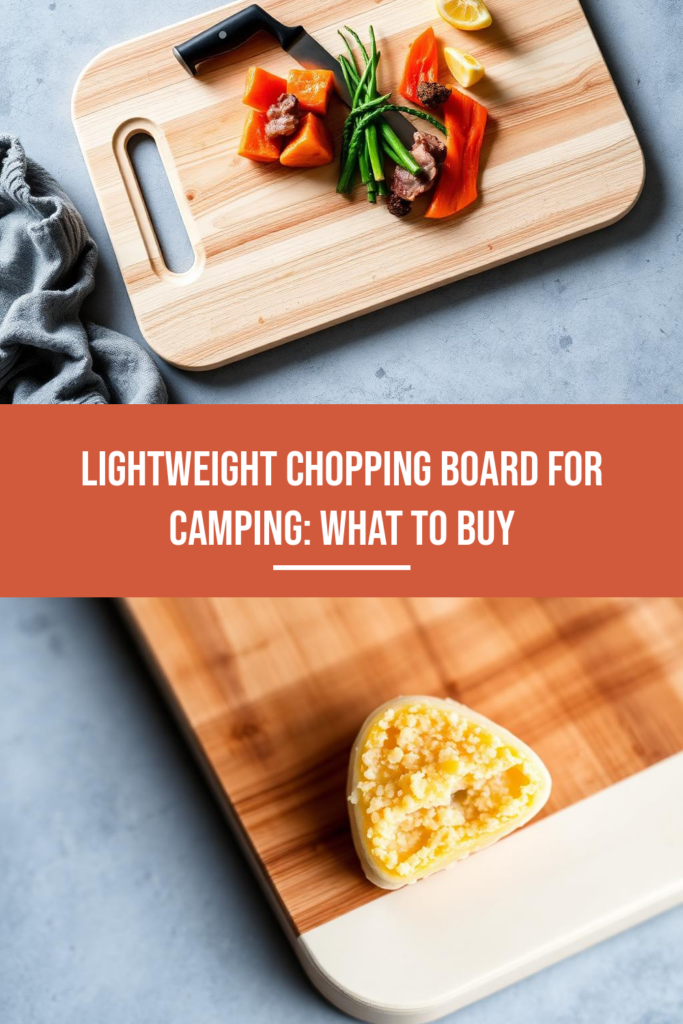
A lightweight chopping board for camping needs to be thin, tough, and easy to pack. The best options are flexible cutting mats (about 1–2 mm thick) or rigid boards made of polypropylene or silicone, weighing between 4 and 12 oz (110–340 g). These materials resist moisture, don’t absorb juices, and can be rolled or stacked flat in a backpack.
What Makes a Board Lightweight and Camp-Suitable?
Weight and packability come first. A typical flexible cutting mat weighs about 4–6 oz (110–170 g) and folds or rolls to fit in a side pocket. Rigid polypropylene boards weigh 8–12 oz (230–340 g) and are stiffer, which helps when you need a stable surface on uneven ground. Avoid glass, ceramic, or heavy wooden boards—they add weight and can crack in cold weather.
Material matters for hygiene and cleanup. Polypropylene and silicone are non-porous, so they don’t hold bacteria from raw meat or fish. They also dry quickly, which is important when you’re packing up in the morning. Wood is heavier and needs oiling; bamboo is heavier still. For camping, stick with plastic or silicone.
How Much Weight and Size Should You Look For?
For one or two people, a board about 8 x 10 inches (20 x 25 cm) is enough for most prep—chopping an onion, slicing cheese, or filleting a small fish. For a group of four or more, go up to 10 x 14 inches (25 x 36 cm). Weight scales with size: an 8×10 polypropylene board is about 6–8 oz (170–230 g), while a 10×14 is 10–12 oz (280–340 g).
Thickness also affects weight and stability. A 1–2 mm flexible mat is the lightest but can slide on a picnic table. A 3–5 mm rigid board is more stable but heavier. If you’re cooking on a rock or log, a rigid board is safer because it won’t bend under pressure.
Which Materials Are Best for Camping?
Polypropylene (PP) – The most common camping board. It’s lightweight, stiff enough for most tasks, and dishwasher-safe (though you’ll likely hand-wash at camp). It doesn’t absorb odors. Some models have a textured surface to keep food from slipping.
Silicone – Very flexible, rolls up tight, and is heat-resistant (up to about 500°F/260°C), so you can use it as a trivet. It’s grippy on a table, but it can be floppy when chopping hard vegetables—you’ll need a flat surface underneath.
Flexible cutting mats (often HDPE or LDPE) – Thin sheets that roll into a tube. They’re the lightest option (about 3–5 oz / 85–140 g for a set of four) and double as a funnel for pouring chopped food into a pot. They tend to slide, so place a damp cloth under them.
Wood or bamboo – Skip for camping unless you already own a small board. They’re heavier, need oiling, and can warp if left wet. If you do bring one, use it only for bread or fruit—not raw meat—to avoid cross-contamination.
How to Keep the Board Clean and Safe at Camp
Wash the board with hot water and biodegradable soap after each use. If you cut raw meat or fish, sanitize it with a dilute bleach solution (1 tablespoon bleach per gallon of water) or a camp-safe sanitizing wipe, then rinse thoroughly. Let it air-dry completely before packing—moisture trapped in a bag causes odors and mildew.
For flexible mats, you can also pour boiling water over them to sanitize, but check the manufacturer’s temperature rating first. Polypropylene and silicone handle boiling water; thin HDPE mats may warp. When packing, roll or stack the board flat, and store it away from sharp utensils that could puncture it.
What Else Do You Need for Camp Food Prep?
A lightweight board is only part of the setup. You’ll also want:
- A sharp knife – A folding camping knife with a 3–4 inch (8–10 cm) blade is enough for most tasks. A dull knife is more dangerous because it slips.
- A cutting surface underneath – If the board is flexible or slides, place it on a flat rock, a camp table, or a silicone trivet.
- A separate board for raw meat – If you’re cooking meat and vegetables, use two boards (or wash the single board with soap and hot water between uses). Color-coded mats help: red for meat, green for vegetables.
- A carrying case or mesh bag – Keeps the board clean and lets it dry while you hike.
If you’re backpacking, a flexible mat that rolls into a tube can also be used as a funnel to pour chopped food into a pot—saves carrying an extra item.
How Long Does a Camping Chopping Board Last?
With proper care, a polypropylene or silicone board will last for years. Flexible mats may develop creases or cracks after heavy use—replace them if they split, because bacteria can hide in the cracks. Rigid boards can warp if left in a hot car for hours; store them flat or hanging. If you notice deep knife grooves, it’s time to replace the board—those grooves are hard to clean.
At camp, you’ll typically use the board daily for a week-long trip. After the trip, wash it at home in the dishwasher (if the material allows) or with hot soapy water. Dry it thoroughly before storing.
What Are Good Substitutes if You Forget Your Board?
If you arrive at camp without a board, you can use:
- A clean, flat rock – Wash it with water and soap, then use it as a hard surface. Not ideal for hygiene, but it works in a pinch.
- A thick plastic bag or dry bag – Place it flat on a table and chop on top. It won’t be stable, but it protects the table from knife marks.
- A piece of cardboard – Use it for bread or fruit only, not raw meat. Discard after use.
These are emergency options, not substitutes for a proper board. A lightweight board costs little and weighs almost nothing, so it’s worth carrying one.
How to Choose the Right Board for Your Trip
Match the board to your trip type:
- Car camping – You can carry a heavier rigid board (10×14 inches, 12 oz). Weight isn’t critical, so prioritize stability.
- Backpacking – Choose a flexible mat or a small silicone board (8×10, under 6 oz). Every ounce counts.
- Kayak or canoe camping – A flexible mat packs flat and resists water damage. Silicone is best because it won’t absorb odors.
- Winter camping – Polypropylene can get brittle in extreme cold (below 20°F/-6°C), so silicone is safer—it stays flexible.
Also consider how many people you’re cooking for. A solo camper can manage with a 6×8 inch mat; a family of four needs a larger board or two mats.
Can You Use a Regular Kitchen Board for Camping?
Yes, but it’s not ideal. A standard 12×18 inch wooden board weighs 2–3 lbs (1–1.4 kg) and takes up space. If you already have a small plastic board (like an 8×10 polypropylene), it will work fine—just make sure it’s not too bulky. The main issue is weight and packability, not function. If you’re driving to a campsite, a regular board is fine. If you’re hiking, leave it at home.
Safe minimum internal temperatures follow USDA FSIS; raw-fish guidance follows the U.S. FDA. See our food safety notes.
Spotted an error? Tell us and we will correct it (corrections policy).