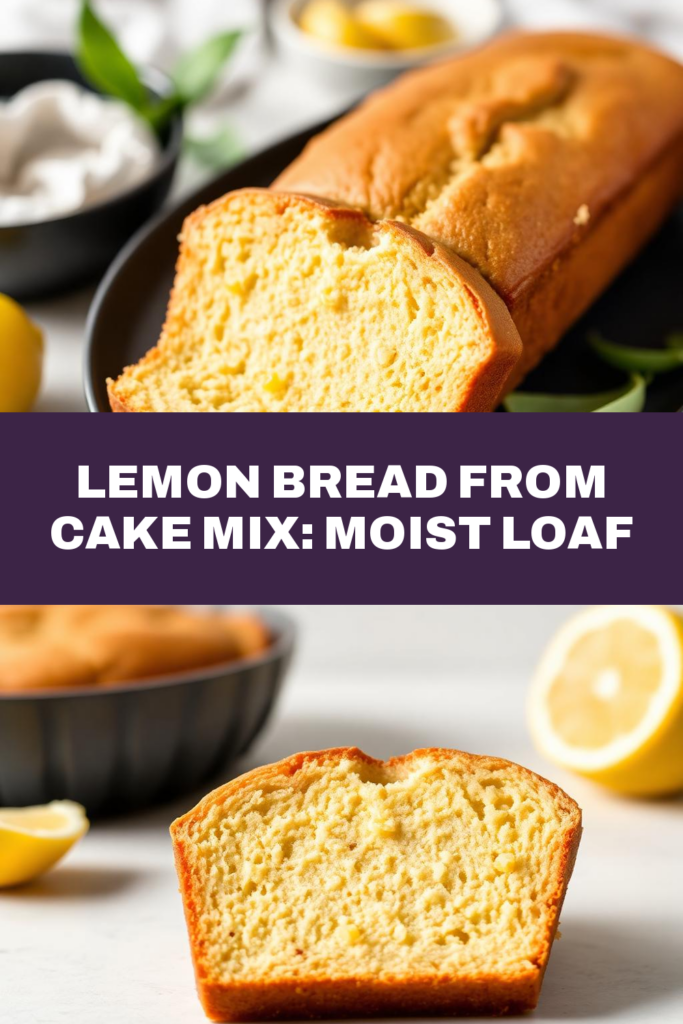
This lemon bread starts with a boxed cake mix, which gives it a reliably tender crumb and a fine, even texture that from-scratch batters sometimes lack. The mix is doctored with lemon zest, juice, and sour cream to add tang and moisture, so the loaf is dense enough to slice cleanly without turning gummy. It bakes into a golden loaf with a crackly top and a tart lemon glaze that soaks into the warm crust.
Pick the Pan and Prep the Oven
Use a standard 9×5-inch (23×13 cm) loaf pan. Line it with parchment paper that overhangs the two long sides; this lets you lift the loaf out cleanly after baking. Grease the exposed ends of the pan with butter or nonstick spray. Heat the oven to 350°F (175°C) with a rack in the middle position. If your oven runs hot, check the loaf at the shorter end of the bake time.
Ingredients
- 1 box (15.25 oz / 432 g) lemon cake mix
- 3 large eggs, at room temperature
- 1/2 cup (120 ml) vegetable oil
- 1 cup (240 g) sour cream, at room temperature
- 1/4 cup (60 ml) water
- Zest of 1 lemon (about 1 tablespoon)
- 2 tablespoons (30 ml) fresh lemon juice
- For the glaze: 1 cup (120 g) powdered sugar, sifted
- For the glaze: 2 tablespoons (30 ml) fresh lemon juice
Mix the Batter Without Overworking It
In a large bowl, whisk the eggs, oil, sour cream, water, lemon zest, and lemon juice until smooth. Add the cake mix and stir with a rubber spatula just until no dry streaks remain—about 30 strokes. Overmixing develops gluten and makes the loaf tough. The batter will be thicker than a standard cake batter; that is correct. Pour it into the prepared pan and smooth the top with the spatula.
Bake Until a Skewer Comes Out Clean
- Bake at 350°F (175°C) for 50–60 minutes, until the top is deep golden brown and a toothpick inserted in the center comes out with only a few moist crumbs (no wet batter). If the top browns too quickly after 40 minutes, tent loosely with foil.
- Cool in the pan on a wire rack for 15 minutes. Use the parchment overhang to lift the loaf out, then set it on the rack to cool completely, about 1 hour.
- While the loaf cools, whisk the powdered sugar and lemon juice for the glaze until smooth. If it is too thick to pour, add water 1 teaspoon at a time. If too thin, add more powdered sugar.
- Once the loaf is fully cool, pour the glaze over the top, letting it drip down the sides. Let the glaze set for 15 minutes before slicing.
Swap Ingredients Without Changing the Texture
If you do not have sour cream, use plain Greek yogurt (full-fat or 2%) in the same amount; it will be slightly less tangy but just as moist. For a dairy-free loaf, replace the sour cream with full-fat coconut yogurt and use a dairy-free cake mix—check the box label. Replace the vegetable oil with an equal amount of melted butter for a richer flavor and a slightly firmer crumb. If you only have a yellow cake mix, add the zest of 2 lemons and an extra tablespoon of lemon juice to the batter to boost the lemon flavor. Do not use a sugar-free cake mix unless you are prepared for a denser, less tender loaf, as the sweetener blend changes the structure.
Store and Slice for the Best Texture
Store the glazed loaf in an airtight container at room temperature for up to 3 days. The glaze will soften the top crust slightly, which is normal. For longer storage, wrap the unglazed loaf tightly in plastic wrap and freeze for up to 3 months; thaw overnight in the refrigerator, then glaze before serving. Slice with a serrated knife using a gentle sawing motion to avoid crushing the crumb. For clean slices, chill the loaf for 30 minutes before cutting. This bread is best served at room temperature with coffee or tea, or toasted lightly and spread with butter. The lemon flavor intensifies after a day, so it is a good make-ahead option for brunch.
If the loaf sinks in the middle, it was likely underbaked—check that your oven is accurate with an oven thermometer. If the edges pull away from the pan but the center is still wet, reduce the oven temperature by 25°F (15°C) and bake longer next time. Raw cake batter contains raw flour and raw eggs; do not taste it before baking. Bake until the internal temperature reaches 200°F (93°C) if you want to be precise, though the toothpick test is the standard cue.
Safe minimum internal temperatures follow USDA FSIS; raw-fish guidance follows the U.S. FDA. See our food safety notes.
Spotted an error? Tell us and we will correct it (corrections policy).





