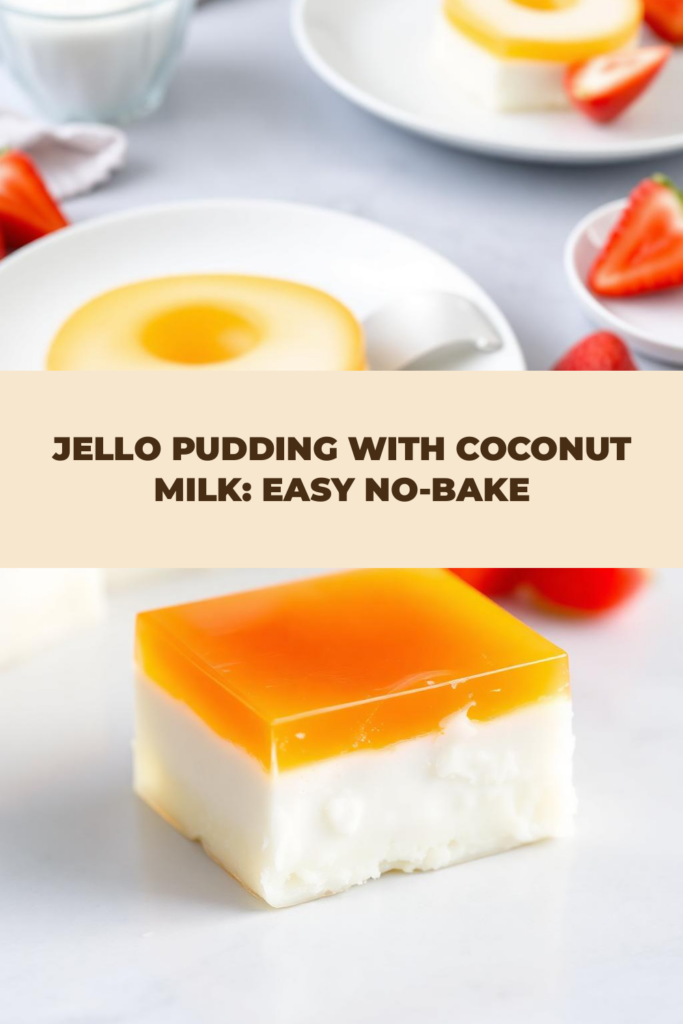
Time: 15 min prep · 4 hr set · Serves: 4 · The key step: whisk the pudding mix into cold coconut milk, not warm, to avoid lumps. This no-bake dessert sets into a silky, coconut-scented pudding that works as a quick weeknight treat or a simple potluck dish. It tastes like a lighter, tropical version of classic pudding, with a firm but spoonable texture.
Why Cold Coconut Milk Makes It Set Firmly
Instant pudding mix sets by absorbing liquid and forming a gel. Warm liquid speeds up that reaction unevenly, causing lumps and a thin, broken texture. Cold coconut milk, straight from the fridge, lets the mix hydrate slowly and evenly. Use full-fat canned coconut milk for the firmest set; light coconut milk makes a thinner pudding that needs an extra hour of chilling.
Shake the can well before opening—coconut milk separates into cream and water. If it is already separated, whisk it in the can first. Do not use coconut beverage from a carton (like a drinking milk) because it has too much water and will not set properly.
Ingredients
- 1 box (3.4 oz / 96 g) instant vanilla or chocolate pudding mix (not cook-and-serve)
- 2 cups (480 ml) full-fat canned coconut milk, cold
- 1/2 teaspoon vanilla extract (optional, for vanilla pudding)
- Pinch of salt (optional)
Swap: For a less coconut-forward flavor, use 1 cup (240 ml) coconut milk and 1 cup (240 ml) whole milk. The pudding will set slightly softer and taste more like classic pudding.
Instructions
- In a medium bowl, whisk the pudding mix and salt together to break up any clumps.
- Pour in the cold coconut milk and vanilla, if using. Whisk vigorously for 2 minutes, scraping the bottom and sides of the bowl, until the mixture is smooth and slightly thickened.
- Let the pudding rest for 5 minutes at room temperature—it will thicken a bit more.
- Divide the pudding among 4 small bowls or ramekins (about 1/2 cup / 120 ml each).
- Cover each bowl with plastic wrap pressed directly onto the surface to prevent a skin from forming.
- Refrigerate for at least 4 hours, or overnight, until fully set and firm to the touch.
What Goes Wrong: Lumps, Thin Pudding, and Skin
Lumps: Usually from warm milk or not whisking long enough. Whisk for the full 2 minutes, and make sure the coconut milk is cold. If lumps form, press the pudding through a fine-mesh strainer before chilling.
Thin pudding that never sets: Likely from using light coconut milk or a carton coconut beverage. Use full-fat canned coconut milk. If you only have light, add 1/2 cup (120 ml) less liquid (use 1 1/2 cups / 360 ml total) and chill for 5 hours.
Skin on top: The pudding forms a skin when exposed to air. Press plastic wrap directly onto the surface before chilling. If you prefer no skin, stir the pudding once after 30 minutes of chilling.
Too sweet or not sweet enough: Instant pudding mix is sweetened. Coconut milk adds no sugar, so the pudding is less sweet than one made with dairy milk. Taste before chilling—if you want it sweeter, whisk in 1 tablespoon (15 ml) maple syrup or honey (not for babies under 1 year).
Serving, Pairings, and Make-Ahead Timeline
Serve the pudding chilled, straight from the fridge. Top with toasted coconut flakes, crushed pineapple, or sliced mango. For a crunch, add a layer of crushed graham crackers or shortbread cookies just before serving—they will soften if left on top.
This pudding pairs well with fresh berries, a drizzle of caramel sauce, or a dollop of whipped cream. It also works as a filling for a simple parfait: layer it with crushed cookies and fruit in a glass.
Make-ahead timeline: The pudding can be made up to 2 days ahead. It sets in 4 hours, so you can prepare it in the morning for dessert that evening. If making for a party, prepare it the night before and keep it covered in the fridge.
Storing Leftover Pudding
Store leftover pudding in an airtight container or cover each bowl with plastic wrap. It keeps in the refrigerator for up to 4 days. Do not leave it at room temperature for more than 2 hours (1 hour if above 90°F / 32°C). The pudding will not freeze well—freezing makes it watery and grainy. Stir before serving if it has separated slightly; that is normal after a day or two.
If you made a batch with dairy milk, the same storage rules apply. Always check for an off smell or mold before eating—discard if you see either. Do not taste to decide safety.
Safe minimum internal temperatures follow USDA FSIS; raw-fish guidance follows the U.S. FDA. See our food safety notes.
Spotted an error? Tell us and we will correct it (corrections policy).





