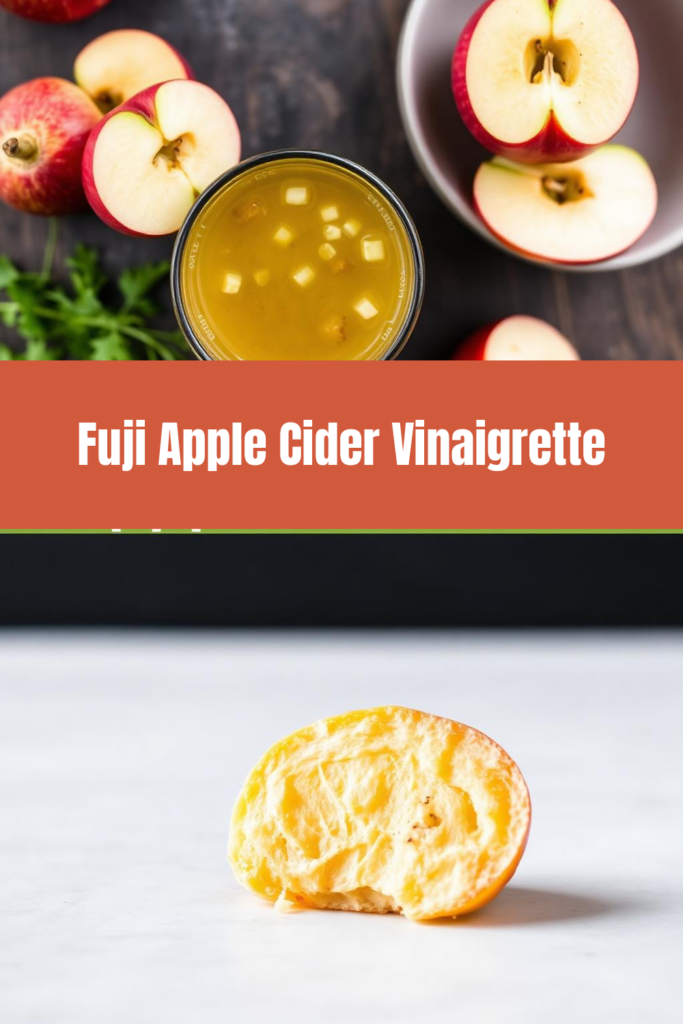
Fuji apple cider vinaigrette is a sweet-tart dressing built on a 3:1 oil-to-acid ratio, with apple cider vinegar providing the tang and Fuji apple juice or grated apple adding fruity sweetness. It coats greens lightly and balances rich or salty toppings, making it a quick choice for lunch salads or a side dish at a weeknight dinner.
Ingredients
- 1/4 cup (60 ml) apple cider vinegar
- 2 tbsp (30 ml) Fuji apple juice (or 1/4 cup grated Fuji apple, see substitution)
- 1 tsp (5 g) Dijon mustard
- 1 tsp (5 ml) honey or maple syrup
- 1/4 tsp fine sea salt
- 1/8 tsp freshly ground black pepper
- 3/4 cup (180 ml) neutral oil (such as grapeseed or canola)
Instructions
- In a small bowl or a jar with a tight-fitting lid, combine the apple cider vinegar, apple juice, Dijon mustard, honey, salt, and pepper. Whisk or shake until the salt dissolves.
- Add the oil. If using a jar, close the lid and shake vigorously for 20–30 seconds until the dressing looks creamy and emulsified. If whisking, pour the oil in a slow, steady stream while whisking constantly.
- Taste and adjust: add a pinch more salt if flat, or an extra teaspoon of honey if too tart.
- Use immediately, or refrigerate in a sealed container for up to 1 week. Shake well before each use.
What Does Fuji Apple Cider Vinaigrette Taste Like?
Fuji apples are among the sweetest apple varieties, so this vinaigrette has a noticeable fruity sweetness that softens the sharpness of the vinegar. The Dijon mustard adds a mild heat and helps the oil and vinegar stay mixed longer. The texture is thin enough to pour but coats leaves evenly when shaken.
How to Use This Vinaigrette
This dressing suits salads with bitter greens like arugula or frisée, because the sweetness balances their bite. It also works on a grain bowl with roasted sweet potatoes, or as a marinade for chicken (use within 2 hours of adding raw chicken, then discard any leftover marinade). For a simple side salad, toss 3 cups (75 g) mixed greens with about 3 tbsp (45 ml) of dressing per serving.
Pairing Ideas
- Over a salad of baby spinach, sliced Fuji apple, toasted walnuts, and crumbled blue cheese.
- As a dressing for a slaw made with red cabbage and carrots.
- Drizzled over roasted Brussels sprouts or butternut squash.
- As a quick sauce for grilled pork chops (make a double batch, use half as marinade, and reserve the other half for serving).
Why Does the Dressing Separate, and How Do I Fix It?
Oil and vinegar naturally separate because oil is less dense and not water-soluble. The mustard and vigorous shaking create a temporary emulsion that holds for a few minutes to a few hours, depending on the oil and how well you mixed it. If it separates, simply shake again for 10–15 seconds. To make a more stable emulsion, add 1/2 tsp of Dijon mustard extra (total 1 1/2 tsp) or use a small amount of mayonnaise (1 tsp) in place of the mustard.
If the Dressing Is Too Tart
Add 1–2 tsp (5–10 ml) of honey or maple syrup, or increase the apple juice by 1 tbsp (15 ml). Whisk or shake to combine.
If the Dressing Is Too Sweet
Add 1 tsp (5 ml) more vinegar or a pinch of salt. The salt will reduce the perception of sweetness.
If the Dressing Is Too Thick
This vinaigrette is naturally thin, but if you used a thick oil like olive oil and it feels heavy, whisk in 1–2 tsp (5–10 ml) of water or apple juice to loosen it.
Substitutions and Adjustments
- Apple cider vinegar: substitute white wine vinegar or champagne vinegar. The flavor will be less apple-forward and slightly sharper.
- Fuji apple juice: use any sweet apple juice or cider. If you don’t have juice, grate 1/4 cup (about 60 g) of Fuji apple and add it with the vinegar; the dressing will be slightly thicker and more textured, and it will keep only 2 days refrigerated.
- Honey or maple syrup: use 1 tsp (5 ml) of sugar dissolved in the vinegar first, or 1 tsp (5 ml) of agave syrup. Honey adds a floral note; maple adds a woodsy note.
- Dijon mustard: substitute 1 tsp (5 g) of whole-grain mustard for a coarser texture, or 1/2 tsp dry mustard powder dissolved in the vinegar.
- Neutral oil: use olive oil for a fruitier flavor, but note that extra-virgin olive oil can overpower the apple taste. Use a mild olive oil if you choose it.
How Long Does Fuji Apple Cider Vinaigrette Keep?
Store the dressing in a sealed jar or bottle in the refrigerator for up to 1 week. Because it contains fresh apple juice and honey, it is perishable; do not leave it at room temperature for more than 2 hours. Shake well before each use. If you used grated apple instead of juice, the dressing will keep for only 2 days because the apple pulp breaks down and can ferment.
Discard the dressing if you see mold, off-odor, or bubbling (which indicates fermentation). Do not taste to check safety; rely on visual and smell cues.
Can I Make This Vinaigrette Ahead?
Yes, you can make it up to 1 week ahead. Keep it refrigerated in a jar. The oil may solidify in the fridge; let it sit at room temperature for 5–10 minutes, then shake vigorously. If you are packing a lunch, put the dressing in a small separate container and add it to the salad just before eating to keep greens crisp.
For a workday lunch, pack 2 tbsp (30 ml) of dressing per serving in a leakproof container. The dressing will stay safe for the morning hours if kept in an insulated lunch bag with an ice pack; otherwise, refrigerate until lunchtime.
How to Adjust the Recipe for a Larger Batch
To make enough for a potluck (about 12 servings), double the ingredients: 1/2 cup (120 ml) vinegar, 1/4 cup (60 ml) apple juice, 2 tsp (10 g) mustard, 2 tsp (10 ml) honey, 1/2 tsp salt, 1/4 tsp pepper, and 1 1/2 cups (360 ml) oil. The proportions stay the same. Shake well before serving.
If you prefer a lighter dressing, reduce the oil to 1/2 cup (120 ml) and add 1/4 cup (60 ml) of water. The dressing will be thinner and less rich, but it will separate more quickly.
For a creamier version, blend in 2 tbsp (30 g) of plain Greek yogurt or sour cream after adding the oil; this makes a thicker dressing that clings to leaves and keeps for 3 days.
This vinaigrette is also a good base for a marinade: combine 1/2 cup (120 ml) of the dressing with 1 tbsp (15 ml) of soy sauce and use to marinate 1 lb (450 g) of chicken thighs for 30 minutes to 2 hours. Discard the marinade after removing the chicken, and cook chicken to an internal temperature of 165°F (74°C) as measured with a food thermometer.
Safe minimum internal temperatures follow USDA FSIS; raw-fish guidance follows the U.S. FDA. See our food safety notes.
Spotted an error? Tell us and we will correct it (corrections policy).





