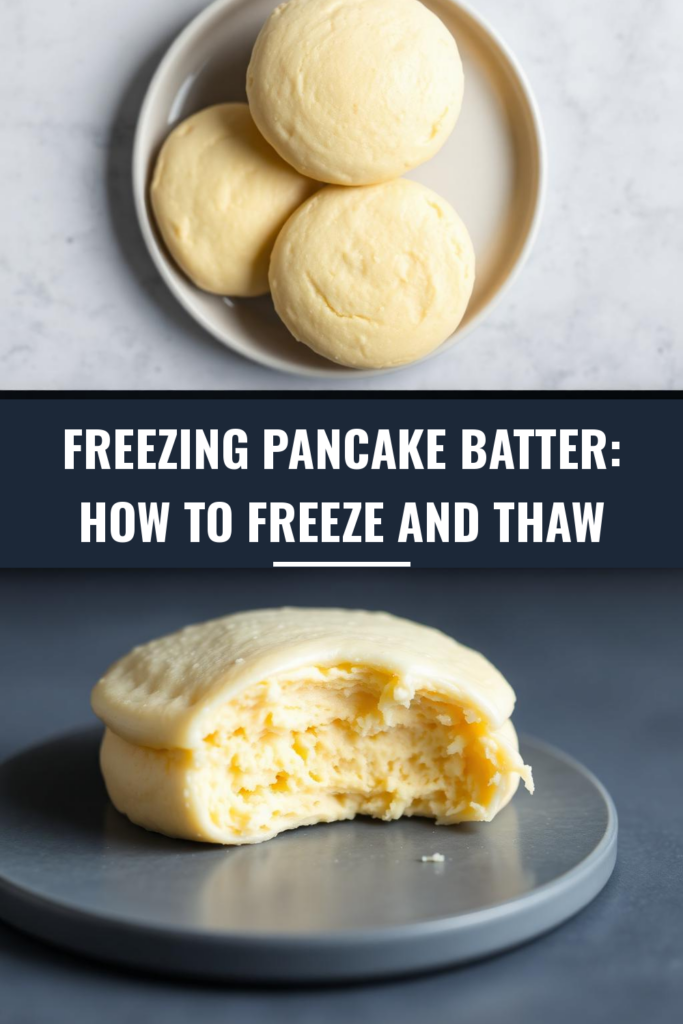
Freezing pancake batter is a make-ahead move for busy weekday mornings or a weekend breakfast crowd. It tastes just like fresh batter once thawed, and it lets you cook only as many pancakes as you need. Serve the pancakes with butter, maple syrup, or fruit.
Ingredients
- 2 cups (250 g) all-purpose flour
- 2 tbsp (25 g) granulated sugar
- 1 tbsp (12 g) baking powder
- 1/2 tsp (3 g) baking soda
- 1/2 tsp (3 g) salt
- 2 large eggs
- 1 3/4 cups (420 ml) buttermilk (or whole milk)
- 3 tbsp (45 g) unsalted butter, melted and cooled
- 1 tsp (5 ml) vanilla extract
Instructions
- In a large bowl, whisk together the flour, sugar, baking powder, baking soda, and salt.
- In a separate bowl, whisk the eggs, buttermilk, melted butter, and vanilla until combined.
- Pour the wet ingredients into the dry and stir with a spatula until just combined. A few lumps are fine; do not overmix.
- Freeze the batter now (see Freezing and Thawing below) or cook immediately. To cook, heat a griddle or nonstick skillet over medium heat (about 350°F/175°C).
- Pour 1/4 cup (60 ml) batter per pancake onto the hot surface. Cook until bubbles form on the surface and the edges look set, about 2–3 minutes.
- Flip and cook until the second side is golden brown, about 1–2 minutes more. The internal temperature of the cooked pancake should reach 160°F (71°C) if you check with a food thermometer, per USDA FSIS safe minimum for egg dishes.
- Repeat with remaining batter. Keep cooked pancakes warm in a 200°F (95°C) oven while you finish the batch.
Freezing and Thawing
Freeze the batter within 2 hours of mixing. Store it in an airtight container or a zip-top freezer bag. Leave about 1 inch (2.5 cm) of headroom in a rigid container because the batter expands as it freezes. Label the container with the date.
Frozen batter keeps for up to 3 months. Thaw it overnight in the refrigerator, or for a quicker method, place the sealed bag in a bowl of cold water for 30–45 minutes, turning occasionally. Do not thaw at room temperature. Once thawed, stir gently; the batter may separate slightly.
If you want to freeze individual portions, pour 1/4 cup (60 ml) batter into each well of a muffin tin, freeze until solid, then pop the pucks into a freezer bag. Thaw as many as you need.
Substitutions
- Buttermilk: Use 1 3/4 cups (420 ml) whole milk plus 1 tbsp (15 ml) lemon juice or white vinegar, let sit 5 minutes. Or use plain kefir.
- All-purpose flour: Swap 1 cup (125 g) whole wheat flour for 1 cup (125 g) of the all-purpose. The pancakes will be denser and slightly nuttier.
- Butter: Use 3 tbsp (45 ml) neutral oil (canola or vegetable) in place of melted butter. The flavor will be milder.
- Eggs: For an egg-free version, use 1/4 cup (60 g) plain yogurt or 1/4 cup (60 ml) applesauce per egg. The pancakes will be a bit more tender and less fluffy.
- Gluten-free: Use a 1:1 gluten-free baking flour blend. Add 1/4 tsp xanthan gum if your blend does not include it.
Equipment That Matters
A cast-iron griddle or a heavy nonstick skillet holds heat evenly. A thin skillet creates hot spots that burn the outside before the middle cooks. Use a 1/4-cup (60 ml) measuring cup or a ladle for uniform pancakes.
For freezing, a rigid freezer-safe container or a zip-top bag works. If using a bag, squeeze out as much air as possible before sealing to prevent freezer burn.
Storage and Safety
Cooked pancakes keep in the refrigerator for 3–4 days in an airtight container. Reheat in a toaster, microwave, or a 350°F (175°C) oven for 5–8 minutes until hot. Leftovers should be reheated to 165°F (74°C) if you are reheating them after they have been refrigerated.
Raw batter contains raw flour and raw eggs. Raw flour can carry bacteria, and raw eggs carry a risk of salmonella. Do not taste raw batter. If you want to sample it, heat-treat the flour in a 350°F (175°C) oven for 5 minutes and let it cool, and use pasteurized eggs. Pregnant people, young children, older adults, and anyone with a weakened immune system should avoid raw eggs and raw flour entirely.
Never leave batter or cooked pancakes out at room temperature for more than 2 hours (1 hour if the room is above 90°F/32°C). Discard any batter that has been out longer.
Common Questions
Does frozen batter make fluffier pancakes?
No. Freezing stops the leavening action. The baking powder will be less active after thawing, so the pancakes may be slightly less fluffy than fresh. To compensate, add 1/2 tsp (2 g) extra baking powder to the dry mix before freezing, or stir in 1/4 tsp (1 g) baking soda just before cooking.
Can I freeze the batter in a squeeze bottle?
Yes, but leave room for expansion. A plastic squeeze bottle with a wide opening works. Thaw in the refrigerator, then squeeze directly onto the griddle. Do not microwave the bottle to thaw; it can create hot spots and damage the plastic.
How long can I keep the batter in the fridge before freezing?
Keep it in the refrigerator for up to 2 days before freezing. After that, the leavening will start to lose strength, and the batter may develop an off flavor. Freeze it as soon as possible after mixing for best results.
Can I freeze the batter after it has been in the fridge?
Yes, as long as it has been refrigerated and used within 2 days of mixing. Freeze it in the same way as fresh batter.
Safe minimum internal temperatures follow USDA FSIS; raw-fish guidance follows the U.S. FDA. See our food safety notes.
Spotted an error? Tell us and we will correct it (corrections policy).