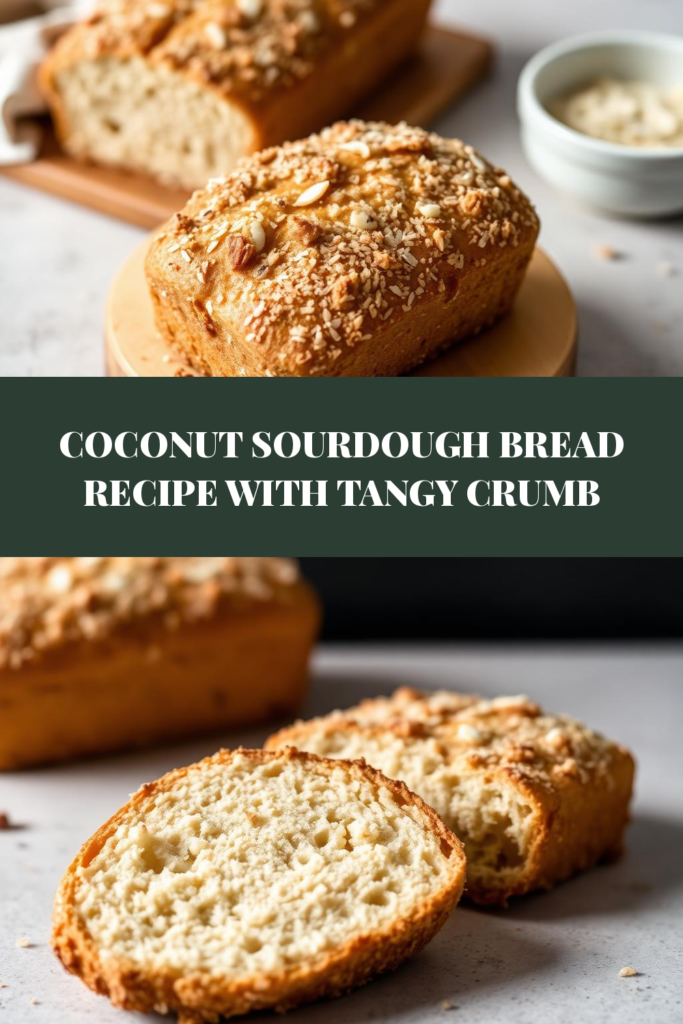
Coconut sourdough bread is a tangy, chewy loaf with a tender crumb and a subtle coconut flavor from coconut milk and shredded coconut. It’s a weekend project that needs about 24 hours from start to finish, but the hands-on time is under an hour. The key is using a ripe, active starter and not rushing the bulk fermentation.
Ingredients
- 100 g (about 1/2 cup) ripe sourdough starter (100% hydration)
- 350 g (1 1/2 cups) warm water (about 80°F / 27°C)
- 100 g (1/2 cup) full-fat coconut milk
- 500 g (4 cups) bread flour, plus more for dusting
- 50 g (1/2 cup) unsweetened shredded coconut
- 10 g (2 tsp) fine sea salt
Instructions
- In a large bowl, whisk the starter and warm water until cloudy. Add the coconut milk and whisk again.
- Add the bread flour and shredded coconut. Mix with a dough whisk or your hand until no dry flour remains. Cover and let rest for 30 minutes (autolyse).
- Sprinkle the salt over the dough. Dimple it in with wet fingers, then fold the dough over itself a few times until the salt is incorporated.
- Perform 4 sets of stretch and folds at 30-minute intervals. To do one set: wet your hand, reach under one side of the dough, stretch it up and fold it over the center. Repeat on all four sides. Cover between sets.
- Cover the bowl and let the dough ferment at room temperature (about 70°F / 21°C) for 8–12 hours, until it has increased by about 50% and the surface is bubbly. In a warmer kitchen it will be closer to 8 hours; cooler, closer to 12.
- Turn the dough out onto a lightly floured surface. Shape it into a round or oval by folding the edges into the center, then flip it seam-side down and pull it toward you to create surface tension.
- Place the dough seam-side up in a floured proofing basket or a bowl lined with a floured kitchen towel. Cover and refrigerate for 12–18 hours. The dough is ready when it has puffed slightly and holds a fingerprint when pressed gently.
- Place a Dutch oven (about 6 qt / 5.7 L) in the oven and preheat to 450°F (230°C) for 30 minutes.
- Carefully turn the cold dough out onto a piece of parchment paper. Score the top with a sharp knife or lame. Use the parchment to lower the dough into the hot Dutch oven.
- Cover and bake at 450°F (230°C) for 20 minutes. Remove the lid and bake for another 25–30 minutes, until the crust is deep golden brown and the internal temperature registers about 205°F (96°C) on an instant-read thermometer.
- Transfer the loaf to a wire rack and cool completely, at least 2 hours, before slicing. Slicing warm will make the crumb gummy.
Why Use Coconut Milk and Shredded Coconut?
Coconut milk replaces part of the water, adding fat that softens the crumb and a mild coconut flavor that doesn’t overpower the sourdough tang. Shredded coconut adds texture and a slightly sweet note. Use full-fat coconut milk; light versions will make a drier loaf. If you want a stronger coconut flavor, toast the shredded coconut in a dry skillet over medium heat for 3–4 minutes, until fragrant, and let it cool before adding.
Substitutions and What Changes
- Bread flour – use all-purpose flour with 1 tbsp vital wheat gluten per cup; the crumb will be slightly less chewy.
- Coconut milk – replace with equal parts water and 1 tbsp coconut oil; the flavor will be more subtle.
- Shredded coconut – omit for a plain sourdough; the texture will be smoother.
- Starter – if your starter is at 100% hydration, use as written. If it’s stiffer or wetter, adjust the water to keep the dough consistency similar.
Make-Ahead Timeline for Coconut Sourdough
This bread is designed to be made over two days. Day 1: mix the dough and do the stretch and folds in the morning or afternoon. Bulk ferment at room temperature for 8–12 hours, then shape and refrigerate overnight. Day 2: preheat and bake in the morning. The cold proof can be extended to 24 hours if needed; the flavor will become more tangy. If you need a shorter timeline, skip the cold proof and bake after a 2–3 hour room-temperature proof, but the crust will be less crackly.
Storing and Reheating Coconut Sourdough
Store the cooled loaf in a paper bag at room temperature for up to 3 days. For longer storage, slice and freeze in a zip-top bag for up to 3 months. To reheat, toast slices directly in a toaster or under a broiler for 1–2 minutes per side, until crisp. For a whole loaf, wrap in foil and warm in a 350°F (175°C) oven for 10–15 minutes. Never refrigerate the bread; it will go stale faster.
What If My Dough Is Too Sticky or Too Dry?
Sticky dough is normal for sourdough, especially with coconut milk. If it’s unmanageably sticky after the first couple of folds, wet your hands and use a bench scraper to help. If the dough seems very dry and stiff, add 1–2 tbsp of water during the first fold. The dough should be soft and slightly tacky, not stiff. If you’re new to sourdough, err on the wetter side; it’s easier to add flour than to add water later.
How to Serve Coconut Sourdough
This bread is excellent toasted with butter and jam, or as a base for avocado toast. The mild coconut pairs well with tropical fruit preserves, honey, or a smear of cream cheese. It also makes great French toast or bread pudding because the crumb holds custard well. Serve it alongside a bowl of soup or use it for sandwiches; the tangy flavor stands up to strong fillings like roasted vegetables or grilled chicken.
Safe minimum internal temperatures follow USDA FSIS; raw-fish guidance follows the U.S. FDA. See our food safety notes.
Spotted an error? Tell us and we will correct it (corrections policy).





