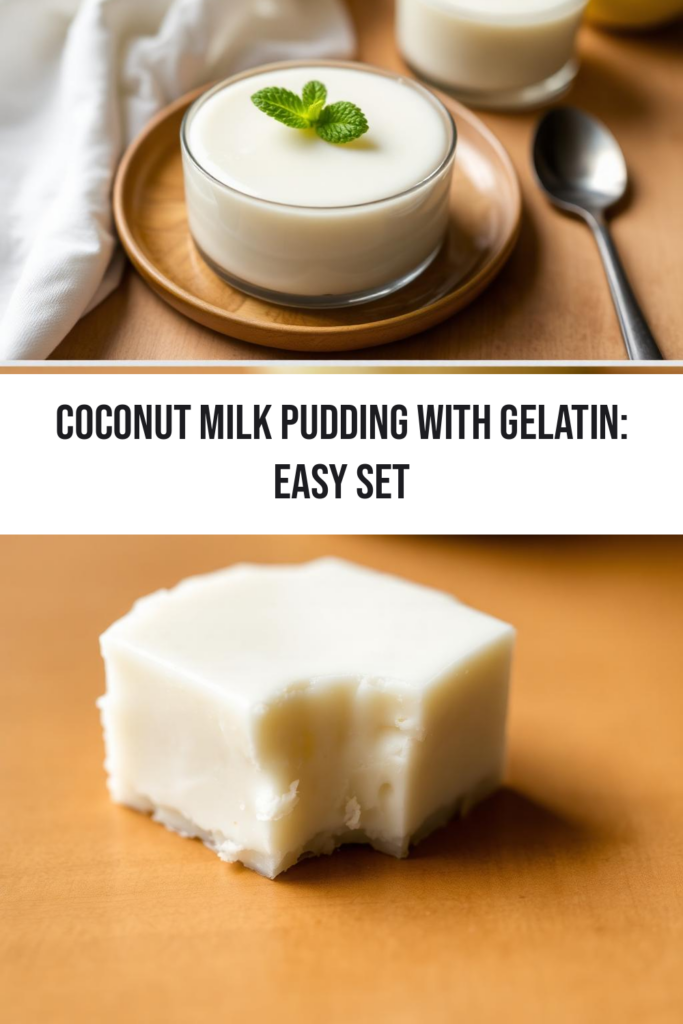
Time: 15 min prep + 4 hr chill · Serves: 4 · The key step: Bloom the gelatin in cold liquid before heating, then stir until fully dissolved.
This coconut milk pudding is a smooth, wobbly dessert made with coconut milk, sugar, and gelatin. It sets into a firm-but-tender custard that tastes like sweet coconut, with a clean, light finish. Serve it chilled on its own or with fresh fruit.
Ingredients
- 2 cups (480 ml) full-fat coconut milk (from one 13.5-oz / 400 ml can plus water to make 2 cups)
- 1/4 cup (50 g) granulated sugar (adjust to taste, 3–5 tbsp)
- 1/2 tsp vanilla extract (optional)
- 2 1/4 tsp (7 g / 1 packet) unflavored powdered gelatin
- 3 tbsp (45 ml) cold water (for blooming)
Instructions
- In a small bowl, sprinkle the gelatin over the cold water. Let stand for 5 minutes until it becomes spongy and thick. This is called blooming.
- In a medium saucepan, combine the coconut milk and sugar. Heat over medium, stirring frequently, until the sugar dissolves and the mixture is steaming but not boiling (about 3–5 minutes). Do not let it boil—boiling can make the gelatin less effective.
- Remove the saucepan from heat. Add the bloomed gelatin and stir for 1–2 minutes until every grain is fully dissolved. The mixture should look smooth and slightly glossy. If you see any undissolved granules, keep stirring—they will dissolve as it cools slightly.
- Stir in the vanilla, if using. Pour the mixture through a fine-mesh strainer into a large measuring cup or bowl to remove any lumps.
- Divide the liquid among 4 small ramekins or cups (about 1/2 cup / 120 ml each). Let them cool to room temperature, about 20 minutes, then cover and refrigerate for at least 4 hours, until set. The pudding should be firm to the touch and jiggle slightly when shaken.
- To serve, eat directly from the ramekin, or dip the ramekin in hot water for 10 seconds and invert onto a plate.
Setting and Doneness
The pudding is set when it no longer flows when tilted. After 4 hours, it should be firm enough to hold a spoon mark. If you want a firmer texture, chill for 6 hours or overnight. If it is still liquid after 4 hours, the gelatin may not have fully dissolved—see the troubleshooting note below.
The final texture is a soft, jelly-like set that cuts cleanly with a spoon. It should not be rubbery; if it is, you used too much gelatin or boiled it too long.
Common Mistakes
Gelatin not dissolved
If you see white specks or a grainy texture, the gelatin did not dissolve completely. Always bloom in cold water, then heat gently and stir until the liquid is clear. If you add gelatin directly to hot liquid without blooming, it clumps.
Pudding too soft or runny
This happens when the gelatin is underused, the mixture was boiled too long (which breaks down gelatin), or the pudding was not chilled long enough. Check your gelatin amount—use 2 1/4 tsp (7 g) for 2 cups of liquid. If you used light coconut milk, it has more water and sets softer; add 1/2 tsp more gelatin.
Skin or film on top
A thin skin forms if the pudding sits uncovered while cooling. Cover with plastic wrap or a lid as soon as it is cool enough to refrigerate. If a skin forms, it is harmless—just peel it off before serving.
Storage and Make-Ahead
Covered puddings keep in the refrigerator for up to 4 days. They do not freeze well—freezing makes the texture watery and grainy. To make ahead, prepare and chill up to 2 days before serving. Keep them covered so they do not absorb fridge odors. If you are adding fruit, add it just before serving so it does not sink or release juice.
Variations
Less sweet: Use 2 tbsp (25 g) sugar for a barely sweet pudding that works as a base for syrup or fruit.
More coconut flavor: Replace 1/4 cup of the coconut milk with coconut cream (from the top of a chilled can) for a richer set.
Dairy-free and vegan: This recipe is already dairy-free. For a vegan version, use agar agar instead of gelatin: use 1 tsp (3 g) agar powder, simmer for 2 minutes in the coconut milk, then pour and chill. Note that agar sets firmer and more brittle than gelatin.
Sweetener swap: Use 1/4 cup (80 g) honey or maple syrup instead of sugar. Honey adds a floral note; maple adds a woody sweetness. Reduce the coconut milk by 2 tbsp (30 ml) to compensate for the extra liquid.
Why Gelatin Needs Cold Water
Gelatin is a protein that dissolves only when first soaked in cold water. This step, called blooming, hydrates the granules so they melt evenly into hot liquid. Skipping it leaves lumps that never dissolve. Use cold water—warm water makes the outside dissolve and trap dry powder inside.
How to Check the Set
After 4 hours, gently tilt a ramekin. The surface should be flat and not flow. Press a fingertip lightly on the top—it should feel springy and leave a slight indentation that bounces back. If it is still liquid, refrigerate for another 1–2 hours and recheck. If it never sets, the gelatin was not dissolved or the mixture was too hot.
Safe minimum internal temperatures follow USDA FSIS; raw-fish guidance follows the U.S. FDA. See our food safety notes.
Spotted an error? Tell us and we will correct it (corrections policy).





