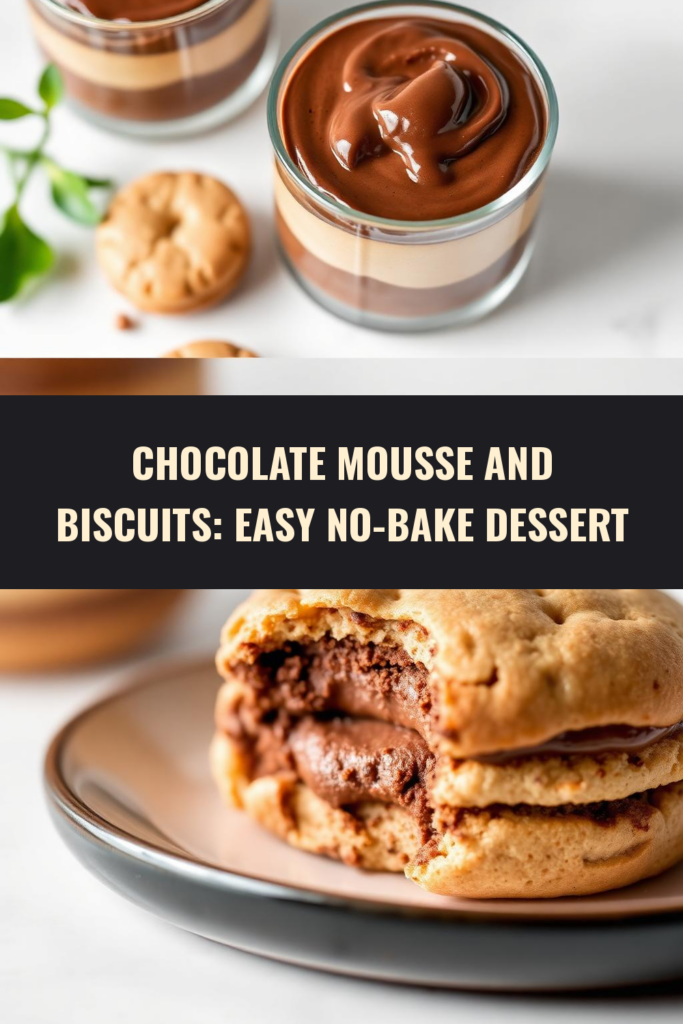
Chocolate mousse and biscuits are a quick no-bake dessert that layers rich, airy mousse with crisp cookies for contrast in texture. This version uses a simple stovetop custard base, so it sets firmly enough to slice or spoon, and the biscuits soften just slightly overnight. It suits a weeknight treat or a potluck dish that needs to be made ahead.
Ingredients
- 1 1/2 cups (360 ml) heavy cream, cold
- 4 large egg yolks, from pasteurized eggs (see note)
- 1/4 cup (50 g) granulated sugar
- 8 oz (225 g) semisweet chocolate, chopped (or 1 1/3 cups chocolate chips)
- 2 tbsp (30 ml) water
- 1 tsp vanilla extract
- 1/4 tsp salt
- About 24 crisp biscuits (such as graham crackers, shortbread, or butter cookies), enough to cover an 8-inch (20 cm) square pan in two layers
- Optional: 1/2 cup (60 g) chopped toasted nuts or crushed cookies for topping
Note on eggs: Use pasteurized eggs to reduce risk of foodborne illness, especially if serving to pregnant people, young children, older adults, or anyone with a weakened immune system. Raw eggs and raw flour can carry bacteria; pasteurized eggs are safest for these groups.
Instructions
- Line an 8-inch (20 cm) square baking pan with parchment paper, leaving overhang on two sides for easy lifting.
- In a medium heatproof bowl, whisk together egg yolks, sugar, and water. Place the bowl over a saucepan of simmering water (the bowl should not touch the water). Whisk constantly until the mixture thickens and reaches 160°F (71°C) on a food thermometer, about 5–7 minutes. Remove from heat and set aside.
- Add the chopped chocolate to the warm yolk mixture and stir until completely melted and smooth. Stir in vanilla and salt. Let cool to room temperature, about 15 minutes, stirring occasionally.
- In a separate bowl, whip the cold heavy cream to stiff peaks (the cream holds its shape when the whisk is lifted).
- Fold the whipped cream into the chocolate mixture in three additions, using a spatula, until no white streaks remain. The mixture will be light and airy.
- Spread a thin layer of mousse (about 1 cup) over the bottom of the prepared pan. Arrange a single layer of biscuits on top, breaking them to fit as needed. Spread half of the remaining mousse over the biscuits. Add a second layer of biscuits, then spread the rest of the mousse on top, smoothing the surface.
- Cover with plastic wrap and refrigerate for at least 4 hours, or overnight, until the mousse is firm enough to slice cleanly.
- To serve, lift out using the parchment overhang, cut into squares, and sprinkle with nuts or crushed cookies if using.
Biscuit Choice and How It Changes the Texture
The type of biscuit affects how much it softens. Graham crackers soften noticeably and become cake-like; shortbread stays firmer and adds buttery crunch; butter cookies (like tea biscuits) soften moderately. For the classic “mousse and biscuit” dessert, use a crisp, neutral biscuit that won’t overpower the chocolate. If you prefer a firmer biscuit layer, use thicker cookies and reduce the resting time to 3 hours.
Substitutions for Chocolate and Cream
- Chocolate: Use milk chocolate for a sweeter mousse, but reduce sugar to 2 tbsp (25 g). Use dark chocolate (70% cacao) for a more intense, less sweet result; you may add 1–2 tbsp extra sugar to balance.
- Heavy cream: For a lighter texture, replace half the heavy cream with whole milk, but the mousse will be less firm and may need an extra hour of chilling. Coconut cream (full-fat, chilled) works as a dairy-free swap; whip it the same way, but note it has a slight coconut flavor.
- Egg yolks: For an egg-free version, omit the yolks and use a stovetop ganache: heat 1 cup (240 ml) cream to a simmer, pour over 8 oz (225 g) chocolate, stir until smooth, then chill and whip. The texture will be denser and less airy.
Make-Ahead Timeline and How Long It Keeps
This dessert must be made at least 4 hours ahead, and it’s best after 8–24 hours in the fridge. The biscuits soften gradually, so the texture improves with time. You can assemble it up to 2 days in advance. Store covered in the refrigerator for up to 4 days. The mousse will not freeze well because the cream and custard can separate when thawed; if you must freeze, do so for up to 1 month, but expect a slightly grainy texture after thawing.
Serving and Pairing Ideas
Serve chilled, straight from the refrigerator. Cut into squares with a sharp knife dipped in hot water and wiped dry between cuts for clean edges. Pair with a small spoonful of raspberry or strawberry jam on the side, or a dusting of cocoa powder. For a richer plate, add a dollop of lightly sweetened whipped cream. This dessert stands alone after a heavy meal, or alongside strong coffee or espresso. If serving at a party, you can make individual portions in small glasses: layer mousse and broken biscuits in 8 (6-oz / 180 ml) ramekins, chilling as directed.
Why the Mousse Needs a Custard Base
A classic chocolate mousse uses raw egg whites or yolks, which carry a risk of salmonella. This recipe cooks the yolks with sugar and water to 160°F (71°C), which is the safe minimum for egg dishes, so the mousse is safe to serve to most people. The cooked yolks also stabilize the mousse, helping it hold its shape when sliced. If you prefer a no-egg mousse, the substitution above works, but the texture will be more like a chocolate ganache whip.
What to Do If the Mousse Is Too Soft or Too Firm
If the mousse hasn’t set after 4 hours, it may be because the cream was not whipped stiffly enough or the chocolate mixture was too warm when folded in. Refrigerate for another 2 hours; if it still doesn’t hold, spoon it into glasses instead of slicing. If the mousse is too firm after chilling, let it sit at room temperature for 10–15 minutes before serving. The biscuits may become very soft if left for more than 2 days; that’s expected and still safe to eat, but the texture will be more like a cake.
Storage note: This dessert contains dairy and eggs, so keep it refrigerated at all times. Do not leave it out for more than 2 hours total (1 hour if the room is above 90°F/32°C). Leftovers can be kept for up to 4 days, but the biscuits will continue to soften.
Related
- Chili Cheese Dog Casserole with Grands Biscuits
- Banana Bread Chocolate Loaf Recipe
- Microwave Chocolate Cake in a Cup
Safe minimum internal temperatures follow USDA FSIS; raw-fish guidance follows the U.S. FDA. See our food safety notes.
Spotted an error? Tell us and we will correct it (corrections policy).