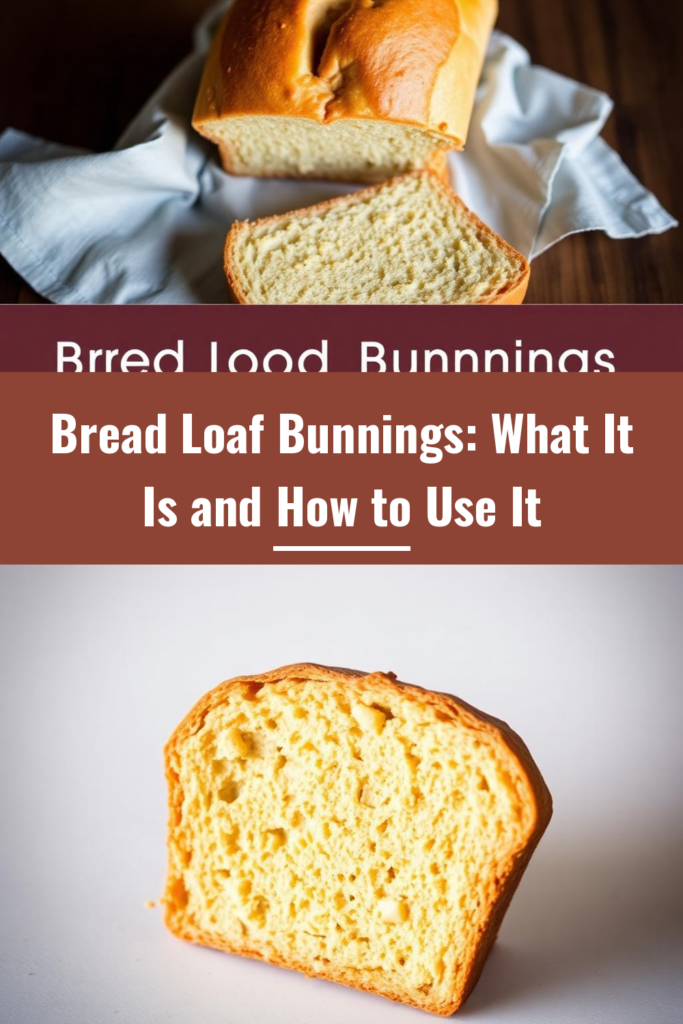
Time: 5 min to identify · Serves: 1 loaf · The key step: Check the label for “bread loaf” or “loaf pan” – Bunnings sells hardware, not food. This page explains what the search likely means and how to bake a basic loaf in a Bunnings-style metal pan.
Bunnings is an Australian hardware chain; it does not sell bread. The search “bread loaf bunnings” most often means someone is looking for a loaf pan (tin) to bake bread, or they typed it while thinking of a bread maker. This page covers the two practical interpretations: buying the right pan at a hardware store, and baking a simple white bread loaf in it. If you already have a pan, skip to the recipe.
What “Bread Loaf Bunnings” Likely Means
Two common intents:
- Loaf pan (tin): Bunnings sells metal bakeware, including loaf pans. Look for a 9×5-inch (23×13 cm) pan, the standard size for most bread recipes. Check the label for “loaf pan” or “bread pan.”
- Bread maker: Bunnings also sells bread makers. If you meant that, the pan inside the machine is non-stick and shaped for the machine; you do not need a separate pan.
If you searched for a recipe, the pan size matters: a 9×5-inch pan gives a taller loaf; an 8×4-inch (20×10 cm) pan gives a shorter, wider loaf. Use the pan size your recipe calls for, or adjust baking time by 5–10 minutes if you swap.
Basic White Bread Loaf
This recipe makes one standard 9×5-inch loaf. It uses active dry yeast and all-purpose flour. Total time includes rising and baking.
Ingredients
- 3 cups (375 g) all-purpose flour, plus more for dusting
- 1 packet (2 ¼ tsp / 7 g) active dry yeast
- 1 ½ tsp (9 g) salt
- 1 tbsp (12 g) sugar
- 1 cup (240 ml) warm water (105–115°F / 40–46°C)
- 2 tbsp (30 ml) olive oil or melted butter, plus more for greasing
Instructions
- In a large bowl, whisk together the flour, yeast, salt, and sugar. Make a well in the center.
- Pour in the warm water and oil. Stir with a wooden spoon until a shaggy dough forms.
- Turn the dough onto a lightly floured surface. Knead for 8–10 minutes, until smooth and elastic. The dough should feel slightly tacky but not sticky; add flour 1 tbsp at a time if needed.
- Place the dough in a lightly oiled bowl, cover with plastic wrap or a damp towel, and let rise in a warm spot (about 75°F / 24°C) for 1 to 1 ½ hours, until doubled in size.
- Punch down the dough. Shape it into a loaf by flattening into a rectangle, rolling tightly, and pinching the seam. Place seam-side down in a greased 9×5-inch (23×13 cm) loaf pan.
- Cover loosely and let rise again for 30–45 minutes, until the dough rises just above the pan rim.
- Meanwhile, preheat the oven to 375°F (190°C).
- Bake for 30–35 minutes, until the top is deep golden brown and the loaf sounds hollow when tapped on the bottom. If you have a thermometer, the center should read 190–200°F (88–93°C).
- Let cool in the pan for 10 minutes, then transfer to a wire rack to cool completely before slicing.
Baking in a Hardware-Store Pan
Metal loaf pans from hardware stores are usually aluminized steel or non-stick. Both work. If the pan is dark-colored, reduce the oven temperature by 25°F (4°C) to prevent over-browning. If it is shiny, bake at the full temperature. Always grease the pan thoroughly, even if it claims non-stick; use butter, oil, or baking spray.
If your pan is a different size, adjust:
- 8×4-inch (20×10 cm) pan: bake 35–40 minutes; the loaf will be taller.
- 10×5-inch (25×13 cm) pan: bake 25–30 minutes; the loaf will be flatter.
Check for doneness with the hollow sound or thermometer, not just time.
Storage and Keeping
Store the cooled loaf in a paper bag at room temperature for 2–3 days. Do not refrigerate – it dries out faster. For longer storage, wrap tightly in plastic wrap and freeze for up to 3 months. Thaw at room temperature for 2–3 hours, then reheat in a 350°F (175°C) oven for 5–10 minutes to restore crust.
If the loaf develops mold, discard it. Never eat bread with visible mold – the roots can extend deeper than you see.
What Went Wrong – Quick Fixes
Dense, heavy loaf: The dough was under-kneaded or the first rise was too short. Knead the full 8–10 minutes and let it double, which can take up to 1 ½ hours in a cool kitchen.
Crust too dark, inside raw: Your pan is darker than standard, or the oven runs hot. Lower the temperature by 25°F (4°C) and check with a thermometer – the center should reach 190°F (88°C).
Loaf collapses after baking: The second rise went too long. The dough should rise just above the pan rim, not double again. If it over-rises, it will fall in the oven.
Using a Bread Maker Instead
If you have a bread maker from Bunnings, follow the machine’s manual for ingredient order – usually liquids first, then dry ingredients, yeast last. Use the same ingredient amounts above, but reduce the water to ¾ cup (180 ml) because the machine kneads differently. Set the machine to the “basic” or “white” cycle. The internal pan is non-stick; do not grease it. Remove the loaf promptly after baking to avoid a soggy bottom.
If you are unsure which setting, start with the default “basic” cycle. Most machines bake at 350–400°F (175–200°C) internally; you do not control that.
For food safety, the bread is fully cooked when the internal temperature reaches 190°F (88°C) – not a USDA meat temperature, but a standard doneness check for bread. Let it cool before slicing to set the crumb.
Safe minimum internal temperatures follow USDA FSIS; raw-fish guidance follows the U.S. FDA. See our food safety notes.
Spotted an error? Tell us and we will correct it (corrections policy).





