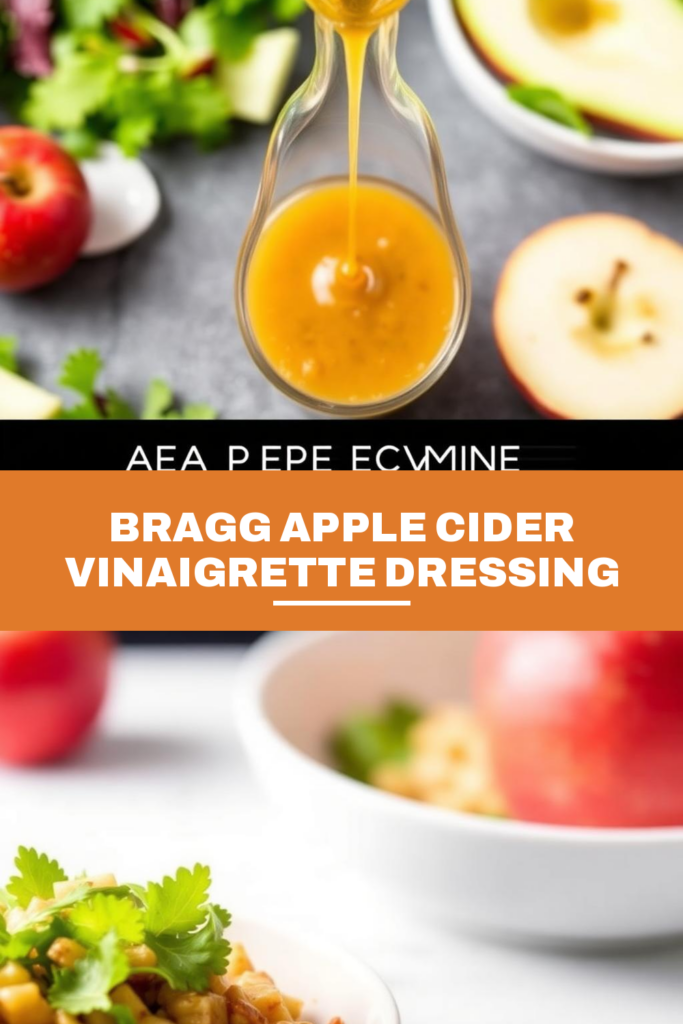
This homemade vinaigrette mimics the tangy-sweet flavor of bottled Bragg apple cider vinaigrette, but with fresher ingredients and no added preservatives. It’s a 5-minute shake-and-pour dressing that works for green salads, grain bowls, and roasted vegetables. The key is balancing the sharp apple cider vinegar with a touch of sweetener and a smooth emulsifier.
Ingredients
- 1/2 cup (120 ml) apple cider vinegar (Bragg or any raw, unfiltered kind)
- 1/4 cup (60 ml) water
- 1/4 cup (60 ml) olive oil (or avocado oil)
- 2 tablespoons (30 ml) maple syrup or honey (see note)
- 1 teaspoon (5 g) Dijon mustard
- 1/2 teaspoon (3 g) fine sea salt
- 1/4 teaspoon (1 g) black pepper
- 1 small garlic clove, minced (about 1/2 teaspoon)
Instructions
- Place all ingredients in a jar with a tight-fitting lid or a small blender.
- Shake vigorously for 30 seconds, or blend until smooth and creamy.
- Taste and adjust salt or sweetener. The dressing should be tangy but not harsh.
- Use immediately, or refrigerate in a sealed container for up to 1 week. Shake well before each use.
What Makes This Version Different From Bottled Bragg
Bottled Bragg vinaigrette is sweet and slightly thick, with a mild vinegar bite. This homemade version uses raw apple cider vinegar, which has a more pronounced tang, and olive oil instead of soybean oil. The Dijon mustard acts as an emulsifier, so the dressing stays blended longer than a simple oil-and-vinegar mix. If you prefer a sweeter dressing, add another tablespoon of maple syrup; for a sharper one, reduce the water to 2 tablespoons (30 ml).
Substitutions That Change the Result
- Sweetener: Maple syrup gives a mild, caramel-like sweetness; honey is thicker and slightly floral. For a sugar-free version, use 1 tablespoon (15 ml) of a monk fruit–erythritol blend, but note the dressing will be less syrupy.
- Oil: Olive oil is fruity; avocado oil is neutral and lighter. Do not use extra-virgin olive oil if you want a milder flavor.
- Mustard: Dijon is classic; whole-grain mustard adds texture. If you omit mustard, the dressing will separate faster—shake before each use.
- Garlic: Use 1/4 teaspoon garlic powder instead of fresh if you plan to store longer than 4 days (see storage note).
How to Use This Dressing
This vinaigrette pairs well with bitter greens like arugula or radicchio, and with grain salads made from quinoa, farro, or brown rice. It also works as a marinade for chicken or tofu—use 1/2 cup (120 ml) per pound of protein and marinate for 30 minutes to 2 hours. For a warm salad, toss roasted vegetables (like Brussels sprouts or sweet potatoes) with the dressing while they’re still warm; the oil helps the flavors coat evenly.
Make-Ahead and Storage Safety
This dressing keeps in the refrigerator for up to 1 week in a sealed jar. Because it contains fresh garlic, it must stay refrigerated and should be used within 4 days if you want to minimize any risk—garlic in oil can support botulism if left at room temperature. If you plan to keep it longer, omit the fresh garlic or use garlic powder. The olive oil will solidify when cold; let the jar sit at room temperature for 10 minutes, then shake well. Do not leave the dressing out for more than 2 hours (1 hour if the room is above 90°F/32°C).
Why It Separates and How to Fix It
Oil and vinegar naturally separate because oil is less dense. The mustard and vigorous shaking temporarily form an emulsion, but it will break over time. To re-emulsify, shake the jar for 20–30 seconds. If you want a longer-lasting emulsion, blend in 1 teaspoon of honey or maple syrup and 1 teaspoon of Dijon mustard—these act as stabilizers. For a creamier texture, add 1 tablespoon (15 g) of plain Greek yogurt or mayonnaise, but then refrigerate and use within 4 days.
Adjusting the Tang to Your Taste
The vinegar-to-oil ratio here is 2:1, which is more vinegar-forward than a classic 3:1 oil-to-vinegar ratio. If you find it too sharp, increase the olive oil to 1/3 cup (80 ml) and reduce the water to 2 tablespoons (30 ml). If you like it more acidic, add an extra tablespoon of vinegar and reduce the water by the same amount. Always taste after shaking—the sweetness of the syrup balances the vinegar, so adjust both together.
How to Scale This Recipe
This recipe makes about 1 cup (240 ml), enough for 8–10 salads (about 2 tablespoons per serving). To double it, simply double all ingredients and shake in a larger jar. For a single serving, use 1 tablespoon vinegar, 1 teaspoon oil, 1 teaspoon water, 1/2 teaspoon syrup, and a pinch of salt and pepper—shake in a small bowl with a fork.
What to Serve With It
Use this dressing on a classic garden salad with tomatoes, cucumbers, and red onion. It also complements a chopped kale salad with apples, walnuts, and dried cranberries—the tartness cuts through the hearty kale. For a main-dish salad, toss with grilled chicken or chickpeas and quinoa. The dressing is also good drizzled over roasted carrots or as a dip for raw vegetables.
Common Mistake: Overpowering the Salad
Because this dressing is vinegar-heavy, a little goes a long way. Start with 1–2 tablespoons per serving and toss well. If you add too much, the salad will be soggy and sour. To rescue an overdressed salad, add more greens or a sprinkle of crumbled cheese (feta or goat cheese) to balance the acidity.
Safe Handling of Garlic and Oil
Fresh garlic in oil can support the growth of Clostridium botulinum if left at room temperature. Always refrigerate this dressing, and if you use fresh garlic, consume within 4 days. For longer storage, use garlic powder instead—it does not carry the same risk. Never leave the dressing out for more than 2 hours.
Frequently Asked Questions
Can I use regular vinegar instead of apple cider vinegar?
Yes, but the flavor changes significantly. White wine vinegar is milder and less fruity; red wine vinegar is sharper and darker. Bragg-style vinaigrette specifically relies on apple cider vinegar’s tangy, slightly sweet profile, so substituting will alter the taste.
Is this dressing gluten-free?
Yes, all ingredients are naturally gluten-free. Check the mustard label to ensure it’s certified gluten-free if you have celiac disease.
Can I freeze this dressing?
Freezing is not recommended because the emulsion will break completely and the texture will become watery. Refrigerate instead and use within the recommended time.
Safe minimum internal temperatures follow USDA FSIS; raw-fish guidance follows the U.S. FDA. See our food safety notes.
Spotted an error? Tell us and we will correct it (corrections policy).





