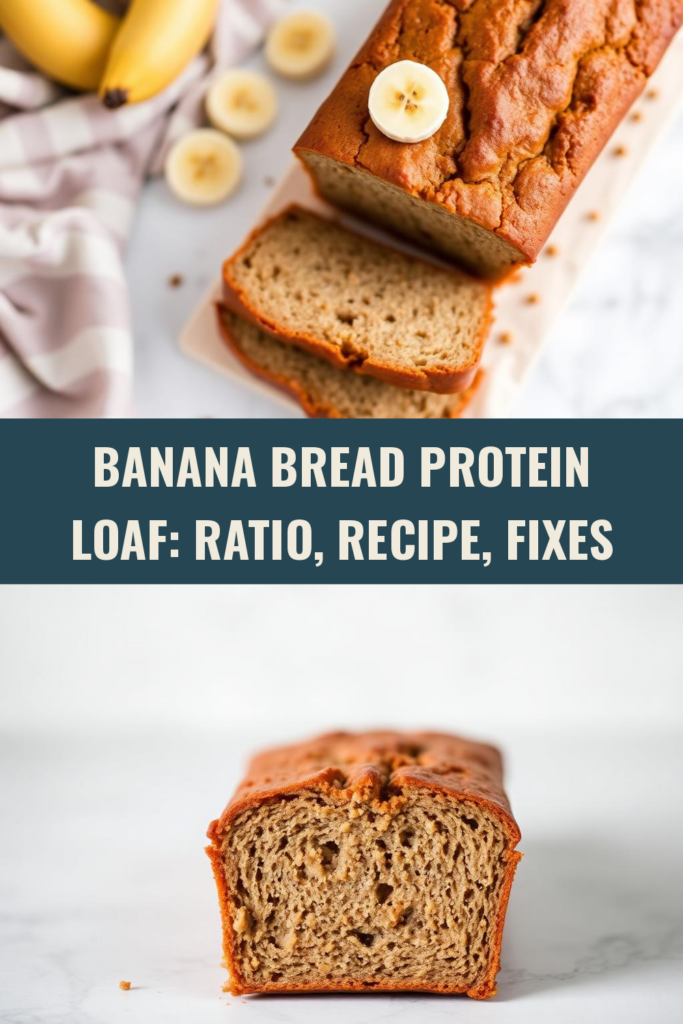
Banana bread protein loaf swaps a portion of the flour for protein powder, which changes the crumb: protein powder absorbs more liquid and less gluten structure forms, so the loaf is denser and more tender than classic banana bread. The ratio that works is 1 cup (120 g) all-purpose flour plus 1/2 cup (60 g) protein powder for every 2 large ripe bananas (about 1 cup mashed). This loaf tastes like banana bread with a slightly drier, more cake-like texture and a mild protein-powder flavor; serve it for breakfast, a post-workout snack, or in lunchboxes.
Ingredients
- 2 large ripe bananas, mashed (about 1 cup / 240 g)
- 2 large eggs, room temperature
- 1/3 cup (80 ml) neutral oil (canola or avocado) or melted butter
- 1/2 cup (120 ml) plain Greek yogurt or milk (any kind)
- 1/2 cup (100 g) granulated sugar or 1/3 cup (80 ml) honey
- 1 teaspoon vanilla extract
- 1 cup (120 g) all-purpose flour
- 1/2 cup (60 g) unflavored or vanilla protein powder (whey, casein, or plant-based)
- 1 teaspoon baking soda
- 1/2 teaspoon baking powder
- 1/2 teaspoon salt
- 1 teaspoon ground cinnamon (optional)
- 1/2 cup (60 g) chopped walnuts or chocolate chips (optional)
Instructions
- Preheat the oven to 350°F (175°C). Grease a 9×5-inch (23×13 cm) loaf pan and line with parchment paper.
- In a large bowl, mash the bananas until mostly smooth. Whisk in the eggs, oil, yogurt, sugar, and vanilla until well combined.
- In a separate bowl, whisk together the flour, protein powder, baking soda, baking powder, salt, and cinnamon. If using nuts or chocolate chips, toss them in the dry mixture.
- Add the dry ingredients to the wet ingredients and stir with a spatula just until no streaks of flour remain. Do not overmix; the batter will be thick and slightly lumpy.
- Pour the batter into the prepared pan and smooth the top. Bake for 50–60 minutes, until a toothpick inserted in the center comes out with only a few moist crumbs (not wet batter). If the top browns too quickly, tent loosely with foil after 30 minutes.
- Cool in the pan on a wire rack for 15 minutes, then lift out and cool completely before slicing. The loaf is fully cooked when the internal temperature reaches 200°F (93°C) (optional check).
Why Is My Protein Banana Bread Too Dry?
Protein powder, especially whey or casein, absorbs more liquid than flour. If the loaf turns out dry and crumbly, the next time add 2–3 tablespoons (30–45 ml) extra yogurt or milk, or reduce the protein powder to 1/3 cup (40 g). Also check that you measured the protein powder by spooning it into the cup and leveling—scooping can pack it. If the loaf is already baked, serve slices toasted and spread with butter or peanut butter; the moisture from the spread compensates.
Why Is My Protein Banana Bread Too Dense or Gummy?
Dense, gummy loaves usually come from overmixing the batter, which develops gluten and makes the crumb tough, or from using a protein powder that doesn’t bake well (some plant-based blends are gritty). Mix just until the flour disappears. If the center sinks, the loaf was underbaked—always test with a toothpick at the center. For a lighter crumb, separate the eggs and fold in the whipped whites at the end, or add 1/2 teaspoon cream of tartar to the dry mix.
How Long Does Banana Bread Protein Loaf Keep?
Store the loaf tightly wrapped in plastic wrap or in an airtight container at room temperature for up to 3 days. For longer storage, refrigerate for up to 5 days—cold makes it firmer, so toast slices before serving. To freeze, wrap the whole loaf or individual slices in plastic wrap and then foil; freeze for up to 3 months. Thaw overnight in the refrigerator or toast directly from frozen. Always check for mold or off smells before eating; discard if any appear.
What Can I Substitute for Protein Powder?
If you don’t have protein powder, replace it with an equal amount of all-purpose flour (1/2 cup / 60 g) and reduce the yogurt to 1/4 cup (60 ml) to keep the same consistency—this gives classic banana bread. For a gluten-free version, use a 1:1 gluten-free flour blend instead of the all-purpose flour; the loaf will be more crumbly. For a dairy-free version, use plant-based yogurt and oil instead of butter; the texture will be slightly more tender. If you use a flavored protein powder (e.g., chocolate or peanut butter), reduce the sugar by 2 tablespoons (25 g) to balance sweetness.
How Should I Serve and Pair This Loaf?
Slice the loaf and serve warm with butter, almond butter, or a drizzle of honey. It pairs well with coffee or tea for breakfast, or as a snack with a glass of milk. For a dessert, top slices with vanilla ice cream or a spoonful of Greek yogurt. The loaf is sturdy enough to toast—spread with cream cheese for a richer bite. If you added chocolate chips, serve with a glass of cold milk.
Can I Make This Loaf Ahead or as Muffins?
Yes, the batter keeps in the refrigerator for up to 24 hours before baking; cover the bowl and bake straight from the fridge, adding 5–10 minutes to the bake time. To make muffins, divide the batter among 12 muffin cups and bake at 350°F (175°C) for 20–25 minutes, until a toothpick comes out clean. Muffins freeze well for up to 3 months. For a no-sugar version, use 1/3 cup (80 ml) maple syrup instead of granulated sugar and reduce the yogurt to 1/4 cup (60 ml); the loaf will be more moist and slightly darker.
Note: Raw flour and raw eggs are not safe to eat. This recipe bakes fully, so no special treatment is needed. If you choose to taste the batter, heat-treat the flour to 160°F (71°C) and use pasteurized eggs; pregnant people, young children, older adults, and those with weakened immune systems should avoid raw batter.
Safe minimum internal temperatures follow USDA FSIS; raw-fish guidance follows the U.S. FDA. See our food safety notes.
Spotted an error? Tell us and we will correct it (corrections policy).





