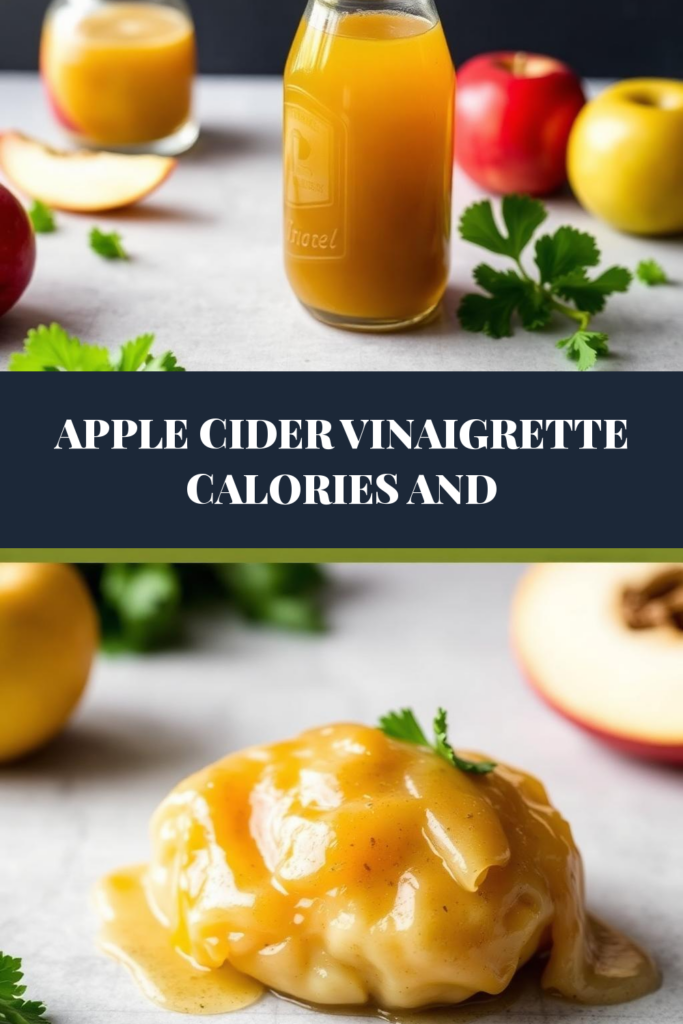
Apple cider vinaigrette is a tangy, slightly sweet salad dressing made with apple cider vinegar, oil, and a sweetener. The calorie count depends almost entirely on the oil and sweetener amounts; a standard 2-tablespoon serving of a homemade version with 1/2 cup oil and 1 tablespoon honey runs about 120–140 calories. This recipe makes a balanced vinaigrette that clings to greens without being heavy, and it comes together in under 5 minutes.
Ingredients
- 1/2 cup (120 ml) olive oil (or neutral oil like canola or grapeseed)
- 1/4 cup (60 ml) apple cider vinegar
- 1 tablespoon (15 ml) honey or maple syrup
- 1 teaspoon (5 g) Dijon mustard
- 1 small shallot, minced (about 2 tablespoons / 20 g)
- 1/4 teaspoon salt
- 1/8 teaspoon black pepper
How to Make Apple Cider Vinaigrette
- In a small bowl or a jar with a tight-fitting lid, combine the vinegar, honey, Dijon mustard, shallot, salt, and pepper. Whisk or shake until the salt dissolves and the mustard is evenly mixed.
- Slowly drizzle in the olive oil while whisking constantly, or add it to the jar, seal, and shake vigorously for 20–30 seconds until the dressing is emulsified and looks slightly thickened.
- Taste and adjust: add a pinch more salt if it tastes flat, or a few drops more vinegar if you want more tang. Use immediately or refrigerate.
Calorie Math: What Changes the Count
The calories in apple cider vinaigrette come almost entirely from the oil. One tablespoon of olive oil has about 120 calories, so the 1/2 cup (8 tablespoons) in this recipe totals about 960 calories for the whole batch. Divided by 8 servings (2 tablespoons each), that’s about 120 calories per serving, plus about 15 calories from the honey and negligible from the vinegar and mustard—roughly 130–140 calories total per serving.
If you want a lighter version, reduce the oil to 1/3 cup (80 ml) and increase the vinegar to 1/3 cup (80 ml). That cuts the per-serving calories to about 90–100. Or use a spray bottle to mist the dressing over greens—you’ll use far less than 2 tablespoons.
Substitutions That Change Flavor and Calories
- Oil: Use avocado oil or light olive oil for a milder taste; walnut or hazelnut oil adds a nutty note. All have the same calorie count per tablespoon.
- Sweetener: Honey and maple syrup are equal by volume. Use 1 tablespoon of either; for a sugar-free version, use 1 tablespoon of a granulated sweetener like erythritol or allulose, but dissolve it in the vinegar first.
- Mustard: Yellow mustard works, but Dijon gives a smoother emulsion. Omit it and the dressing will separate faster—shake before each use.
- Shallot: Swap for 1/2 teaspoon garlic powder or 1 small garlic clove, minced. Garlic is stronger, so use less.
- Vinegar: White wine vinegar or champagne vinegar are milder; cider vinegar is the most assertive. Keep the same amount.
Make-Ahead and Storage
This vinaigrette keeps in a sealed jar in the refrigerator for up to 1 week. The oil will solidify when cold—that’s normal. Take it out 15–20 minutes before using, or run the jar under warm water for a few seconds, then shake well to re-emulsify. If you added fresh herbs or minced garlic, use it within 4 days and keep it refrigerated at all times.
Do not leave the dressing at room temperature for more than 2 hours. If you’re taking it to a picnic or potluck, pack it in a small insulated bag with an ice pack.
How to Use Apple Cider Vinaigrette
This dressing suits sturdy greens like kale, romaine, or a mixed spring salad. It also works as a marinade for chicken or pork—use 1/4 cup vinaigrette per pound of meat, marinate in the refrigerator for 30 minutes to 2 hours, then cook to the safe minimum internal temperature: 165°F (74°C) for poultry, 145°F (63°C) for whole cuts of pork with a 3-minute rest.
For a quick side, toss it with sliced cucumbers, cherry tomatoes, and red onion. It also brightens grain bowls with quinoa or farro. If you’re serving it over a salad with fruit like apples or pears, the cider vinegar echoes the fruit’s tartness.
Why Does My Vinaigrette Separate?
Separation happens when the oil and vinegar don’t stay emulsified. The Dijon mustard and honey act as emulsifiers, but they’re not permanent. If the dressing separates, shake it vigorously for 15–20 seconds before each use. To make it hold longer, blend the dressing in a blender or food processor for 30 seconds—this creates a finer emulsion that stays mixed for a few days in the fridge.
If you prefer a thicker dressing, add 1 teaspoon of mayonnaise or Greek yogurt—it will also add about 10–15 calories per serving.
Is Store-Bought Apple Cider Vinaigrette Higher in Calories?
Store-bought versions vary widely. A typical 2-tablespoon serving of commercial apple cider vinaigrette ranges from 60 to 150 calories, depending on the oil content and whether it contains added sugar or thickeners. Check the nutrition label for the serving size—some bottles list 2 tablespoons, others list 1.5 tablespoons. If you’re watching calories, compare the oil content: the first ingredient is often soybean or canola oil, which is calorie-dense.
Making your own lets you control the oil and sweetener, but the calorie difference is modest unless you cut the oil significantly. For a very light option, use a vinaigrette with 1/4 cup oil and 1/2 cup vinegar, which yields about 60 calories per 2-tablespoon serving.
How to Adjust Sweetness and Tang
Start with the amounts in the recipe, then taste. For a sweeter dressing, add 1 teaspoon more honey or maple syrup (about 20 calories per batch). For more tang, add 1 tablespoon more vinegar (about 5 calories). If it tastes too sharp, add a pinch of salt—salt rounds out acidity without adding calories.
If you’re using a very tart apple cider vinegar, you might need the full tablespoon of sweetener. Conversely, a milder vinegar may need only 1–2 teaspoons. Always taste before serving.
Safe minimum internal temperatures follow USDA FSIS; raw-fish guidance follows the U.S. FDA. See our food safety notes.
Spotted an error? Tell us and we will correct it (corrections policy).





