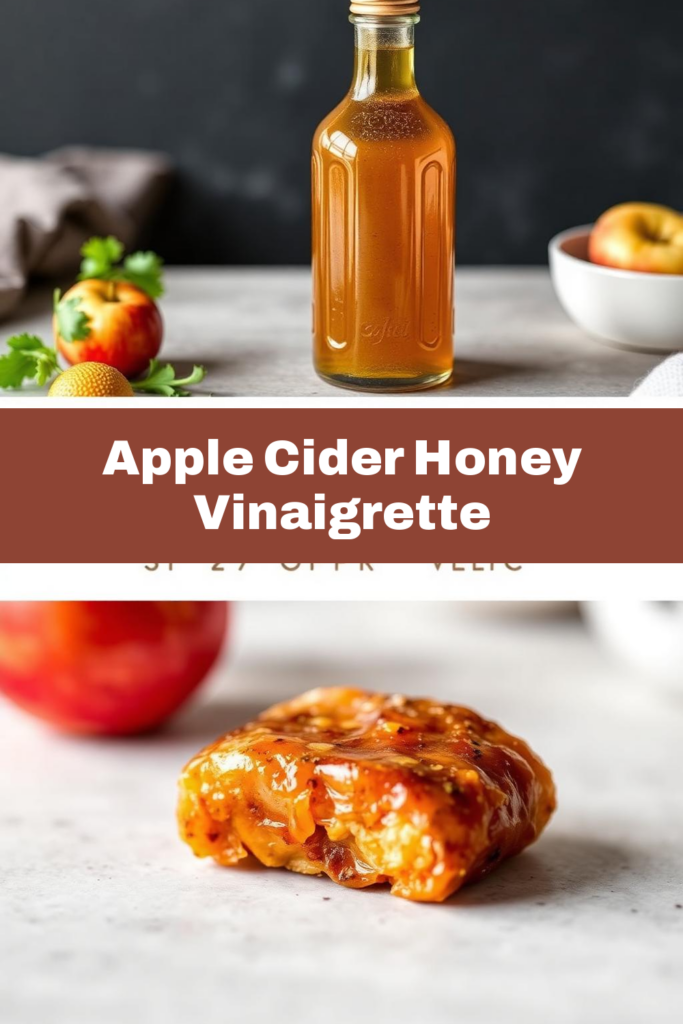
Time: 10 minutes · Serves: 4 (about 1/2 cup) · The key step: Whisk the honey into the vinegar first so it dissolves before adding oil. This is a tangy-sweet salad dressing with apple cider vinegar, honey, and a touch of Dijon mustard for emulsion. It suits green salads, grain bowls, and roasted vegetable slaws.
Ingredients
- 1/4 cup (60 ml) apple cider vinegar
- 2 tablespoons (30 ml) honey
- 1 teaspoon Dijon mustard
- 1/2 teaspoon fine sea salt
- 1/4 teaspoon black pepper
- 1/2 cup (120 ml) neutral oil (such as canola or grapeseed) or extra-virgin olive oil
- Optional: 1 small shallot, finely minced (about 1 tablespoon)
Instructions
- In a medium bowl, combine the apple cider vinegar, honey, Dijon mustard, salt, pepper, and shallot if using. Whisk until the honey is fully dissolved and the mixture is smooth, about 30 seconds.
- While whisking constantly, add the oil in a slow, steady stream. Continue whisking until the dressing is emulsified and slightly thickened, about 1 minute.
- Taste and adjust salt or pepper. Use immediately, or refrigerate in a sealed jar for up to 5 days. Shake or whisk before each use.
Why It Can Come Out Too Runny or Too Sharp
The two most common problems are separation and an overly acidic bite. Separation happens when the oil is added too quickly and the dressing does not emulsify; it will still taste fine but needs vigorous shaking before use. To fix, whisk the vinegar, honey, and mustard together first—the mustard acts as a stabilizer. If the dressing tastes too sharp, the honey has not fully dissolved; make sure you whisk until no graininess remains. If it still tastes too acidic, add an extra teaspoon of honey or a pinch of salt to balance.
Too Dry or Too Thick
This dressing is naturally thin. If it becomes too thick after refrigeration (honey can thicken when cold), let it sit at room temperature for 10 minutes, then shake. If it is too thick right after mixing, whisk in 1–2 teaspoons of water or extra vinegar.
Scaling for Half and Double Batches
| Batch | Apple cider vinegar | Honey | Dijon | Oil | Yield |
|---|---|---|---|---|---|
| Half | 2 tbsp (30 ml) | 1 tbsp (15 ml) | 1/2 tsp | 1/4 cup (60 ml) | 1/4 cup |
| Single | 1/4 cup (60 ml) | 2 tbsp (30 ml) | 1 tsp | 1/2 cup (120 ml) | 1/2 cup |
| Double | 1/2 cup (120 ml) | 1/4 cup (60 ml) | 2 tsp | 1 cup (240 ml) | 1 cup |
Keep the same ratio for any batch. For a half batch, use a small bowl and whisk; for a double batch, a quart jar with a tight lid works well—add all ingredients except oil, shake, then add oil and shake again.
Swaps That Change the Flavor
- Honey: Use maple syrup for a deeper, less floral sweetness. The dressing will be slightly thinner.
- Apple cider vinegar: Substitute white wine vinegar or champagne vinegar for a milder tang. Do not use balsamic—it will overpower the honey.
- Dijon mustard: Yellow mustard works but adds a sharper bite. Omit it entirely for a thinner dressing that separates more quickly.
- Oil: Extra-virgin olive oil gives a peppery finish; a neutral oil keeps the apple flavor forward.
Storage and Make-Ahead
Store the dressing in a sealed glass jar or container in the refrigerator for up to 5 days. The oil will solidify when cold; let it sit at room temperature for 10–15 minutes, then shake vigorously. Do not leave it out at room temperature for more than 2 hours. If you added shallot, the dressing keeps for 4 days—after that, the shallot can become mushy and develop an off flavor. Freezing is not recommended because the emulsion breaks and the texture becomes grainy.
How to Use It and What It Pairs With
This vinaigrette suits salads with bitter greens like arugula or radicchio, as the sweetness balances their bite. It also works as a marinade for chicken (use within 2 hours, then discard any leftover marinade that touched raw poultry) or as a drizzle over roasted carrots, Brussels sprouts, or butternut squash. For a grain bowl, toss cooked farro or quinoa with the dressing while still warm so it absorbs. If you are serving it with a salad that includes fruit, like apples or pears, the dressing reinforces that flavor.
How to Fix a Broken Emulsion
If the dressing separates after sitting, that is normal—just shake it. If it separates during mixing (oil pooling on top), pour the mixture into a blender or use an immersion blender and blend for 10 seconds. Alternatively, start over with a clean bowl: whisk 1 teaspoon of Dijon with 1 tablespoon of the broken mixture, then slowly whisk in the rest. The mustard provides a fresh base for the emulsion.
Why Honey and Vinegar Need to Be Whisked First
Honey is denser than oil and does not dissolve in oil. If you add honey after the oil, it sinks to the bottom and the dressing tastes unevenly sweet. Whisking honey with vinegar first creates a uniform syrup that the oil can emulsify into. The same applies to salt—dissolve it in the vinegar before adding oil, otherwise it stays gritty.
Safe minimum internal temperatures follow USDA FSIS; raw-fish guidance follows the U.S. FDA. See our food safety notes.
Spotted an error? Tell us and we will correct it (corrections policy).





