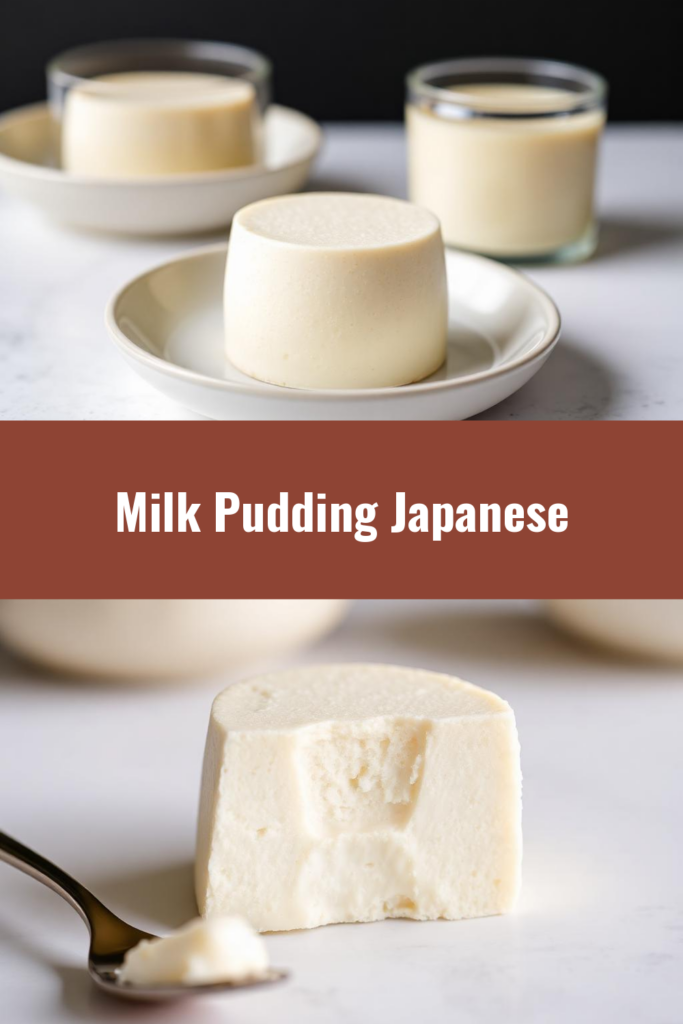
Japanese milk pudding, or milk purin, is a silky, custard-like dessert made from milk, sugar, and gelatin, set into a wobbly, creamy pudding that is less rich than flan but more delicate than American-style pudding. It has a light vanilla flavor and a smooth, melt-in-your-mouth texture, perfect for a simple dessert after dinner or a sweet treat for a tea party. This recipe uses a gelatin set, so it is easy to make ahead and chill until firm.
Ingredients
- 2 cups (480 ml) whole milk
- 1/4 cup (50 g) granulated sugar
- 1 teaspoon vanilla extract
- 2 1/4 teaspoons (7 g) powdered gelatin (about one 0.25-oz packet)
- 3 tablespoons (45 ml) water
- Optional: caramel sauce for serving (store-bought or homemade, see note)
Instructions
- In a small bowl, sprinkle the gelatin over the water. Let it sit for 5 minutes to bloom (soften).
- In a medium saucepan, combine the milk and sugar. Heat over medium heat, stirring occasionally, until the sugar dissolves and the milk is steaming but not boiling (about 3–4 minutes). Do not let it boil.
- Remove the saucepan from the heat. Add the bloomed gelatin and stir until completely dissolved, about 1 minute.
- Stir in the vanilla extract.
- Pour the mixture through a fine-mesh strainer into a large measuring cup or bowl to remove any undissolved gelatin.
- Divide the mixture evenly among 4 small ramekins or glasses (about 1/2 cup / 120 ml each).
- Refrigerate uncovered for at least 3 hours, until set and firm to the touch. Cover after 1 hour to prevent a skin from forming.
- To serve, either eat directly from the ramekin or invert onto a plate: run a thin knife around the edge, place a plate over the ramekin, and flip. If using caramel sauce, drizzle over the top before serving.
What to Serve With Milk Pudding
Japanese milk pudding is often served with a drizzle of caramel sauce, similar to flan, or with a spoonful of sweet red bean paste (anko) for a more traditional Japanese touch. You can also top it with fresh fruit like strawberries or mango, or a sprinkle of matcha powder for a green-tea flavor. The pudding is light enough to follow a rich meal like teriyaki chicken or sushi, and it pairs well with green tea or coffee.
Make-Ahead Timeline
This pudding is ideal for making ahead. The mixture takes about 15 minutes to prepare, then needs at least 3 hours to chill and set. You can make it the day before serving; it will keep in the refrigerator for up to 3 days. If you plan to serve it inverted, do so just before serving, as the caramel may soak into the pudding if left too long.
Variations and Swaps
Dairy-Free Version
Substitute the whole milk with an equal amount of oat milk, almond milk, or coconut milk. Oat milk gives a creamier texture; almond milk is thinner and may result in a slightly softer set. Use the same amount of gelatin, but note that some non-dairy milks may require slightly more gelatin (add 1/4 teaspoon if the pudding seems too soft after chilling).
Less Sweet
Reduce the sugar to 3 tablespoons (38 g) for a less sweet pudding. The texture will not change.
Caramel Sauce
Instead of store-bought caramel, you can make a simple caramel by heating 1/2 cup (100 g) sugar and 2 tablespoons (30 ml) water in a saucepan over medium heat until amber, then carefully whisk in 1/4 cup (60 ml) heavy cream and a pinch of salt. Let it cool before drizzling. This is optional and not required for the pudding itself.
Storage and Shelf Life
Store leftover milk pudding in the refrigerator, covered, for up to 3 days. Do not freeze, as the gelatin will break down and the texture will become watery. If you have added a caramel sauce, the pudding may soften slightly, but it is still safe to eat within the same timeframe. Always refrigerate within 2 hours of making or serving.
Why Gelatin Sets Differently
Powdered gelatin needs to be bloomed in cold water before dissolving in hot liquid, as this ensures even setting. If you use agar agar (a plant-based setting agent), the ratio is different: use 1 teaspoon (3 g) agar powder per 2 cups (480 ml) milk, and boil the mixture for 2 minutes to activate the agar. The texture will be firmer and less creamy than gelatin-set pudding.
Common Troubleshooting
Pudding Too Soft
If the pudding does not set after 3 hours, it may be because the gelatin was not fully dissolved, or the milk was too hot and broke down the gelatin. To fix, dissolve 1/2 teaspoon (2 g) more gelatin in 1 tablespoon (15 ml) water, heat it gently, and stir into the pudding mixture, then re-chill.
Skin on Top
A skin forms when the pudding is exposed to air during chilling. Cover the ramekins with plastic wrap or a lid after the first hour to prevent this.
Gelatin Lumps
If you see lumps, the gelatin was not fully dissolved. Always stir until completely clear, and strain the mixture before pouring.
Safety Note on Raw Eggs
This recipe uses no eggs, so there is no risk of raw egg consumption. However, if you add a caramel sauce that contains eggs (some recipes do), use pasteurized eggs and refrigerate promptly. Pregnant people, young children, older adults, and anyone with a weakened immune system should avoid raw eggs.
Safe minimum internal temperatures follow USDA FSIS; raw-fish guidance follows the U.S. FDA. See our food safety notes.
Spotted an error? Tell us and we will correct it (corrections policy).





