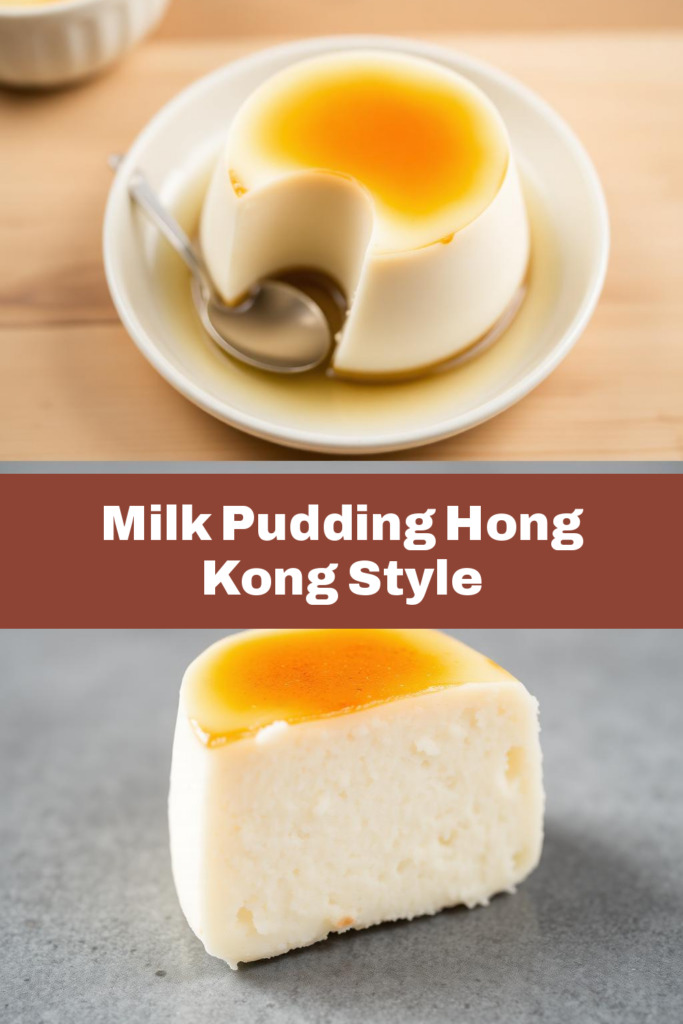
Hong Kong milk pudding is a soft, wobbly custard made with milk, egg whites, and sugar, steamed until just set. It has a delicate, lightly sweet flavor and a silky texture that melts on the tongue. This dessert suits a weeknight treat or a simple dinner party ending, and it is best served chilled.
Ingredients
- 2 cups (480 ml) whole milk
- 3 large egg whites (about 90 g)
- 3 tbsp (40 g) granulated sugar
- 1/2 tsp vanilla extract (optional)
Instructions
- In a small saucepan, warm the milk over medium heat until it is steaming but not boiling, about 160°F (71°C). Remove from heat and let cool for 5 minutes.
- In a mixing bowl, whisk the egg whites and sugar together until the sugar dissolves and the mixture is frothy, about 1 minute. Do not whip to stiff peaks.
- Slowly pour the warm milk into the egg mixture, whisking constantly. Add vanilla if using. Strain the mixture through a fine-mesh sieve into a large measuring cup or bowl.
- Divide the mixture among 4 small ramekins or heatproof cups (about 1/2 cup / 120 ml each). Skim off any foam with a spoon.
- Place the ramekins in a steamer basket or on a rack in a deep pot with 1 inch (2.5 cm) of water. Bring the water to a gentle simmer over medium heat. Cover and steam for 12–15 minutes, until the custards are just set but still jiggle slightly in the center when shaken.
- Remove the ramekins from the steamer and let cool to room temperature, about 30 minutes. Then refrigerate for at least 2 hours, until fully chilled and firm.
Serving and Pairing
Serve the pudding cold, straight from the fridge. It is delicious on its own, or with a drizzle of honey and a few fresh berries. In Hong Kong, it is often enjoyed as a light dessert after a meal of wonton noodles or roast goose. It also pairs well with strong black tea or coffee.
Variations
Ginger Milk Pudding
Add 1 tbsp (15 ml) fresh ginger juice (grated ginger squeezed through a cloth) to the milk before warming. Omit the vanilla. The ginger adds a gentle heat and a floral aroma.
Mango Milk Pudding
Replace 1/2 cup (120 ml) of the milk with 1/2 cup (120 g) mango puree (from ripe mango). Reduce sugar to 2 tbsp (25 g). The pudding will be slightly softer and fruitier.
Storage and Make-Ahead
Refrigerate leftover puddings within 2 hours of cooking. They keep for up to 3 days in the fridge, covered with plastic wrap. Do not freeze; the texture becomes watery and grainy. The puddings can be made a day ahead, which makes them ideal for a dinner party.
Why the Pudding Weeps
If the pudding weeps (releases liquid), it was steamed too long or at too high a temperature. The egg whites overcook and squeeze out water. Steam gently at a simmer, not a rolling boil, and check at 12 minutes. The center should be slightly jiggly; it will finish setting as it cools.
Egg Safety Note
This recipe uses raw egg whites that are cooked by steaming. To minimize any risk, use fresh, properly refrigerated eggs. Pregnant people, young children, older adults, and anyone with a weakened immune system should avoid raw or undercooked eggs; cook the pudding until the center reaches 160°F (71°C) if serving to these guests.
Doubling the Recipe
To serve 8, double all ingredients and steam in two batches or use a larger steamer. Increase steaming time to 18–20 minutes, checking for the same jiggle. The total time will be about 3 hours including chilling.
Common Issues and Fixes
Pudding Too Firm
If the pudding is rubbery, it was overcooked. Next time, reduce steaming time by 2–3 minutes and use a lower heat.
Pudding Too Soft
If the pudding does not set, it was undercooked or the milk was too hot when added to the eggs, causing curdling. Steam for 3–4 more minutes, and ensure the milk is only warm, not hot.
Scrambled Eggs in the Pudding
If the mixture curdles, the milk was too hot. Always cool the milk to about 140°F (60°C) before adding to the eggs, and whisk constantly.
What to Serve With It
For a traditional Hong Kong-style dessert spread, serve the pudding alongside other chilled sweets like mango sago or red bean soup. It also works as a light finish after a rich meal, as its clean flavor cleanses the palate.
Safe minimum internal temperatures follow USDA FSIS; raw-fish guidance follows the U.S. FDA. See our food safety notes.
Spotted an error? Tell us and we will correct it (corrections policy).





