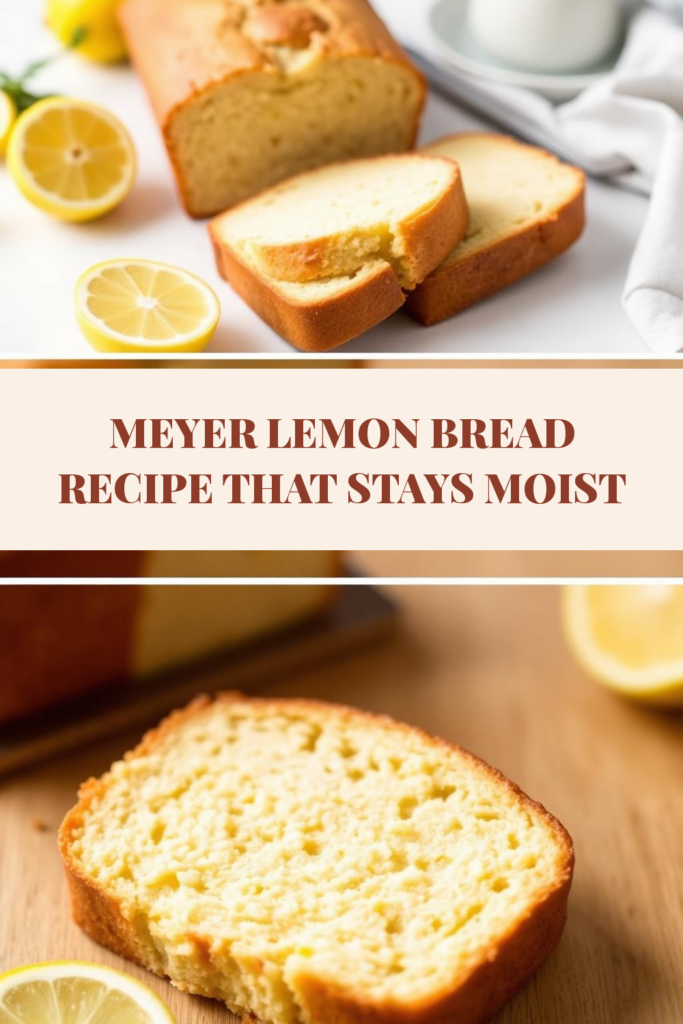
Meyer lemon bread is a quick bread that trades the sharp, acidic bite of regular lemons for a sweeter, floral flavor. This version uses the whole fruit—zest and juice—plus a simple syrup soak, which keeps the crumb tender and the top glossy for days. The key is treating the syrup as part of the bake, not an afterthought, so the loaf stays moist from the first slice to the last.
The One Technique That Makes It Work: Syrup While Warm
Meyer lemons are less acidic than regular lemons, so the bread needs a syrup to carry the flavor through the whole slice. Pour the syrup over the loaf while it is still warm, in the pan, right after it comes out of the oven. The warm crumb absorbs the syrup evenly, so you get the same lemon hit in the middle as you do on the crust. If you pour it on a cooled loaf, the syrup pools on top and soaks in unevenly, leaving dry patches inside. Use a skewer to poke holes about 1 inch (2.5 cm) apart across the top before pouring—this lets the syrup reach the center faster.
Ingredients for One 9×5-Inch Loaf
- 1 ½ cups (190 g) all-purpose flour
- 1 teaspoon baking powder
- ½ teaspoon baking soda
- ½ teaspoon salt
- ½ cup (115 g) unsalted butter, softened
- ¾ cup (150 g) granulated sugar
- 2 large eggs, room temperature
- ½ cup (120 ml) plain whole-milk yogurt or sour cream
- 2 tablespoons Meyer lemon zest (from about 3 medium Meyer lemons)
- ¼ cup (60 ml) fresh Meyer lemon juice (from about 2 more lemons)
- 1 teaspoon vanilla extract
For the syrup:
- ¼ cup (50 g) granulated sugar
- ¼ cup (60 ml) fresh Meyer lemon juice (about 1 ½ lemons)
For the glaze (optional but recommended):
- ¾ cup (90 g) powdered sugar
- 1 ½ tablespoons Meyer lemon juice
Instructions: Bake, Soak, Cool, Glaze
- Heat the oven to 350°F (175°C). Grease a 9×5-inch (23×13 cm) loaf pan and line the long sides with parchment paper, leaving an overhang.
- In a medium bowl, whisk the flour, baking powder, baking soda, and salt together.
- In a large bowl, beat the butter and sugar with an electric mixer on medium speed until light and fluffy, about 3 minutes. Scrape down the bowl.
- Add the eggs one at a time, beating well after each addition. Beat in the lemon zest, lemon juice, and vanilla.
- With the mixer on low, add half the flour mixture, then all the yogurt, then the remaining flour. Mix just until no streaks of flour remain—do not overmix.
- Pour the batter into the prepared pan and smooth the top. Bake for 50–60 minutes, until a toothpick inserted in the center comes out with a few moist crumbs, not wet batter. The top should be deep golden brown.
- While the loaf bakes, make the syrup: stir the sugar and lemon juice in a small saucepan over medium heat until the sugar dissolves, about 2 minutes. Do not boil. Set aside.
- When the loaf comes out of the oven, poke holes across the top with a skewer. Pour the warm syrup evenly over the hot loaf in the pan. Let it sit in the pan for 30 minutes.
- Lift the loaf out using the parchment and cool completely on a wire rack, about 1 hour.
- For the glaze, whisk the powdered sugar and lemon juice until smooth. Drizzle over the cooled loaf. Let the glaze set for 10 minutes before slicing.
What Ruins This Bread: Overmixing, Cold Ingredients, Skipping the Syrup
The three mistakes that make Meyer lemon bread dry or dense are easy to avoid. Overmixing the batter develops gluten, which turns the crumb tough and tunnels the texture—mix until the flour just disappears, then stop. Cold eggs or yogurt seize the butter into lumps, so the batter bakes unevenly; bring both to room temperature for 30 minutes before starting. Skipping the syrup is the biggest error, because Meyer lemons are less tart than regular lemons, and without the syrup the bread tastes flat and bakes drier. If you are in a hurry, at least brush the top with the syrup while warm—but the full soak is what keeps the interior moist.
Substitutions and Equipment That Matter
Regular lemons: Use the same amount of zest and juice, but reduce the sugar in the batter to ⅔ cup (135 g) and add 1 tablespoon more yogurt, because regular lemons are more acidic and will make the crumb slightly denser. No yogurt or sour cream: Use ½ cup (120 ml) buttermilk, but reduce the lemon juice in the batter to 3 tablespoons to keep the liquid ratio balanced. Gluten-free: Swap the all-purpose flour for a 1:1 gluten-free baking flour blend; the texture will be slightly more crumbly, and the bake time may drop by 5 minutes—check early. No Meyer lemons at all: You can use a mix of 2 parts regular lemon to 1 part orange juice for a similar sweetness, but the floral note will be missing.
Equipment: A metal loaf pan conducts heat better than glass, so the edges brown evenly and the center bakes through. If you use glass, lower the oven to 325°F (165°C) and add 5–10 minutes to the bake time. A digital kitchen scale gives the most consistent results for flour—spooning flour into a cup can add 20% more than the recipe intends. If you do not have a skewer, a thin knife or a chopstick works for poking the holes.
Storing and Freezing: Keeps 4 Days at Room Temperature
Wrap the cooled loaf tightly in plastic wrap or keep it in an airtight container at room temperature for up to 4 days. The syrup keeps it moist, but the glaze may soften slightly after day 2—that is fine. For longer storage, wrap the unglazed loaf in plastic wrap, then foil, and freeze for up to 3 months. Thaw overnight in the refrigerator, then bring to room temperature before glazing and serving. Do not refrigerate the loaf—it dries out faster in the fridge. If you slice it ahead, store the cut side face-down on a plate or press parchment against the exposed crumb to keep it from drying.
Making It Ahead and Doubling
This bread tastes best the day after baking, because the syrup has fully distributed through the crumb. You can bake it a day ahead and keep it wrapped at room temperature. To double the recipe, use two 9×5-inch pans and bake them side by side on the same rack—the bake time stays the same, but rotate the pans halfway through. Do not try to bake a double batch in one pan; the center will not cook through before the edges burn. If you want to skip the glaze, brush the top with a little extra syrup while warm and dust with powdered sugar just before serving.
Safe minimum internal temperatures follow USDA FSIS; raw-fish guidance follows the U.S. FDA. See our food safety notes.
Spotted an error? Tell us and we will correct it (corrections policy).





