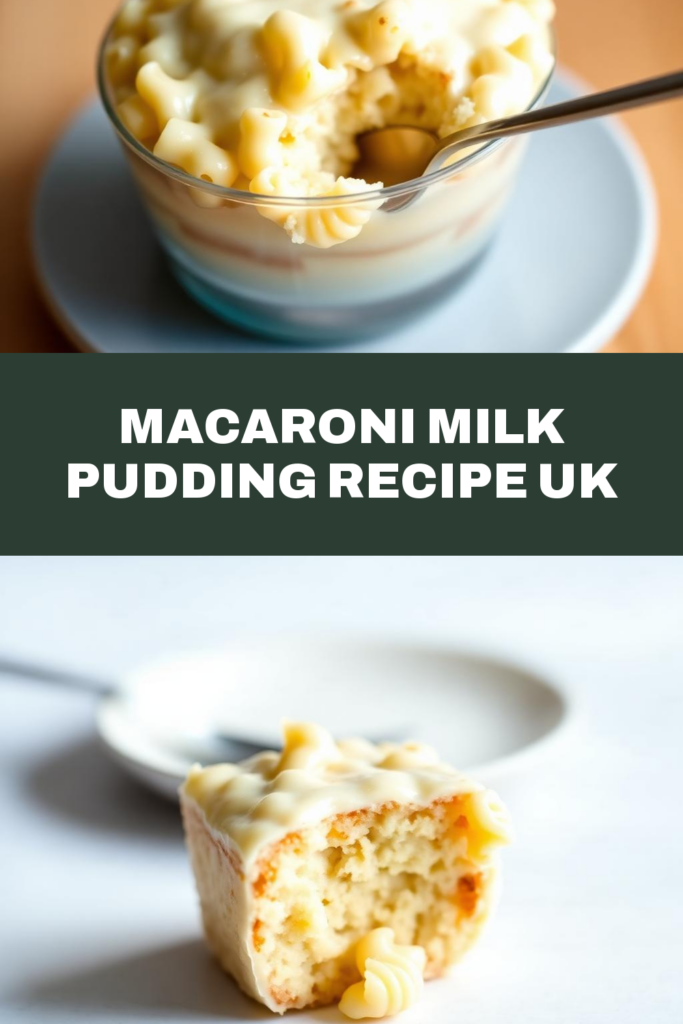
Macaroni milk pudding is a classic British comfort dessert: short macaroni simmered in sweetened milk until tender, then baked or served as a creamy, lightly spiced pudding. This version uses the traditional stovetop method with a short bake to set the custard, giving it a soft, spoonable texture with a golden top. It’s an easy, budget-friendly dessert for a family weeknight or a simple Sunday treat.
Ingredients
- 1 cup (200 g) macaroni (short, not elbow if possible; use gluten-free if needed)
- 4 cups (960 ml) whole milk (or 2% for a lighter pudding)
- 1/2 cup (100 g) granulated sugar (adjust to taste)
- 1/4 tsp salt
- 1 tsp vanilla extract
- 1/4 tsp ground nutmeg (plus extra for topping)
- 2 large eggs, lightly beaten
- 2 tbsp (30 g) butter, cut into small pieces
Instructions
- Preheat the oven to 350°F (175°C). Butter a 2-quart (2-liter) baking dish.
- In a large saucepan, combine the milk, sugar, salt, and nutmeg. Heat over medium heat, stirring occasionally, until the sugar dissolves and the milk is steaming but not boiling (about 5 minutes).
- Add the macaroni to the hot milk. Reduce heat to low and simmer gently, stirring frequently, for 15–20 minutes, until the macaroni is tender but still slightly firm (al dente). The mixture will look thin; that’s correct.
- Remove the pan from the heat. Gradually whisk about 1 cup of the hot milk mixture into the beaten eggs, then pour the egg mixture back into the pan, stirring constantly. This tempers the eggs so they don’t scramble.
- Stir in the vanilla and butter until the butter melts. Pour the mixture into the prepared baking dish.
- Sprinkle the top with a little extra nutmeg. Bake for 25–30 minutes, until the pudding is just set around the edges but still slightly wobbly in the center (internal temperature should reach 160°F / 71°C if you check with a thermometer).
- Let the pudding rest for 10 minutes before serving. It will thicken as it cools.
What to Do If the Pudding Curdles or Splits
Curdling happens when the eggs are added to milk that’s too hot or when the mixture is cooked too fast. If you see small curds, the pudding is still safe to eat, but the texture will be grainy. To avoid it, always temper the eggs as described and keep the heat low. If the mixture splits during the bake, remove it from the oven immediately and stir gently; it may smooth out. For a guaranteed smooth result, you can strain the custard before baking.
Swaps and Substitutions
- Macaroni: Use any short pasta—penne, fusilli, or ditalini work. Gluten-free pasta works, but check the cooking time; it often needs less time.
- Milk: Whole milk gives the creamiest result. For a dairy-free version, use oat milk or almond milk; the pudding will be thinner and less rich.
- Sugar: Reduce to 1/3 cup (65 g) for a less sweet pudding. Honey or maple syrup can replace sugar, but add them after the milk is off the heat to avoid bitterness.
- Eggs: For an egg-free version, omit the eggs and increase the cornstarch slurry (see below).
Making It Ahead: Timeline and Storage
You can make the pudding a day ahead. Prepare and bake as directed, then cool completely, cover, and refrigerate. The pudding will set further as it chills. To serve cold, scoop it straight from the dish. To serve warm, reheat individual portions in the microwave in 30-second bursts, or reheat the whole dish in a 300°F (150°C) oven for 15–20 minutes, until warmed through.
Store leftovers in the refrigerator within 2 hours of cooking. They will keep for up to 4 days. You can freeze the pudding for up to 2 months, but the texture may become slightly watery after thawing; stir well before reheating.
Serving and Pairing Ideas
Serve the pudding warm with a drizzle of honey or a spoonful of jam. It pairs well with stewed fruit—try rhubarb, plums, or berries—or a sprinkle of cinnamon. For a richer treat, add a dollop of clotted cream or a scoop of vanilla ice cream. In the UK, it’s often served with a grating of fresh nutmeg on top.
Why This Pudding Needs a Resting Time
The resting time after baking is not just for cooling. As the pudding sits, the starch from the macaroni continues to absorb liquid, and the custard sets further. If you serve it immediately, it will be runny. Letting it rest for at least 10 minutes gives you that spoonable, creamy consistency. If you prefer a firmer pudding, cool it completely and refrigerate—it will slice like a baked custard.
Common Problems and Fixes
- Too runny: The macaroni may have been undercooked before baking, or the pudding wasn’t baked long enough. Next time, cook the macaroni until just tender, and bake until the edges are set and the center is barely wobbly.
- Skin on top: That’s normal and many people love it. To avoid a skin, press a piece of buttered parchment paper directly onto the surface before baking.
- Too sweet: Reduce the sugar to 1/3 cup (65 g) or use a less sweet milk substitute.
Can You Make It Without Eggs?
Yes. Omit the eggs and instead mix 2 tablespoons (16 g) cornstarch with 1/4 cup (60 ml) cold milk to make a slurry. After the macaroni is tender, stir the slurry into the hot milk and cook for 2–3 minutes, until thickened. Then pour into the dish and bake as directed. The pudding will be slightly less rich but still creamy.
Safe minimum internal temperatures follow USDA FSIS; raw-fish guidance follows the U.S. FDA. See our food safety notes.
Spotted an error? Tell us and we will correct it (corrections policy).





