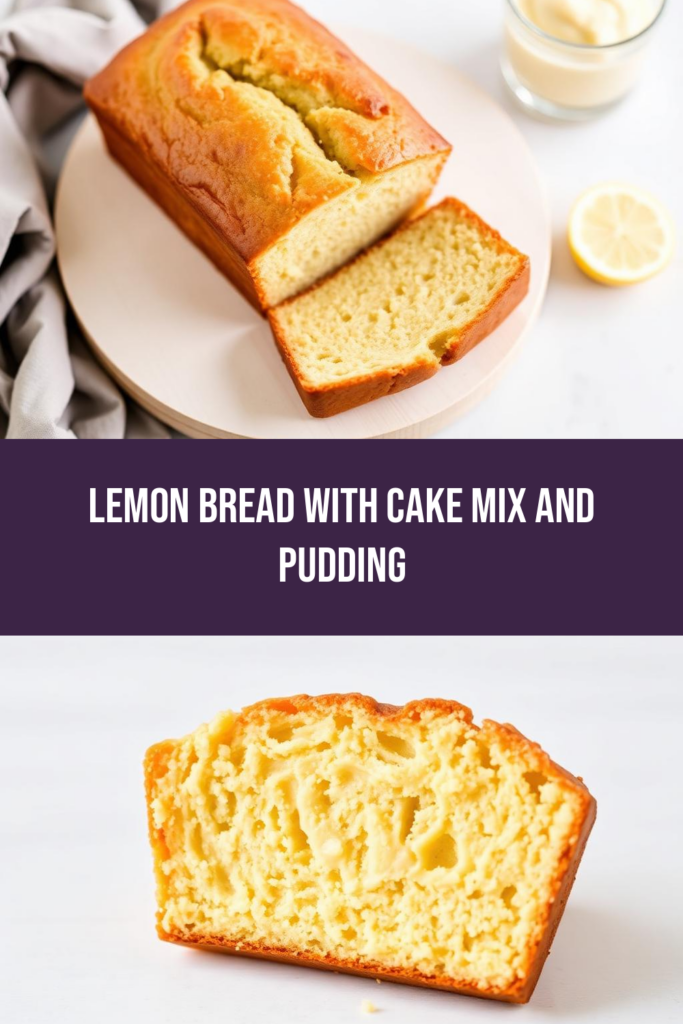
This lemon bread uses a boxed yellow cake mix and instant lemon pudding for a tender, moist loaf with a bright citrus flavor. It comes together in about 15 minutes of prep and is a good choice for a brunch table, a bake sale, or a simple afternoon snack.
Ingredients
- 1 box (15.25 oz / 432 g) yellow cake mix
- 1 box (3.4 oz / 96 g) instant lemon pudding mix (dry)
- 4 large eggs
- 1 cup (240 ml) water
- 1/3 cup (80 ml) vegetable oil
- 1 tablespoon (15 ml) lemon zest (from about 1 lemon)
- 1/4 cup (60 ml) lemon juice (from about 1 lemon)
- 1 cup (120 g) powdered sugar (for glaze)
- 2 tablespoons (30 ml) lemon juice (for glaze, from about 1/2 lemon)
Instructions
- Preheat the oven to 350°F (175°C). Grease a 9×5-inch (23×13 cm) loaf pan with butter or nonstick spray.
- In a large bowl, whisk together the cake mix and dry pudding mix. Add the eggs, water, oil, lemon zest, and 1/4 cup (60 ml) lemon juice. Beat with an electric mixer on medium speed for 2 minutes, until smooth and well combined. The batter will be slightly thin.
- Pour the batter into the prepared pan. Bake for 50–60 minutes, until a toothpick inserted in the center comes out clean or with only a few moist crumbs. The top should be golden brown and spring back lightly when touched.
- Let the bread cool in the pan on a wire rack for 10 minutes. Then turn it out onto the rack to cool completely, about 1 hour.
- For the glaze: in a small bowl, whisk together the powdered sugar and 2 tablespoons (30 ml) lemon juice until smooth. Drizzle over the cooled loaf. Let the glaze set for 10 minutes before slicing.
Substitutions and Changes
- Lemon cake mix: Use a lemon-flavored cake mix instead of yellow for a stronger lemon flavor. Omit the lemon zest and reduce the lemon juice in the batter to 2 tablespoons (30 ml) to keep the batter balanced.
- Pudding flavor: Substitute instant vanilla or cheesecake pudding for a milder lemon taste. The texture stays the same.
- Oil: Replace the vegetable oil with an equal amount of melted butter (1/3 cup / 75 g) for a richer flavor. The crumb will be slightly denser.
- Eggs: For a lower-egg version, use 3 large eggs plus 1/4 cup (60 ml) unsweetened applesauce. The loaf will be a bit more tender and may take 5 minutes longer to bake.
- Glaze: Skip the glaze and dust the cooled loaf with powdered sugar for a less sweet finish.
Doneness and Cooling
The bread is done when a toothpick inserted into the center comes out clean or with just a few moist crumbs. The internal temperature should read about 200°F (93°C) on an instant-read thermometer, though the toothpick test is the most reliable. Let the loaf cool completely before glazing; a warm loaf will absorb the glaze and become sticky.
Storing and Freezing
Store the glazed bread in an airtight container at room temperature for up to 3 days. For longer storage, wrap the unglazed loaf tightly in plastic wrap and then foil; freeze for up to 3 months. Thaw overnight in the refrigerator, then bring to room temperature before glazing and serving. If the bread is already glazed, freeze it without the glaze and add the glaze after thawing for the best texture.
This bread also makes good muffins: divide the batter among 12 muffin cups and bake at 350°F (175°C) for 18–22 minutes, until a toothpick comes out clean. Muffins keep at room temperature for 2 days.
Lemon Bread for Large Batches and Kids
Doubling the recipe: Double all ingredients and bake in two loaf pans on the middle rack. Check for doneness at 50 minutes; the loaves may need up to 65 minutes. Rotate the pans halfway through baking for even browning.
Making it with kids: Have children measure the dry ingredients and whisk the glaze. Let them help zest the lemon, but supervise the mixing and oven steps. For a less tart glaze, use 1 tablespoon (15 ml) lemon juice and 1 tablespoon (15 ml) milk instead of 2 tablespoons lemon juice.
Lemon bread without pudding mix: If you don’t have pudding mix, use 1/4 cup (30 g) all-purpose flour plus 1/4 cup (50 g) granulated sugar in its place. The bread will be slightly less tender and a bit more crumbly, but still moist.
Safe minimum internal temperatures follow USDA FSIS; raw-fish guidance follows the U.S. FDA. See our food safety notes.
Spotted an error? Tell us and we will correct it (corrections policy).





