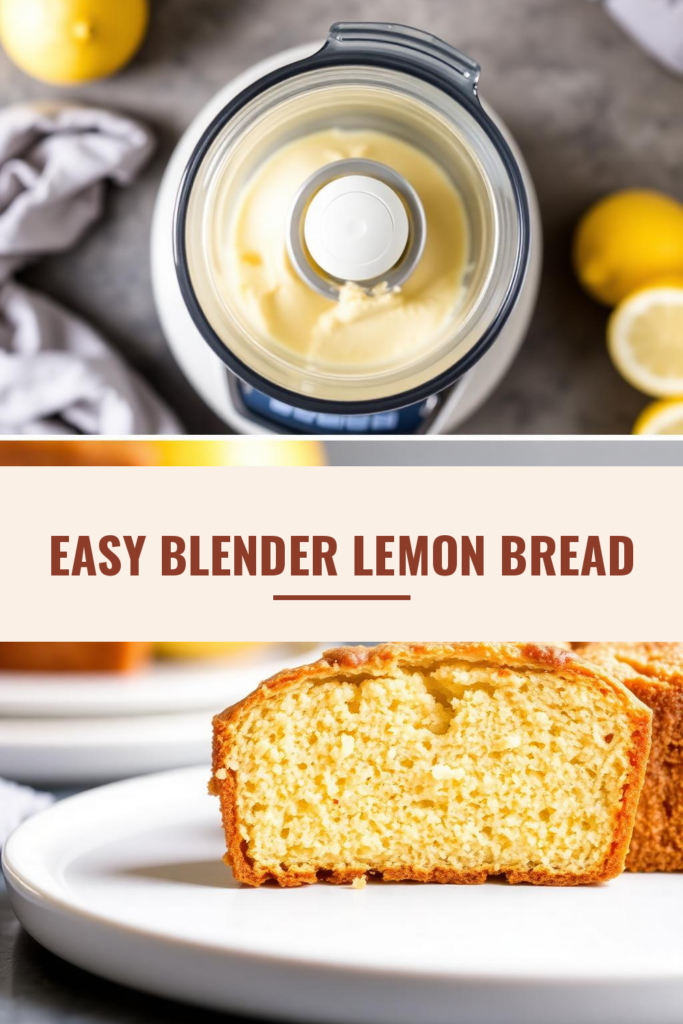
This blender lemon bread is a quick-bread made entirely in a blender, with a tender crumb and bright lemon flavor from fresh zest and juice. It suits a weekend breakfast, an afternoon snack, or a simple dessert. The batter comes together in minutes, and the bread bakes in about an hour.
Ingredients
- 2 cups (250 g) all-purpose flour
- 1 ½ teaspoons baking powder
- ½ teaspoon baking soda
- ½ teaspoon salt
- 1 cup (200 g) granulated sugar
- 2 large eggs
- ½ cup (120 ml) plain whole-milk yogurt (or buttermilk)
- ⅓ cup (80 ml) neutral oil (canola or vegetable)
- 1 tablespoon lemon zest (from 1–2 lemons)
- ¼ cup (60 ml) fresh lemon juice (from 2–3 lemons)
- 1 teaspoon vanilla extract
For the glaze (optional):
- 1 cup (120 g) powdered sugar
- 2 tablespoons (30 ml) fresh lemon juice
Instructions
- Preheat the oven to 350°F (175°C). Grease a 9×5-inch (23×13 cm) loaf pan and line the bottom with parchment paper.
- In a small bowl, whisk together the flour, baking powder, baking soda, and salt. Set aside.
- In a blender, combine the sugar, eggs, yogurt, oil, lemon zest, lemon juice, and vanilla. Blend on medium speed until smooth and well combined, about 30 seconds.
- Add the dry flour mixture to the blender. Pulse 5–6 times, just until the flour is incorporated. Do not over-blend; the batter should be thick and lumpy-free but not beaten further.
- Pour the batter into the prepared pan. Bake for 50–60 minutes, until a toothpick inserted in the center comes out clean or with only a few moist crumbs. The top should be golden brown.
- Let the bread cool in the pan for 10 minutes, then transfer to a wire rack to cool completely before glazing.
- For the glaze, whisk the powdered sugar and lemon juice in a small bowl until smooth. Drizzle over the cooled bread. Let the glaze set for 15 minutes before slicing.
Make-Ahead Timeline
This bread is best the day it is made, but it can be baked a day ahead. Bake it in the evening, let it cool completely, then store it tightly wrapped at room temperature. Glaze it the next morning just before serving. The unglazed bread can also be frozen for up to 3 months; thaw overnight in the refrigerator and glaze before serving.
Serving and Pairing
Serve slices at room temperature or lightly toasted. It pairs well with coffee or tea. For a dessert, serve with a spoonful of whipped cream or a scoop of vanilla ice cream. The lemon flavor is bright enough to stand alone, but a dusting of powdered sugar or a few fresh berries on the side works too.
Leftovers and Storage
Store the glazed bread in an airtight container at room temperature for up to 3 days. The glaze may soften slightly; that is fine. For longer storage, wrap the unglazed bread tightly in plastic wrap and then foil, and freeze for up to 3 months. Thaw in the refrigerator overnight, then bring to room temperature before glazing. Do not leave the bread out at room temperature for more than 2 hours total if it has been glazed, as the glaze contains sugar and lemon juice but no perishable ingredients; the bread itself is fine at room temperature for 3 days.
Swaps and Adjustments
You can replace the yogurt with buttermilk or sour cream; use the same amount. If you only have plain milk, add 1 teaspoon of lemon juice to the milk and let it sit for 5 minutes before blending. For a less sweet bread, reduce the sugar to ¾ cup (150 g) and skip the glaze. For a more intense lemon flavor, add 1 teaspoon of lemon extract with the vanilla. If you want a poppy seed version, stir 2 tablespoons of poppy seeds into the batter after blending.
Why This Works
Blending the wet ingredients first ensures the sugar is dissolved and the lemon zest is fully incorporated, which gives a uniform crumb. The yogurt adds moisture and a slight tang that balances the lemon. The batter is thick, so the bread rises evenly in the loaf pan. The glaze adds sweetness and a shiny finish, but it is optional if you prefer a less sweet loaf.
Common Questions
Can I use bottled lemon juice? Fresh lemon juice gives a brighter flavor. Bottled juice works in a pinch, but reduce the amount to 3 tablespoons (45 ml) because bottled juice is more concentrated and can make the bread taste slightly bitter.
Why did my bread sink in the middle? This usually happens if the batter was over-blended, which develops too much gluten and makes the bread rise then collapse. Pulse only until combined. Also, make sure your baking powder and baking soda are fresh (not expired) and that the oven is at the correct temperature.
Can I make this in a different pan? Yes. Use a 8×4-inch (20×10 cm) loaf pan and increase the baking time by 5–10 minutes. Or bake as muffins: fill a 12-cup muffin tin lined with paper liners, and bake at 350°F (175°C) for 18–22 minutes, until a toothpick comes out clean. Muffins will make about 12.
Do I need to sift the flour? No, just whisk it with the other dry ingredients to break up any lumps. The blender will incorporate it quickly.
Safe minimum internal temperatures follow USDA FSIS; raw-fish guidance follows the U.S. FDA. See our food safety notes.
Spotted an error? Tell us and we will correct it (corrections policy).





