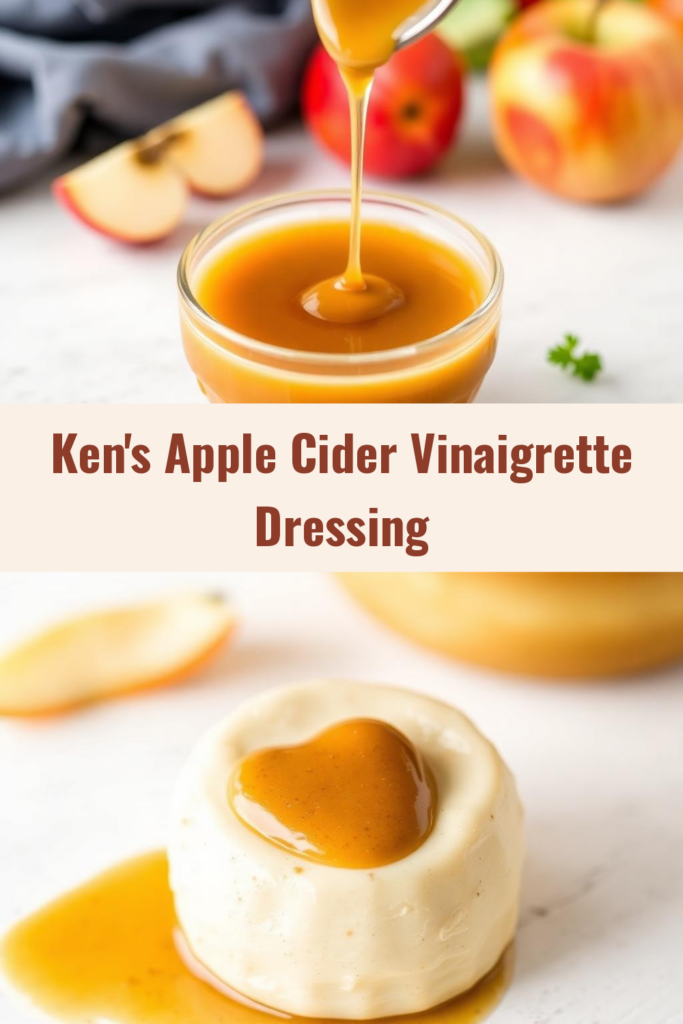
Ken’s apple cider vinaigrette is a tangy, slightly sweet bottled dressing with a thin, pourable texture and a clean cider vinegar bite. Making it at home takes about 5 minutes and lets you control the sweetness and oil. The key is balancing the vinegar’s sharpness with enough honey or sugar so it doesn’t taste harsh, and shaking it well before each use because it separates quickly.
Ingredients
- 1/2 cup (120 ml) apple cider vinegar
- 1 tablespoon (15 ml) Dijon mustard
- 1 tablespoon (15 ml) honey (or maple syrup for a vegan version)
- 1/2 teaspoon fine sea salt
- 1/4 teaspoon black pepper
- 1 small shallot, minced (about 2 tablespoons / 20 g), optional
- 3/4 cup (180 ml) neutral oil (such as canola or grapeseed) or extra-virgin olive oil
Instructions
- In a small bowl or a jar with a tight-fitting lid, combine the apple cider vinegar, Dijon mustard, honey, salt, pepper, and shallot if using. Whisk or shake until the salt dissolves, about 30 seconds.
- Slowly add the oil while whisking constantly, or add it all to the jar and shake vigorously for 30 seconds. The dressing will look slightly cloudy and thicken a little, but it will still separate on standing.
- Taste and adjust: if it’s too sharp, add another teaspoon of honey; if it’s too oily, add a teaspoon of vinegar. Stir and taste again.
- Use immediately or refrigerate. Shake or whisk well before every use.
What to Swap and How It Changes the Dressing
- Apple cider vinegar: Use white wine vinegar or champagne vinegar for a milder, less fruity tang. Do not use balsamic; it will turn the dressing brown and much sweeter.
- Honey: Maple syrup adds a deeper, woodsy sweetness; agave is neutral. For a sugar-free version, use 1 tablespoon of monk fruit sweetener dissolved in 1 tablespoon of water, but expect a slightly thinner texture.
- Dijon mustard: Yellow mustard is milder and less creamy; stone-ground mustard adds texture. Mustard is the emulsifier here, so don’t skip it or the dressing will separate within minutes.
- Shallot: Omit it for a smoother dressing, or use 1/4 teaspoon garlic powder for a different savory note. Fresh garlic will make the dressing sharper; use only 1/2 teaspoon minced.
- Oil: Extra-virgin olive oil gives a fruity, peppery flavor; neutral oil lets the vinegar shine. A mix of half olive, half neutral is a good middle ground.
Why This Dressing Separates and How to Keep It Emulsified
Oil and vinegar naturally separate because oil is less dense and doesn’t dissolve in water. The mustard and honey help create a temporary emulsion, but it will still break after a few minutes. To keep it stable for a few hours, add 1/2 teaspoon of mayonnaise (or 1/4 teaspoon of xanthan gum) along with the mustard; whisk or shake well. For a single serving, just shake it right before pouring.
Make-Ahead and Storage Times
This dressing keeps in the refrigerator for up to 2 weeks in a sealed jar. Because it contains no dairy or fresh herbs, it’s safe at room temperature for up to 2 hours, but it’s best chilled. If you added shallot, use it within 4 days (the botulism risk from garlic or shallots in oil applies). Never leave it out overnight. The oil will solidify when cold; let it sit at room temperature for 10 minutes or run the jar under warm water, then shake vigorously.
How to Use This Dressing Beyond Salads
This vinaigrette works as a marinade for chicken or pork (use within 2 hours, then discard the marinade). It also makes a quick slaw dressing: toss 4 cups of shredded cabbage with 1/4 cup of dressing and let sit for 15 minutes. For a warm grain bowl, drizzle it over farro or quinoa while they’re still warm so they absorb the flavor. It’s also good as a drizzle over roasted vegetables like Brussels sprouts or carrots right before serving.
What to Serve With This Dressing
Pair it with a simple green salad of mixed lettuces, sliced apples, walnuts, and crumbled blue cheese. It also suits a spinach salad with dried cranberries and sunflower seeds. For a main dish, serve it over a chopped salad with grilled chicken, or use it as a dressing for a pasta salad with cherry tomatoes and cucumbers. The sweetness and tang balance rich foods like roasted pork or sharp cheddar.
How to Adjust Sweetness and Tang to Your Taste
Start with the base recipe, then adjust in small increments. If you prefer a sweeter dressing, add honey 1 teaspoon at a time, tasting after each addition. For more tang, add vinegar 1 teaspoon at a time. For a milder flavor, reduce the vinegar to 1/3 cup (80 ml) and increase the oil to 1 cup (240 ml). Remember that the dressing will taste slightly sharper cold; let it come to room temperature before tasting for final adjustments.
Can You Use This Dressing as a Marinade?
Yes, but with a caveat. The acid in the vinegar can make chicken or pork mushy if left too long. Marinate for no more than 2 hours for chicken pieces (or 1 hour for thin cuts like pork chops), then discard the marinade. For a glaze, brush it on during the last 5 minutes of grilling. Always cook poultry to 165°F (74°C) and pork to 145°F (63°C) with a 3-minute rest, checking with a food thermometer.
What If You Don’t Have a Jar or Whisk?
You can make this dressing in a blender or food processor. Add all ingredients except the oil, then with the motor running, slowly pour the oil through the feed tube. This creates a more stable emulsion that lasts longer. If you only have a fork, mince the shallot very finely and whisk rapidly in a bowl; the dressing will still work, just shake it before each use.
Safe minimum internal temperatures follow USDA FSIS; raw-fish guidance follows the U.S. FDA. See our food safety notes.
Spotted an error? Tell us and we will correct it (corrections policy).





