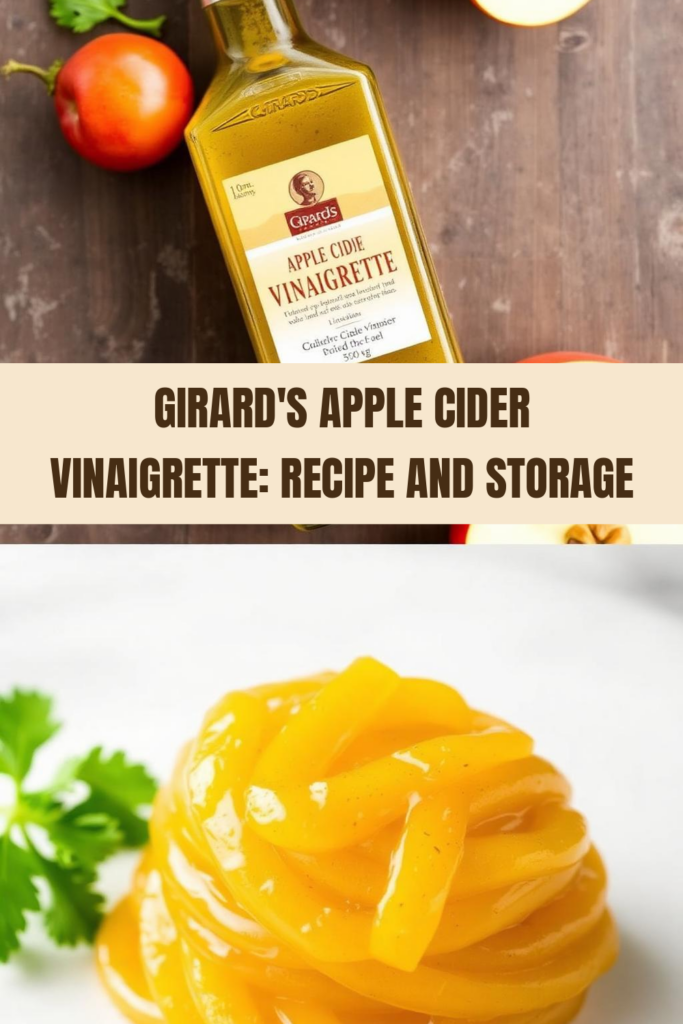
Girard’s apple cider vinaigrette is a tangy, slightly sweet salad dressing that balances sharp cider vinegar with a hint of honey and garlic. It’s a reliable pantry staple for weeknight salads, and this homemade version comes together in under 10 minutes with no special equipment. The key is the emulsifier—a dab of Dijon mustard—which keeps the dressing from separating into a watery layer and a slick of oil.
The One Technique That Keeps It Emulsified
Whisk the Dijon mustard into the vinegar and honey first, then add the oil in a slow, steady stream while whisking constantly. The mustard acts as a stabilizer, allowing the oil and vinegar to form a temporary suspension. If you skip this step and dump everything in at once, the dressing will separate within minutes. For a more stable emulsion, use a blender or a jar with a tight lid—shake the jar vigorously for 30 seconds instead of whisking.
Ingredients
- 1/2 cup (120 ml) apple cider vinegar
- 2 tablespoons (30 ml) honey
- 1 teaspoon Dijon mustard
- 1 small garlic clove, minced (about 1/2 teaspoon)
- 1/2 teaspoon salt
- 1/4 teaspoon black pepper
- 3/4 cup (180 ml) olive oil (or a neutral oil like canola)
Instructions
- In a medium bowl, whisk together the apple cider vinegar, honey, Dijon mustard, garlic, salt, and pepper until the salt dissolves and the honey is fully incorporated.
- While whisking constantly, add the olive oil in a slow, steady stream. Continue whisking until the dressing is thick and creamy, about 1 minute.
- Transfer to a jar or bottle with a tight-fitting lid. Use immediately or refrigerate.
Mistakes That Ruin This Dressing
Adding Oil Too Fast
If you pour the oil all at once, the dressing will separate and look broken. Slow pouring is non-negotiable. If it does separate, whisk in 1 teaspoon of water or another teaspoon of mustard to re-emulsify.
Using Old Cider Vinegar
Apple cider vinegar loses its bright tang over time. Check the bottle’s best-by date. If it tastes flat, the dressing will too. Use a fresh bottle for the best result.
Skipping the Garlic Rest
Raw garlic is sharp. Let the dressing sit for 15 minutes after making it so the garlic mellows and melds with the honey. If you’re in a hurry, use 1/4 teaspoon garlic powder instead.
Over-Salting
Salt intensifies as the dressing sits. Start with 1/2 teaspoon, taste, and add more only if needed. Remember that if you’re dressing a salad with salty cheese or nuts, you may need less.
Substitutions and Variations
- Honey → maple syrup or agave nectar, same amount. Maple syrup adds a deeper, woodsy flavor; agave is more neutral.
- Dijon mustard → yellow mustard, same amount. Yellow mustard is milder and less tangy.
- Olive oil → avocado oil or grapeseed oil, same amount. Avocado oil is neutral; grapeseed oil is light and lets the vinegar shine.
- Garlic → 1/4 teaspoon garlic powder, added with the dry ingredients. This gives a milder, more even garlic flavor.
- To make it sweeter → add an extra 1 tablespoon (15 ml) honey. This balances a very tart vinegar.
- To make it more tangy → reduce honey to 1 tablespoon (15 ml) and add 1 teaspoon lemon juice.
Storage and Shelf Life
Store the dressing in a sealed jar in the refrigerator. It will keep for up to 2 weeks. The olive oil will solidify and turn cloudy when cold—this is normal. Let it sit at room temperature for 10 minutes and shake well before using. Do not leave the dressing at room temperature for more than 2 hours. Because it contains garlic in oil, there is a small risk of botulism if left out too long; refrigeration is essential. If you notice an off smell, mold, or a fizzy texture, discard it.
How to Use It
This dressing pairs well with crisp greens like romaine or arugula, sliced apples, walnuts, and blue cheese. Use about 2 tablespoons per 4 cups of greens. For a main-dish salad, add grilled chicken and toss with 3 tablespoons. It also works as a marinade for chicken or pork—use 1/2 cup of dressing per pound of meat, marinate for 30 minutes to 2 hours, then cook to the safe minimum internal temperature (chicken 165°F / 74°C, pork 145°F / 63°C with 3 minutes rest).
Safe minimum internal temperatures follow USDA FSIS; raw-fish guidance follows the U.S. FDA. See our food safety notes.
Spotted an error? Tell us and we will correct it (corrections policy).





