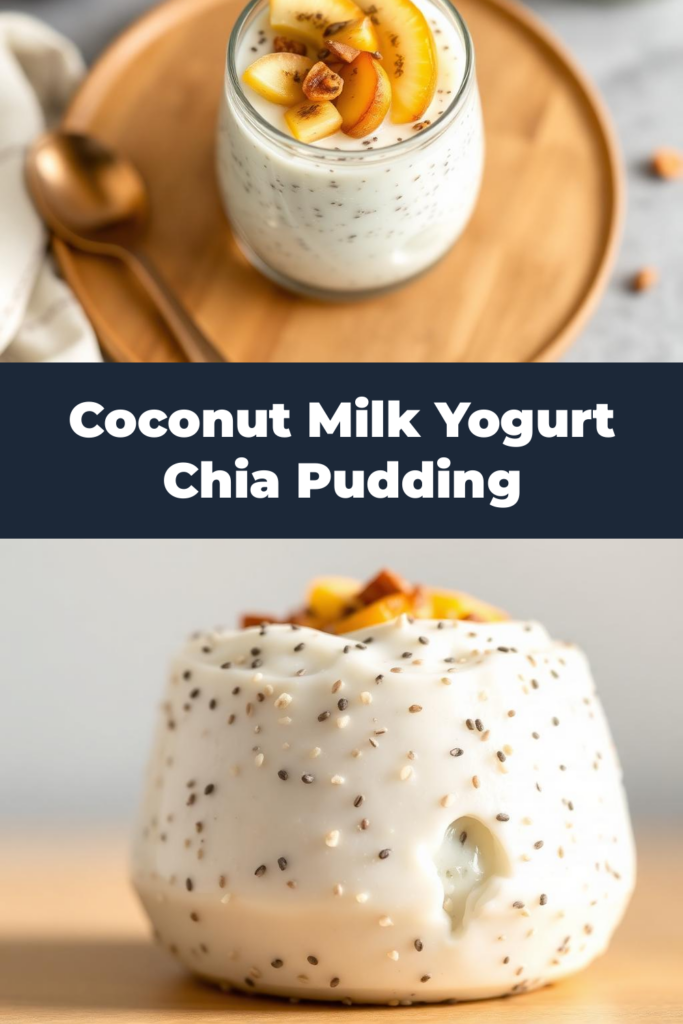
Coconut milk yogurt chia pudding is a no-cook breakfast or snack that thickens as chia seeds absorb liquid and form a gel. The yogurt adds tang and body, while coconut milk provides richness. It is ready after a minimum 4-hour chill, making it a practical make-ahead option for busy mornings.
Ingredients
- 1 cup (240 ml) full-fat coconut milk (from a can, shaken)
- 1 cup (240 g) plain yogurt (dairy or plant-based)
- 1/4 cup (45 g) chia seeds (white or black)
- 1–2 tbsp (15–30 ml) maple syrup or honey (optional; honey not for babies under 1 year)
- 1/2 tsp vanilla extract (optional)
- Pinch of salt (optional)
Instructions
- In a medium bowl or a 1-quart (1 L) jar with a lid, whisk together the coconut milk, yogurt, maple syrup (if using), vanilla, and salt until smooth.
- Add the chia seeds and whisk thoroughly. Let the mixture sit for 5 minutes, then whisk again to break up any clumps that have formed.
- Cover the bowl or jar and refrigerate for at least 4 hours, or overnight (8–12 hours). The pudding is ready when it has a spoonable, pudding-like consistency and the seeds are soft and gelatinous.
- Stir the pudding before serving. If it is too thick, thin with a splash of coconut milk or yogurt. If too thin, stir in 1–2 tsp more chia seeds and refrigerate for another 30 minutes.
What Makes It Thicken
Chia seeds absorb roughly 10 times their weight in liquid, forming a gel that sets the pudding. The ratio of 1/4 cup chia seeds to 2 cups total liquid yields a medium-thick pudding. For a thicker, more custard-like texture, use 3 tbsp (45 g) chia seeds; for a thinner, drinkable version, use 2 tbsp (30 g). The yogurt adds protein and tang, but it also contributes liquid, so the total liquid includes the yogurt.
Flavor and Texture Variations
Chocolate Coconut Pudding
Add 2 tbsp (10 g) unsweetened cocoa powder to the liquid mixture before adding the chia seeds. Whisk well to avoid lumps. The cocoa adds bitterness; increase the sweetener to 2–3 tbsp (30–45 ml) if desired.
Mango or Berry Layer
After chilling, layer the pudding with fresh or thawed fruit. For a parfait, alternate pudding and fruit in glasses. This variation is best served immediately, as fruit releases juice and thins the pudding over time.
Serving and Pairing
Serve chilled, topped with fresh berries, sliced banana, toasted coconut flakes, chopped nuts, or a drizzle of nut butter. The pudding pairs well with granola for crunch, but add granola just before serving so it stays crisp. It works as a breakfast, a midday snack, or a light dessert. For a more filling breakfast, serve with a handful of nuts or a side of scrambled eggs.
Storage and Make-Ahead
Store the pudding in an airtight container in the refrigerator for up to 5 days. Stir before serving, as the chia seeds may settle. The pudding does not freeze well; freezing changes the texture of the coconut milk and yogurt, making it grainy upon thawing. If you want to make it ahead for the week, prepare individual jars and keep them refrigerated. Do not leave the pudding at room temperature for more than 2 hours (1 hour if above 90°F/32°C).
Ingredient Swaps
Use light coconut milk to reduce richness, but the pudding will be thinner—add an extra 1 tbsp (15 g) chia seeds. For a dairy-free version, use a plain plant-based yogurt (coconut, soy, or almond) and ensure the coconut milk is full-fat for best texture. If you prefer a less coconut-forward flavor, replace half the coconut milk with regular milk or a nut milk. Honey can be replaced with maple syrup or agave; note that honey is not safe for babies under 1 year.
Why It Needs to Chill
The chia seeds need time to absorb liquid and form a gel. At 4 hours, the pudding is set but still slightly loose; overnight (8–12 hours) yields a firmer, more cohesive texture. Chilling also allows the flavors to meld. If you are short on time, you can speed the process by using a blender: blend all ingredients except chia seeds, then stir in the seeds and chill for at least 2 hours. The pudding will be smooth, but the texture will be less distinct.
Safe minimum internal temperatures follow USDA FSIS; raw-fish guidance follows the U.S. FDA. See our food safety notes.
Spotted an error? Tell us and we will correct it (corrections policy).





