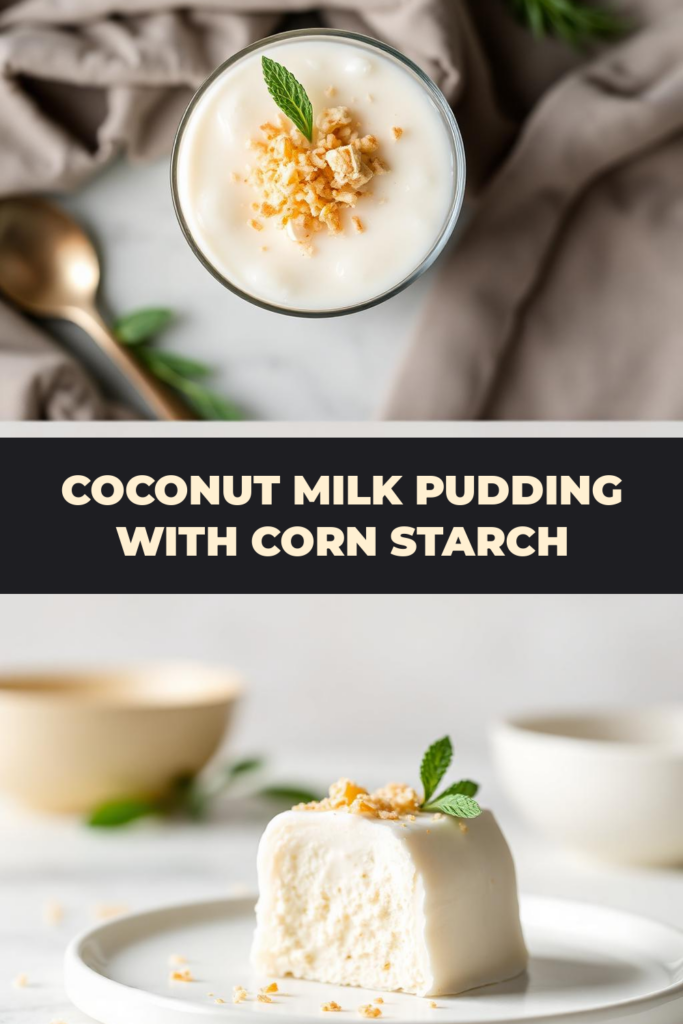
Coconut milk pudding with corn starch is a simple, dairy-free dessert that sets into a smooth, wobbly custard with a rich coconut flavor. It is a good choice for a weeknight treat or a potluck because it needs only five ingredients and about 15 minutes of active work. The key is to cook the mixture until it thickens enough to coat a spoon, then let it chill until fully set.
Ingredients
- 2 cans (13.5 oz / 400 ml each) full-fat coconut milk (about 3 1/3 cups / 800 ml total)
- 1/2 cup (100 g) granulated sugar
- 1/4 cup (30 g) corn starch
- 1/4 teaspoon salt
- 1 teaspoon vanilla extract
- Optional: 1/4 teaspoon ground cardamom or cinnamon
Instructions
- In a medium bowl, whisk together the corn starch, sugar, and salt. Add about 1/2 cup (120 ml) of the coconut milk and whisk until smooth, with no lumps.
- Pour the remaining coconut milk into a medium saucepan. Whisk in the corn starch mixture until fully combined.
- Place the saucepan over medium heat. Cook, stirring constantly with a whisk or silicone spatula, for 10–15 minutes, until the mixture thickens and just begins to bubble. It should coat the back of a spoon and hold a line when you run a finger through it. Do not let it boil hard.
- Remove from heat. Stir in the vanilla and cardamom, if using.
- Pour the pudding into four small ramekins or one large bowl. Let cool at room temperature for 15 minutes, then cover with plastic wrap pressed directly onto the surface to prevent a skin from forming.
- Refrigerate for at least 3 hours, until fully chilled and set. The pudding will firm up as it cools.
How to Scale the Recipe
This pudding scales easily. Use the table below for common batch sizes. The cooking time stays about the same, but stir more frequently with larger batches to prevent scorching.
| Servings | Coconut milk | Sugar | Corn starch | Salt | Vanilla |
|---|---|---|---|---|---|
| 2 | 1 can (13.5 oz / 400 ml) | 1/4 cup (50 g) | 2 tbsp (15 g) | 1/8 tsp | 1/2 tsp |
| 4 | 2 cans (27 oz / 800 ml) | 1/2 cup (100 g) | 1/4 cup (30 g) | 1/4 tsp | 1 tsp |
| 8 | 4 cans (54 oz / 1.6 L) | 1 cup (200 g) | 1/2 cup (60 g) | 1/2 tsp | 2 tsp |
What to Serve With It
Serve the pudding chilled, topped with fresh mango slices, toasted coconut flakes, or a drizzle of honey (not for babies under 1 year). It also works as a base for fruit compotes—try a quick blueberry or strawberry topping made by simmering 1 cup (150 g) fruit with 2 tablespoons (25 g) sugar until syrupy. For a firmer texture, add 1 tablespoon (8 g) more corn starch; for a softer, creamier set, reduce the corn starch to 3 tablespoons (23 g).
Common Mistakes and How to Avoid Them
Lumpy Pudding
If you add the corn starch directly to the hot liquid without first making a slurry, it will form lumps. Always whisk the corn starch with a small amount of cold coconut milk before combining with the rest.
Thin, Runny Pudding
Undercooking is the usual cause. The mixture must reach a gentle boil and visibly thicken before you remove it from heat. If it still looks thin after 15 minutes, continue cooking for another 2–3 minutes, stirring constantly.
Skin on Top
As the pudding cools, a rubbery skin forms where it meets the air. Press plastic wrap directly onto the surface before refrigerating, or stir in a small pat of butter (about 1 teaspoon) after cooking to help prevent it.
How Long Does Coconut Milk Pudding Keep?
Refrigerate the pudding within 2 hours of making it. It will keep for 3–4 days in the fridge, covered. Do not leave it at room temperature for more than 2 hours total. You can freeze it for up to 2 months, but the texture may become slightly watery after thawing; stir well before serving. Reheat leftovers gently on the stove or microwave, but the pudding is best served cold.
Can I Use Light Coconut Milk?
Yes, but the pudding will be less rich and may set a bit softer. If using light coconut milk, increase the corn starch by 1 tablespoon (8 g) to compensate. Full-fat coconut milk gives the creamiest, most stable texture.
Why Is My Pudding Not Setting?
Two common reasons: not cooking it long enough, or using a different starch (like all-purpose flour) which needs a different ratio. Corn starch needs to reach a boil to activate. If you used a different starch, follow a recipe written for that starch. Also, check that your corn starch is fresh—old starch loses thickening power.
Safe minimum internal temperatures follow USDA FSIS; raw-fish guidance follows the U.S. FDA. See our food safety notes.
Spotted an error? Tell us and we will correct it (corrections policy).





