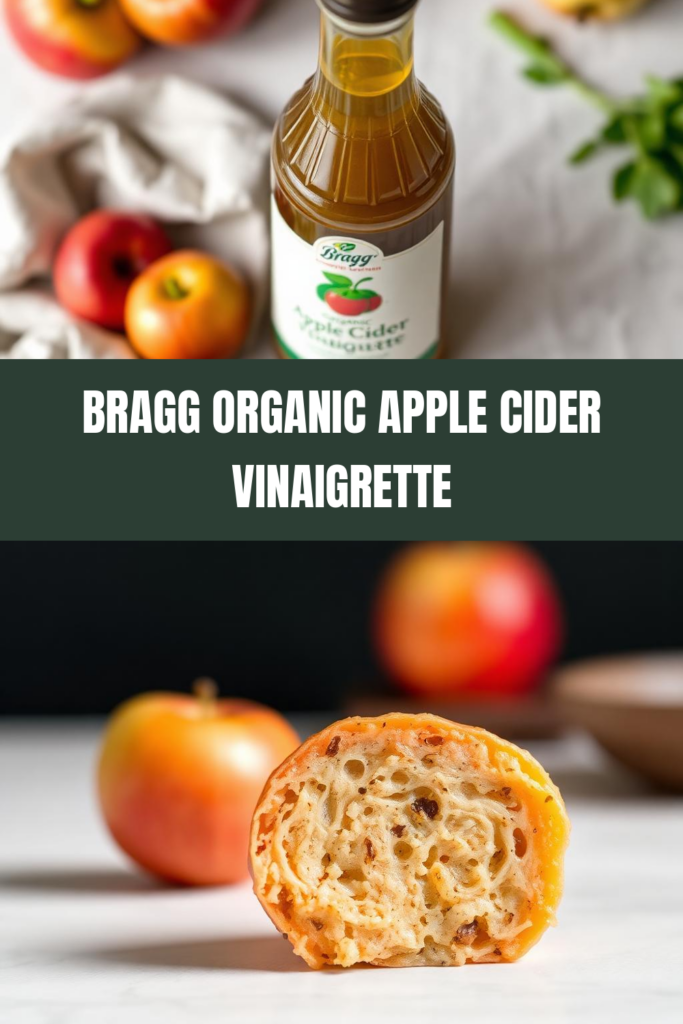
Time: 10 min · Serves: 4 · The key step: shake or whisk just before serving so the oil and vinegar re-emerge into a smooth emulsion. This is a homemade version of the bottled Bragg Organic Apple Cider Vinaigrette, made with raw apple cider vinegar, olive oil, a touch of sweetener, and a few seasonings. It tastes tangy, slightly sweet, and bright, and it works on green salads, grain bowls, or roasted vegetables.
Ingredients
- 1/2 cup (120 ml) Bragg Organic Apple Cider Vinegar (with the mother)
- 1 cup (240 ml) extra-virgin olive oil
- 2 tbsp (30 ml) water
- 1 tbsp (15 ml) honey or maple syrup (for a vegan version)
- 1 tsp (5 g) Dijon mustard
- 1 small garlic clove, minced (about 1/2 tsp / 1 g)
- 1/2 tsp (1.5 g) salt
- 1/4 tsp (0.5 g) black pepper
- 1/4 tsp (0.5 g) dried oregano (optional)
Instructions
- In a small bowl, whisk together the apple cider vinegar, water, honey or maple syrup, Dijon mustard, garlic, salt, pepper, and oregano if using. Whisk until the salt dissolves and the honey is fully mixed in.
- Slowly drizzle in the olive oil while whisking constantly. Keep whisking until the dressing looks cloudy and slightly thickened, about 30 seconds. Alternatively, combine everything in a jar with a tight-fitting lid and shake for 20–30 seconds.
- Taste and adjust: add more salt in 1/4 tsp (1.5 g) increments if it tastes flat, or more vinegar in 1 tbsp (15 ml) increments if you want more tang. The dressing should be pleasantly sharp but not puckering.
- Use immediately, or refrigerate in a sealed jar for up to 1 week. Shake well before each use because the oil and vinegar will separate as it sits.
What This Dressing Is For
This vinaigrette is a pantry-style dressing that suits any salad with sturdy greens like romaine, kale, or arugula. It also works as a marinade for chicken or tofu (use within 2 hours of adding, then cook to the safe minimum internal temperature: poultry 165°F / 74°C). For a grain bowl with quinoa, chickpeas, and roasted vegetables, use about 2 tbsp (30 ml) per serving. The raw apple cider vinegar gives a sharper, fruitier tang than regular cider vinegar; if you use a non-raw vinegar, the flavor is slightly less complex but fine.
Swaps and Adjustments
Sweetener: Honey and maple syrup both work. Honey is thicker and slightly floral; maple syrup is thinner and adds a woody note. If you use a granulated sweetener like sugar or monk fruit, dissolve it in the vinegar first, then add the oil. Use 1 tbsp (15 g) granulated sweetener instead of the liquid, and expect a slightly grainier texture until dissolved.
Oil: Extra-virgin olive oil is the standard here. A lighter olive oil or avocado oil will produce a milder, less peppery dressing. Do not use walnut or sesame oil alone; they are too strong and will mask the apple cider vinegar.
Mustard: Dijon mustard acts as an emulsifier, helping the oil and vinegar stay mixed longer. If you leave it out, the dressing will separate faster; shake it more often. You can use 1/2 tsp (2.5 g) yellow mustard, but it will add a slight turmeric color and a milder flavor.
Garlic: Fresh garlic gives a sharp bite. For a milder flavor, use 1/4 tsp (0.5 g) garlic powder instead of fresh. If you use fresh garlic, the dressing must be refrigerated and used within 4 days because garlic in oil can support botulism bacteria if left at room temperature.
Storage and Shelf Life
Refrigerate this dressing in a sealed glass jar or bottle. It keeps for up to 1 week. The olive oil will solidify and turn cloudy in the fridge; that is normal. Let it sit at room temperature for 10–15 minutes, then shake vigorously. Do not leave the dressing at room temperature for more than 2 hours total (1 hour if the room is above 90°F / 32°C). Because it contains fresh garlic, do not store it at room temperature at all; always refrigerate. If you want a longer shelf life, omit the fresh garlic and use garlic powder instead; then the dressing can stay refrigerated for up to 2 weeks. Never keep this dressing beyond 2 weeks, even with garlic powder, because the oil can oxidize and turn rancid.
Common Mistakes
Adding all the oil at once: If you pour the oil in all at once, the dressing will not emulsify properly and will separate within minutes. Drizzle slowly while whisking or shaking, and it will stay combined for several hours.
Using cold oil straight from the fridge: Cold olive oil thickens and makes emulsification harder. Use oil at room temperature, or warm the bottle in a bowl of warm water for a few minutes before making the dressing.
Over-salting before tasting: The vinegar and mustard already contain salt. If you add the full 1/2 tsp salt before tasting, the dressing can be too salty. Start with 1/4 tsp (1.5 g), taste, and add more only if needed.
Skipping the water: The water softens the sharpness of the vinegar and helps the dressing coat greens without feeling oily. If you omit it, the dressing will be more acidic and heavier; add it as written.
How to Use Leftovers
Use leftover dressing within the week on salads, as a drizzle over roasted carrots or Brussels sprouts, or as a quick marinade for chicken breasts (marinate for 30 minutes to 2 hours, then cook to 165°F / 74°C). It also works as a simple slaw dressing: toss with shredded cabbage and carrots, and let sit for 10 minutes before serving. If the dressing separates after sitting, shake it well; it will re-emulsify easily. Do not reuse a bottle that has had dressing in it for more than a week without washing it thoroughly first.
Safe minimum internal temperatures follow USDA FSIS; raw-fish guidance follows the U.S. FDA. See our food safety notes.
Spotted an error? Tell us and we will correct it (corrections policy).





