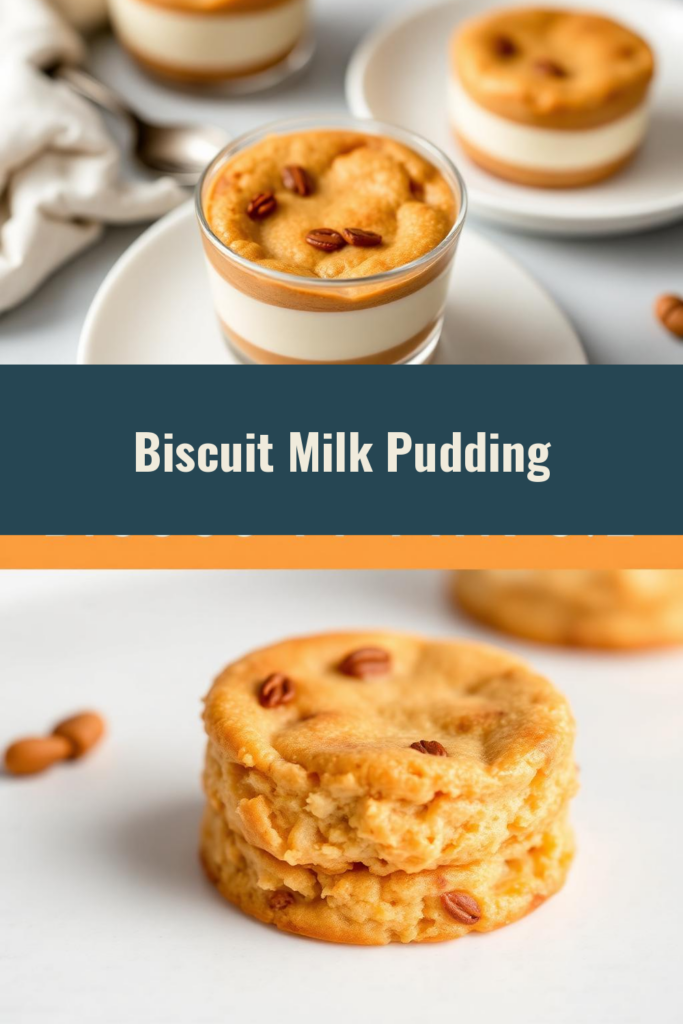
Biscuit milk pudding is a no-bake dessert made by layering store-bought biscuits with a sweetened milk mixture that softens them into a cake-like texture. It tastes like a mild, milky bread pudding with a hint of vanilla and a soft, spoonable crumb. This version uses a stovetop custard base so the pudding sets properly and keeps for days in the fridge.
Ingredients
- 3 cups (720 ml) whole milk
- 1/2 cup (100 g) granulated sugar
- 3 large egg yolks (pasteurized if you prefer)
- 3 tbsp (24 g) cornstarch
- 1 tsp vanilla extract
- 1/4 tsp salt
- About 24 square tea biscuits or graham crackers (about 300 g)
- 1/2 cup (120 ml) heavy cream, cold
- 1 tbsp (15 g) powdered sugar
- 1/4 tsp ground cinnamon or nutmeg (optional, for dusting)
Instructions
- Make the custard base: In a medium bowl, whisk the egg yolks, cornstarch, and 1/2 cup (120 ml) of the milk until smooth and no lumps remain. Set aside.
- In a medium saucepan, combine the remaining 2 1/2 cups (600 ml) milk, sugar, and salt. Heat over medium, stirring occasionally, until the sugar dissolves and the milk is steaming but not boiling (about 180°F/82°C, 3–4 minutes).
- Slowly pour about 1 cup of the hot milk into the egg mixture while whisking constantly. Then pour the tempered mixture back into the saucepan.
- Return the saucepan to medium heat. Cook, stirring constantly with a whisk, until the mixture thickens to a pudding consistency and just begins to bubble (about 5–7 minutes). It should coat the back of a spoon. Remove from heat and stir in the vanilla.
- Let the custard cool for 10 minutes, stirring occasionally to release steam and prevent a skin from forming.
- Assemble the pudding: Choose an 8-inch (20 cm) square dish or a 9-inch (23 cm) round dish. Spread a thin layer of custard (about 1/4 cup) on the bottom.
- Dip each biscuit quickly into a shallow bowl of cold water (or milk) for 1–2 seconds per side—just enough to moisten, not soak. Place a single layer of biscuits over the custard, breaking them to fit if needed.
- Spread about 1/3 of the remaining custard over the biscuits. Repeat with another layer of dipped biscuits, then another third of custard, then a final layer of biscuits. Top with the remaining custard, smoothing the top.
- Cover with plastic wrap directly on the surface (to prevent a skin) and refrigerate for at least 2 hours, or up to 24 hours, until fully chilled and the biscuits are soft.
- Finish and serve: Just before serving, whip the cold heavy cream with the powdered sugar until soft peaks form. Spread or pipe over the top. Dust with cinnamon or nutmeg if using.
Substitutions and Swaps
- Biscuits: Use any crisp, dry biscuit—Marie biscuits, Rich Tea, or digestive biscuits. Graham crackers work but are sweeter and thinner; use about 24 squares. Avoid soft cookies like chocolate chip, which turn mushy.
- Milk: Whole milk gives the richest texture. 2% works but the custard will be slightly thinner. Non-dairy milk (oat or almond) can be used, but the pudding may set softer; add an extra 1 tbsp cornstarch.
- Sugar: Reduce to 1/3 cup (65 g) if using sweetened biscuits or if you prefer a less sweet dessert. Honey or maple syrup can replace sugar, but reduce milk by 2 tbsp to compensate for extra liquid.
- Egg yolks: For an egg-free version, omit yolks and increase cornstarch to 5 tbsp (40 g). The pudding will be slightly less rich.
- Vanilla: Use 1 tsp almond extract or 1/2 tsp cardamom for a different flavor.
Doneness and Texture Cues
The custard is done when it visibly thickens and just starts to bubble—about 170°F (77°C) on a thermometer. It will continue to thicken as it cools. The assembled pudding is ready when the biscuits are uniformly soft with no dry crunch left in the center; this takes at least 2 hours of refrigeration. If you prefer a firmer, more sliceable pudding, chill for 4–6 hours or overnight.
Storage and Make-Ahead
Cover the pudding tightly and refrigerate within 2 hours of assembling. It keeps for 3–4 days in the fridge. The whipped cream topping is best added just before serving; if stored with the pudding, it may weep slightly. You can freeze the pudding (without whipped cream) for up to 2 months, but the texture may become slightly watery after thawing. Thaw overnight in the fridge before serving.
Biscuit Milk Pudding for Large Batches and Kids
To double the recipe, use a 9×13-inch (23×33 cm) dish and double all ingredients; the baking time stays the same. For a kid-friendly version, skip the cinnamon and use vanilla or a few drops of almond extract. If serving to young children, use pasteurized eggs for the yolks (or the egg-free version) to reduce any risk from raw eggs—though the custard is cooked to 170°F, which is safe for everyone. Always refrigerate leftovers promptly.
Why do I need to dip the biscuits? Dipping softens them so they absorb the custard evenly. If you skip dipping, the biscuits stay hard and the pudding won’t set properly. If you dip too long, they turn to mush—keep it to 1–2 seconds.
Can I use leftover custard as a sauce? Yes, any extra custard can be served warm over fruit or cake. Store it separately in the fridge for up to 3 days.
Safe minimum internal temperatures follow USDA FSIS; raw-fish guidance follows the U.S. FDA. See our food safety notes.
Spotted an error? Tell us and we will correct it (corrections policy).





