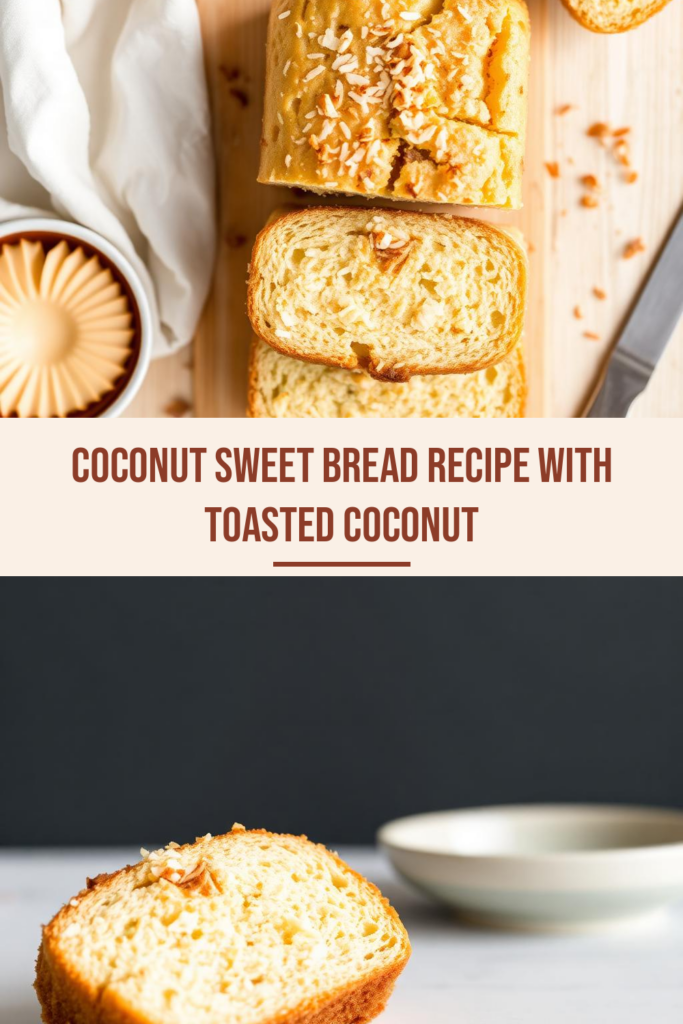
Time: About 3 hr 15 min (including rising) · Serves: 10 · The key step: Toasting the coconut before mixing deepens its flavor. This is a soft, lightly sweet yeast bread with a tender crumb and a crunchy toasted-coconut crust, perfect for breakfast, brunch, or an afternoon snack with coffee.
Ingredients
- 3 ½ cups (440 g) all-purpose flour, plus more for dusting
- ¼ cup (50 g) granulated sugar
- 2 ¼ teaspoons (7 g) instant yeast (one packet)
- 1 teaspoon salt
- ¾ cup (180 ml) whole milk, warmed to 110°F (43°C)
- 2 large eggs, room temperature
- 4 tablespoons (57 g) unsalted butter, melted and cooled
- 1 teaspoon vanilla extract
- 1 cup (85 g) sweetened shredded coconut, toasted (see step 1)
- For the topping: 1 large egg beaten with 1 tablespoon water (egg wash), plus 2 tablespoons (15 g) sweetened shredded coconut for sprinkling
Instructions
- Toast the coconut: spread the 1 cup shredded coconut on a baking sheet and bake at 350°F (175°C) for 5–7 minutes, stirring once, until golden brown. Let cool completely.
- In a large bowl or stand mixer fitted with the dough hook, whisk together the flour, sugar, yeast, and salt. Add the warm milk, eggs, melted butter, and vanilla. Mix on low speed until a shaggy dough forms, then increase to medium and knead for 6–8 minutes, until the dough is smooth and elastic. If kneading by hand, turn out onto a floured surface and knead for 8–10 minutes.
- Knead in the toasted coconut until evenly distributed. The dough will be slightly sticky; add a little flour only if needed.
- Place the dough in a lightly oiled bowl, cover with plastic wrap or a damp cloth, and let rise in a warm place (about 75°F/24°C) for 1–1 ½ hours, until doubled in size.
- Punch down the dough. Turn it out onto a lightly floured surface and shape into a round loaf. Place on a parchment-lined baking sheet. Cover loosely with plastic wrap and let rise again for 45–60 minutes, until puffy and almost doubled.
- Preheat the oven to 375°F (190°C). Brush the top of the loaf with the egg wash and sprinkle with the remaining 2 tablespoons of coconut.
- Bake for 25–30 minutes, until the crust is deep golden brown and the loaf sounds hollow when tapped on the bottom. If the top browns too quickly, tent loosely with foil after 15 minutes. The internal temperature should read 190–200°F (88–93°C) if measured with an instant-read thermometer.
- Let cool on a wire rack for at least 30 minutes before slicing. Serve warm or at room temperature.
Baking Notes and Swaps
Use unsweetened shredded coconut if you prefer a less sweet bread; the bread will be slightly less rich. For a dairy-free version, substitute the milk with oat or almond milk and use vegan butter or coconut oil (melted and cooled). The texture will be a touch denser with coconut oil.
If you don’t have instant yeast, use active dry yeast: dissolve it in the warm milk with a pinch of sugar and let it sit for 5–10 minutes until foamy before adding to the flour. Expect a slightly longer rise time.
Storage and Make-Ahead
Store the cooled bread in an airtight container or zip-top bag at room temperature for up to 4 days. For longer storage, wrap the bread tightly in plastic wrap and then foil, and freeze for up to 3 months. Thaw at room temperature, then reheat slices in a toaster or in a 350°F (175°C) oven for 5–7 minutes to refresh the crust.
To make ahead: after shaping, cover the loaf and refrigerate overnight instead of the second rise. In the morning, let it sit at room temperature for 30–45 minutes, then bake as directed, adding 5–10 minutes to the baking time.
What Can Go Wrong
Dense, heavy bread: This usually means the dough was under-kneaded or the first rise was too short. Knead until the dough passes the windowpane test (a small piece stretches into a thin, translucent membrane without tearing).
Burnt coconut on top: The topping can burn before the center is done. If the top is browning too quickly, cover loosely with foil at the 15-minute mark.
Bread collapses after baking: This happens when the dough is over-proofed. The second rise should stop when the loaf is puffy but not doubled; press a finger gently into the side – if the indentation springs back slowly, it’s ready. If it stays, it’s over-proofed.
Safe minimum internal temperatures follow USDA FSIS; raw-fish guidance follows the U.S. FDA. See our food safety notes.
Spotted an error? Tell us and we will correct it (corrections policy).





