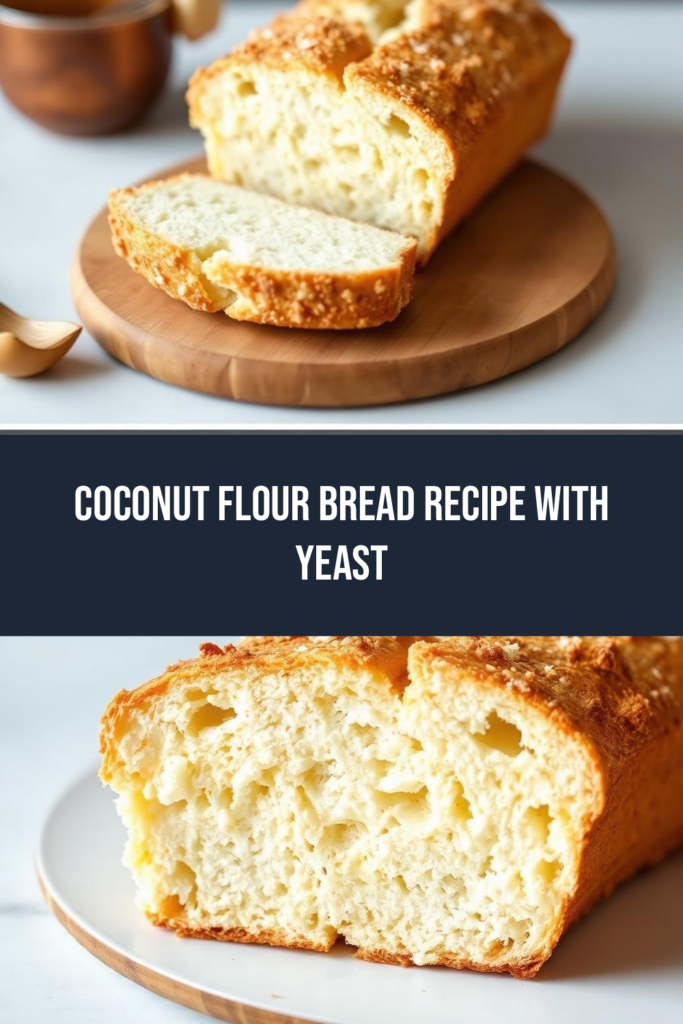
This yeast-risen coconut flour bread is a sturdy, slightly sweet loaf with a tender crumb and a toasted, nutty crust. It suits a weekend baking project or a make-ahead breakfast bread, served with butter and jam, or as a base for sandwiches. The dough is wetter than wheat dough, so it bakes in a loaf pan rather than being shaped by hand.
Ingredients
- 1 1/2 cups (170 g) coconut flour
- 1/2 cup (60 g) tapioca starch or cornstarch
- 2 teaspoons instant yeast (or 2 1/4 teaspoons active dry yeast)
- 1 teaspoon salt
- 2 tablespoons (25 g) sugar or honey
- 3 large eggs, room temperature
- 1/4 cup (60 ml) olive oil or melted butter, cooled
- 1 1/4 cups (300 ml) warm water (110°F/43°C)
- 1 teaspoon apple cider vinegar
Instructions
- In a large bowl, whisk together coconut flour, tapioca starch, yeast, salt, and sugar. If using active dry yeast, dissolve it in the warm water with a pinch of sugar first and let foam for 5 minutes.
- In a separate bowl, beat the eggs, oil, and vinegar. Add the warm water (or yeast mixture) and stir.
- Pour the wet ingredients into the dry and stir until no dry spots remain. The batter will be thick and slightly lumpy; that is normal.
- Cover the bowl with plastic wrap or a damp towel. Let rise in a warm spot (75–80°F/24–27°C) for 1 hour, until it has puffed and is airy. It will not double like wheat dough.
- Preheat oven to 375°F (190°C). Grease a 9×5-inch (23×13 cm) loaf pan.
- Stir the batter down, then scrape it into the pan. Smooth the top with a wet spatula.
- Let it rise again for 30 minutes, uncovered, until slightly domed.
- Bake for 40–45 minutes, until the top is deep golden brown and a skewer inserted in the center comes out clean. The internal temperature should read about 200°F (93°C) if measured.
- Cool in the pan for 10 minutes, then turn out onto a wire rack. Cool completely before slicing.
How to Tell It Is Done
The loaf is done when the crust is firm and dark golden, and a toothpick inserted into the thickest part comes out without wet batter. Because coconut flour browns quickly, if the top is browning too fast, tent loosely with foil for the last 10 minutes. The bread will feel heavy when done; it does not sound hollow like wheat bread.
Scaling the Recipe
| Batch | Coconut flour | Tapioca starch | Eggs | Water | Loaf pan |
|---|---|---|---|---|---|
| Half | 3/4 cup (85 g) | 1/4 cup (30 g) | 1 large + 1 yolk | 2/3 cup (150 ml) | 8×4-inch (20×10 cm) |
| Full | 1 1/2 cups (170 g) | 1/2 cup (60 g) | 3 large | 1 1/4 cups (300 ml) | 9×5-inch (23×13 cm) |
| Double | 3 cups (340 g) | 1 cup (120 g) | 6 large | 2 1/2 cups (600 ml) | Two 9×5-inch pans |
For a half batch, use one whole egg plus one yolk (the yolk adds moisture; the white would make it dry). Bake the half loaf for 30–35 minutes.
Equipment That Matters
A standard 9×5-inch (23×13 cm) loaf pan works best. A glass or ceramic pan may need 5 extra minutes of baking. If you do not have tapioca starch, use potato starch or an equal amount of cornstarch; the crumb will be slightly denser. A stand mixer is not needed—a sturdy spoon and a bowl are enough. Use a kitchen scale for the coconut flour; it is very absorbent and measuring by volume can vary by 20%.
Storage and Reheating
Store the cooled bread in an airtight container at room temperature for up to 3 days. For longer storage, wrap tightly in plastic wrap and freeze for up to 3 months. Thaw at room temperature or toast slices directly from the freezer. Reheat slices in a toaster or under a broiler for 1–2 minutes per side. This bread stales faster than wheat bread, so toast it after day one.
Variations
Seeded loaf: Add 1/4 cup (35 g) sunflower seeds or sesame seeds to the dry ingredients. Brush the top with beaten egg before baking and sprinkle with seeds.
Herb and garlic: Omit the sugar and add 1 teaspoon dried rosemary and 1/2 teaspoon garlic powder. Use olive oil instead of butter.
Cinnamon raisin: Add 1 teaspoon ground cinnamon and 1/2 cup (80 g) raisins to the dry ingredients. Increase the sugar to 3 tablespoons (40 g).
Each variation changes the flavor but not the baking time. Check the loaf at 40 minutes and add time if needed.
Why This Bread Is Different
Coconut flour has no gluten, so the dough cannot be kneaded or shaped. The yeast still produces gas, but the structure comes from eggs and starch. The result is a denser, moister loaf than wheat bread, with a slight coconut sweetness. It toasts well and holds up to spreads. Do not expect a light, airy sandwich bread; this is a sturdy, rustic loaf.
Common Problems
Dough is too dry: Coconut flour absorbs liquid slowly. If the batter is stiff and crumbly after mixing, add warm water 1 tablespoon at a time until it is a thick paste. Bread collapses after baking: This happens if the second rise was too long. The dough should be puffed but not doubled. Crust is too dark: Lower the oven to 350°F (175°C) and bake for 45–50 minutes. Dense or gummy center: Make sure the loaf is fully baked; a skewer test is more reliable than time. If the center is still wet, return the loaf to the oven for 5 more minutes.
Safe minimum internal temperatures follow USDA FSIS; raw-fish guidance follows the U.S. FDA. See our food safety notes.
Spotted an error? Tell us and we will correct it (corrections policy).





