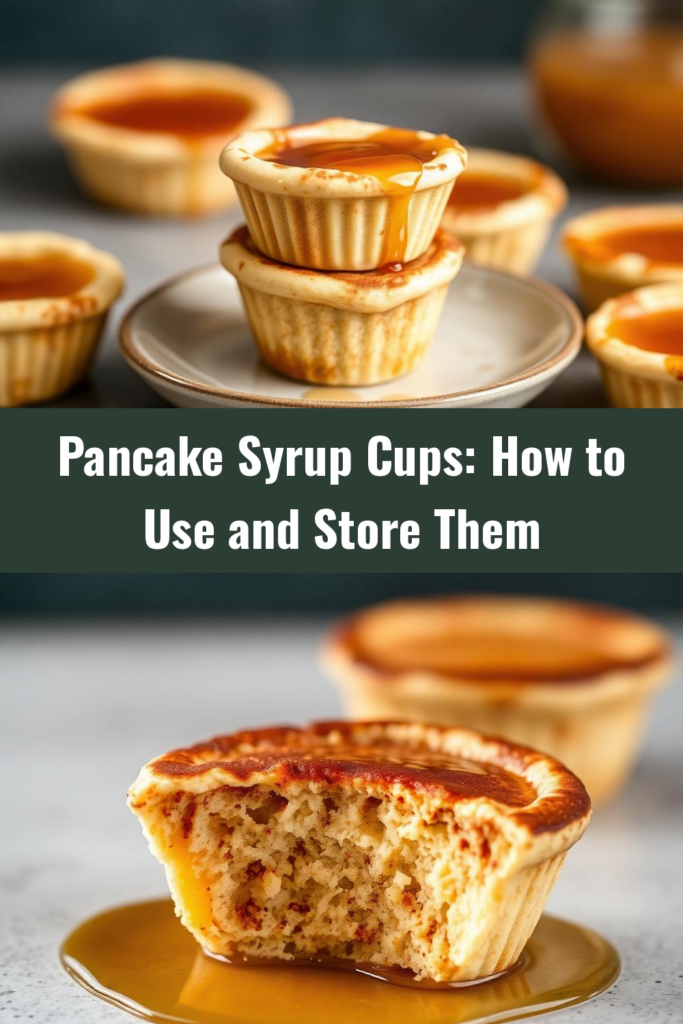
Pancake syrup cups are single-serving portions of maple or maple-flavored syrup, typically 1.5 to 2 ounces (45–60 ml) each, sealed with a peel-off lid. They suit breakfasts on the go, school lunches, camping trips, and any time you want a mess-free, pre-measured syrup portion. Serve them alongside pancakes, waffles, French toast, or oatmeal.
What They Are
Pancake syrup cups are small, disposable plastic or paper cups filled with syrup and sealed with foil or plastic film. They are sold in packs of 24, 48, or 100, usually in the breakfast aisle near bottled syrup. The syrup inside is either real maple syrup (labeled as such) or maple-flavored corn syrup with artificial flavoring. Check the ingredient list to know which you have; real maple syrup has one ingredient (maple sap), while flavored syrups list corn syrup, high-fructose corn syrup, or sugar, plus caramel color and natural or artificial flavor.
How to Open and Use
To open a cup, peel back the foil tab from one corner. If the lid resists, use a fork tine or knife tip to lift the edge. Some cups have a small notch for easier peeling. Once opened, either pour the syrup directly onto your food or dip pieces into the cup. The cups are not resealable, so use the entire portion or cover the open cup with plastic wrap and refrigerate if you do not finish it.
How Much Syrup Is in a Cup?
Standard pancake syrup cups hold 1.5 to 2 fluid ounces (45–60 ml). A typical serving for a stack of two to three pancakes is about 2 ounces (60 ml), so one cup is usually enough for one person. If you prefer less syrup, pour half and save the rest. For a double stack of four pancakes, you may want two cups.
How to Store Unopened and Opened Cups
Unopened pancake syrup cups do not need refrigeration. Store them in a cool, dry pantry or cupboard, away from direct sunlight. They have a long shelf life—typically 12 to 18 months from the manufacturing date—but check the “best by” date on the package. After opening, any leftover syrup in a cup should be refrigerated and used within 3 to 4 days. If the syrup is real maple syrup, it may develop mold if left at room temperature; refrigeration slows that. Do not freeze syrup cups; freezing can cause the syrup to crystallize and the cup to crack.
How to Reheat Syrup from a Cup
If you prefer warm syrup, pour the syrup into a small microwave-safe bowl and heat in 10-second bursts, stirring between each, until warm (about 20–30 seconds for 2 ounces). Do not microwave the sealed cup—the foil lid can spark and the plastic may melt. Alternatively, place the unopened cup in a bowl of hot water for 2–3 minutes to warm the syrup gently.
How to Recycle or Dispose of Cups
Most pancake syrup cups are made of #5 polypropylene plastic (check the recycling symbol on the bottom). If your local recycling program accepts #5, rinse the cup and place it in the recycling bin. The foil lid is usually not recyclable and goes in the trash. Some brands use paper cups with a plastic lining; these are not recyclable and should be thrown away. If you are unsure, check with your local recycling guidelines.
How to Make Your Own Syrup Cups
If you want to avoid single-use plastic, you can make your own portions using small reusable containers, such as 2-ounce (60 ml) silicone cups or small glass jars with lids. Fill each with your preferred syrup, seal, and refrigerate for up to 1 week. For a portable option, use a small leak-proof sauce container meant for lunchboxes. This gives you the same pre-measured convenience without the waste.
How to Choose Between Real Maple and Flavored Syrup
Real maple syrup is made by boiling maple sap and has a distinct, complex flavor. It is graded by color: Golden, Amber, Dark, and Very Dark. The darker grades have a stronger maple taste. Flavored syrup (often labeled “pancake syrup” or “table syrup”) is cheaper and sweeter, with a milder maple flavor. Choose real maple if you want authentic taste; choose flavored if you prefer a sweeter, budget-friendly option. Both work the same way in the cups.
How to Transport Syrup Cups
Pancake syrup cups are sturdy enough for lunchboxes and backpacks, but they can leak if the lid is punctured. Place them in a small plastic bag or a dedicated compartment in your lunchbox. For camping or hiking, pack them in a hard-sided container to prevent crushing. If you are flying, they are allowed in carry-on luggage as long as each cup is under 3.4 ounces (100 ml) and fits in a quart-sized clear bag.
How to Use Leftover Syrup from a Cup
If you have leftover syrup from a cup, pour it into a small jar or container and refrigerate. Use it within 3 to 4 days. You can add it to yogurt, oatmeal, smoothies, or use it to sweeten tea. Do not return leftover syrup to the original bottle, as that can introduce bacteria and reduce the bottle’s shelf life.
How to Tell If a Cup’s Syrup Is Bad
Syrup does not spoil quickly, but it can develop mold or off-flavors over time. If the syrup has visible mold, a sour smell, or an off taste, discard it. Real maple syrup can crystallize in the cup; that is not spoilage—just warm the cup in hot water to dissolve the crystals. If the cup is swollen, leaking, or the seal is broken, do not use it.
How to Buy the Right Size Pack
Pancake syrup cups are sold in packs of 24, 48, or 100. If you pack lunches daily, a 48-pack lasts about two months. For occasional use, a 24-pack is enough. Check the unit price to compare value; larger packs usually cost less per cup. Also, check the expiration date on the package to ensure you have time to use them.
How to Store Opened Syrup Bottles vs. Cups
An opened bottle of pancake syrup, whether real maple or flavored, should be refrigerated after opening. Real maple syrup must be refrigerated to prevent mold; flavored syrup can be stored at room temperature but refrigeration extends its quality. Syrup cups, being single-use, are meant for one-time use, so there is no long-term storage concern after opening. If you open a cup and do not finish it, the same refrigeration rule applies as for a bottle.
How to Use Syrup Cups in Recipes
Syrup cups are not just for pancakes. Use the syrup to sweeten baked beans, glaze ham or carrots, or mix into salad dressings. One cup (2 ounces) is about 4 tablespoons, so you can substitute it for 4 tablespoons of syrup in recipes. For a quick glaze, whisk 1 cup syrup with 1 tablespoon butter and a pinch of salt, then brush on roasted vegetables or chicken during the last 10 minutes of cooking.
How to Keep Syrup Cups from Sticking Together
If the cups are stacked tightly, they can stick. Store them with the foil side up, and do not stack more than 10 high. If they stick, gently twist the top cup to break the seal. Keep them in their original box or a container that allows air circulation.
How to Dispose of Syrup Cups Safely
Before throwing away a syrup cup, rinse it with water to remove sticky residue. This prevents attracting pests and makes recycling easier if your program accepts them. If the cup is plastic #5, recycle it; otherwise, place it in the trash. Do not pour syrup down the drain; it can clog pipes. Wipe out excess syrup with a paper towel and throw that in the trash.
How to Store Syrup Cups for Long-Term Use
If you buy a large pack, keep the cups in a cool, dry place. Avoid storing them in a hot garage or near a stove, as heat can cause the syrup to thin and leak. The “best by” date is a quality indicator, not a safety date. Unopened cups can last well past that date if stored properly, but the syrup may darken or crystallize. For best quality, use them within a year of purchase.
Related
- Substitute for Phyllo Cups in Appetizers
- Cucumber Simple Syrup Recipe for Drinks
- Waffle Recipe in Cups: Easy Batter for Crisp Waffles
Safe minimum internal temperatures follow USDA FSIS; raw-fish guidance follows the U.S. FDA. See our food safety notes.
Spotted an error? Tell us and we will correct it (corrections policy).