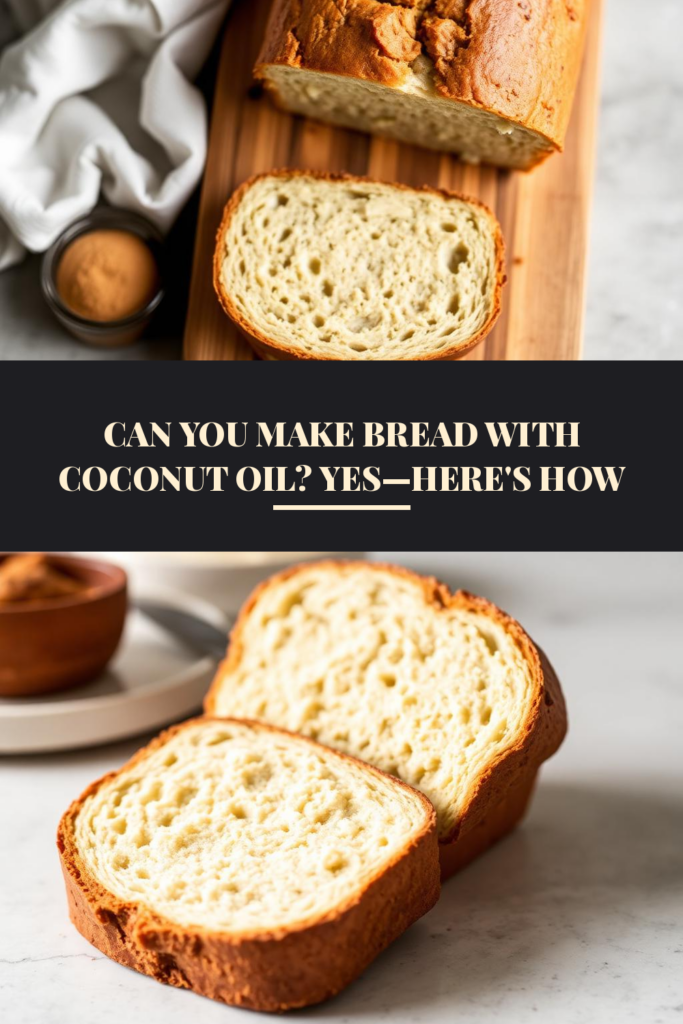
Yes, you can make bread with coconut oil. It replaces butter or other fats in nearly any bread recipe at a 1:1 ratio by volume, and it produces a tender crumb with a mild, sweet aroma. The main condition is that coconut oil must be melted before mixing, and if the recipe calls for cold butter, you’ll need to adjust the method (see below).
How Coconut Oil Changes Bread Dough and Crumb
Coconut oil is solid below about 76°F (24°C) and liquid above that. In bread, it coats the gluten strands, shortening them and making the crumb softer than an oil-free loaf. It also adds a faint coconut flavor that most people notice only in sweet or lightly flavored breads; in a strongly flavored loaf (rye, whole wheat, or with spices), it is barely detectable.
Compared to butter, coconut oil has no water (butter is about 15–20% water), so doughs made with it may feel slightly drier and need a touch more liquid. Compared to olive oil, coconut oil is more saturated and solid at cool room temperature, which can make the finished bread slightly firmer when cold.
Use the Same Amount: 1:1 Swap by Volume
For most bread recipes, replace the butter, margarine, or other oil with the same volume of coconut oil. If the recipe says 1/2 cup (113 g) butter, use 1/2 cup (112 ml) melted coconut oil. For a recipe that already calls for oil (like olive oil in focaccia), swap 1:1 by volume too.
If the recipe gives butter in grams, remember that 1 cup of butter weighs 227 g, but 1 cup of coconut oil weighs about 218 g. So if you’re measuring by weight, use about 96% of the butter weight. Easier: measure coconut oil by volume (cups or tablespoons) and ignore the gram difference.
When You Must Change the Method (Cold Butter Recipes)
If the recipe uses cold butter cut into flour (like biscuits, scones, or some pie doughs), you cannot just substitute melted coconut oil. The cold-butter method creates pockets of fat that steam and flake; melted oil coats the flour evenly, giving a more cake-like, less flaky texture.
For those recipes, use solid coconut oil, chilled in the fridge for 15 minutes, then cut it into the flour with a pastry blender or your fingertips until the mixture looks like coarse meal. Work quickly so the oil stays solid. The result will be slightly less flaky than butter but still tender.
Step-by-Step: Substituting in a Standard Yeast Bread
Here is a basic white sandwich loaf made with coconut oil. It follows the same method as a butter-based loaf, with the oil melted and added with the liquid.
Ingredients
- 3 1/2 cups (438 g) all-purpose flour, plus more for kneading
- 2 1/4 tsp (7 g) instant yeast (one packet)
- 1 1/2 tsp (9 g) salt
- 2 tbsp (30 g) sugar
- 1 cup (240 ml) warm water (110–115°F / 43–46°C)
- 1/2 cup (120 ml) whole milk, warmed
- 1/4 cup (60 ml) melted coconut oil, plus more for greasing
Instructions
- In a large bowl, whisk together the flour, yeast, salt, and sugar.
- Add the warm water, warm milk, and melted coconut oil. Stir with a wooden spoon until a shaggy dough forms.
- Turn the dough out onto a lightly floured surface. Knead for 8–10 minutes, until smooth and elastic. Add flour only if the dough is too sticky to handle.
- Place the dough in a lightly oiled bowl, cover with plastic wrap or a damp towel, and let rise in a warm spot until doubled, about 1 to 1 1/2 hours.
- Punch down the dough. Shape it into a loaf and place it in a greased 9×5-inch (23×13 cm) loaf pan. Cover and let rise again until it rises about 1 inch above the pan rim, 45–60 minutes.
- Meanwhile, preheat the oven to 375°F (190°C).
- Bake for 30–35 minutes, until the top is deep golden brown and the loaf sounds hollow when tapped on the bottom. The internal temperature should read 190–200°F (88–93°C) on an instant-read thermometer.
- Let cool in the pan for 10 minutes, then transfer to a wire rack to cool completely before slicing.
How Much Coconut Oil to Use in Quick Breads and Muffins
Quick breads (banana bread, zucchini bread, pumpkin bread) and muffins usually call for oil or melted butter. Substitute coconut oil 1:1 by volume. For example, if a banana bread recipe calls for 1/2 cup (120 ml) vegetable oil, use 1/2 cup (120 ml) melted coconut oil. Because coconut oil is more saturated, the bread may be slightly more tender and hold together a bit better when sliced.
One note: if the recipe calls for softened butter (not melted) and you use melted coconut oil, the batter will be thinner. That’s fine; just mix until combined and bake as directed. The crumb will be fine, but the loaf may be slightly denser than with butter.
Flavor and Texture: What to Expect
Refined coconut oil has no coconut taste; unrefined (virgin) coconut oil adds a noticeable coconut flavor. In a plain white loaf, use refined if you want neutral flavor. In a sweet bread like banana or chocolate chip, unrefined coconut oil pairs well.
Texture-wise, bread made with coconut oil tends to be:
- Softer and more tender than bread made with olive oil
- Similar to bread made with butter, but slightly less rich in flavor
- Firmer when refrigerated (coconut oil solidifies), so store at room temperature in a sealed bag for up to 3 days
Storage and Keeping
Bread with coconut oil keeps at room temperature in a bread bag or sealed container for 3–4 days. It does not need refrigeration; cold will make the crumb firm. For longer storage, slice and freeze in a zip-top bag for up to 3 months. Thaw slices at room temperature or toast directly from frozen.
If you made a quick bread with coconut oil, the same storage applies: 3–4 days at room temperature, or freeze for up to 3 months. Always let bread cool completely before storing to prevent a soggy crust.
Common Questions About Coconut Oil in Bread
Can I use coconut oil in sourdough?
Yes. Add it at the same stage you would add butter or oil—usually after the dough has been mixed and has rested for 30 minutes. Use 1–2 tablespoons per loaf for a softer crumb. Coconut oil will not harm the sourdough culture; it is added to the dough, not the starter.
Does coconut oil make bread rise less?
No. Fat in general can slow gluten development slightly, but the amount used in bread (1–4 tablespoons per loaf) is not enough to noticeably reduce rise. If your bread rises less, the cause is more likely too much flour, old yeast, or a cool kitchen.
Can I replace all the fat in a recipe with coconut oil?
Yes, for most breads and quick breads. The only exception is recipes that rely on cold butter for flakiness (biscuits, croissants). For those, use solid coconut oil and keep it cold, or expect a denser, less flaky result.
What if my coconut oil is solid when I start?
Measure the solid oil in a measuring cup, then melt it in a small saucepan or microwave in 10-second bursts until just liquid. Let it cool to warm (not hot) before adding to yeast dough—hot oil can kill the yeast. If the recipe calls for cold butter, keep the oil solid and cut it in as described above.
Rule of Thumb to Remember
For any bread recipe, swap coconut oil for the fat 1:1 by volume. Melt it if the recipe calls for melted fat or oil; keep it solid and cold if the recipe calls for cold butter. That one rule covers nearly every loaf, roll, or quick bread you’ll make.
Safe minimum internal temperatures follow USDA FSIS; raw-fish guidance follows the U.S. FDA. See our food safety notes.
Spotted an error? Tell us and we will correct it (corrections policy).





