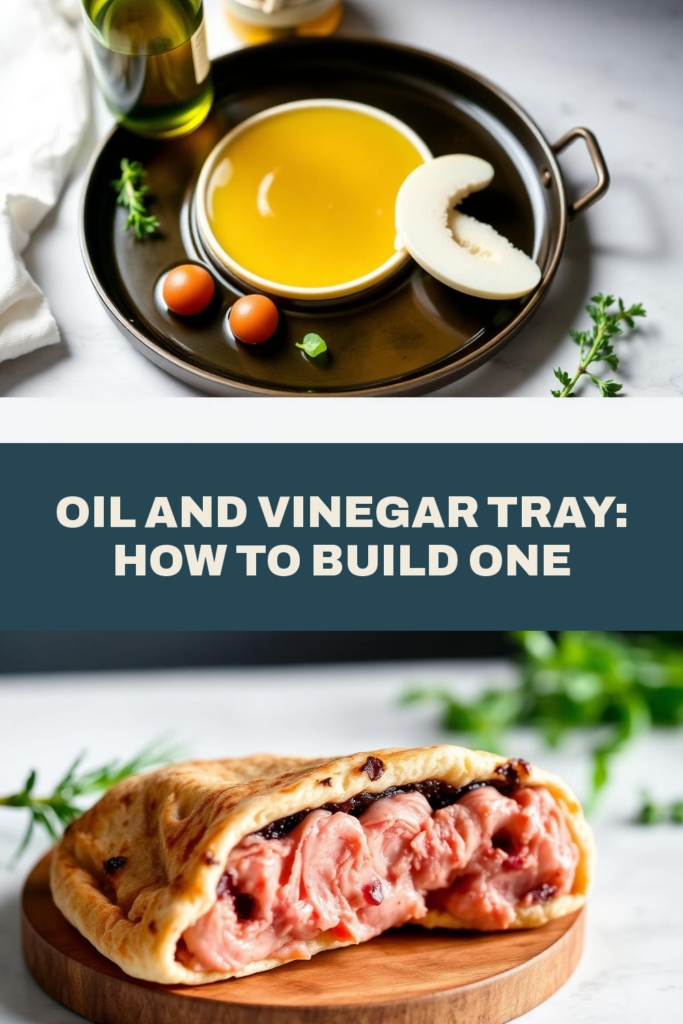
An oil and vinegar tray is a self-serve condiment station for bread, salads, and grilled vegetables. It is simple to assemble, but the key is balancing flavors and keeping the components stable so the oil does not solidify or the vinegar does not get lost. The tray works for a dinner party, a casual weeknight meal, or a picnic spread.
What Goes on the Tray
You need three things: a good extra-virgin olive oil, a vinegar with enough acidity to cut through, and a way to season each serving. The classic pairing is a mild olive oil with a red wine or balsamic vinegar, but you can mix it up. The tray itself is just a board or platter with small bowls, a cruet or two, and a few dippers.
Ingredients for the Tray
- 1 cup (240 ml) extra-virgin olive oil (use a fruity, not peppery, oil for dipping)
- 1/2 cup (120 ml) balsamic vinegar or red wine vinegar
- 1/4 cup (60 ml) white balsamic vinegar (optional, for a milder option)
- 1 teaspoon (5 ml) Dijon mustard (optional, to emulsify a dressing)
- 1/2 teaspoon (2 g) flaky sea salt
- 1/2 teaspoon (1 g) cracked black pepper
- 1 teaspoon (5 g) dried oregano or thyme (optional)
- 1 small clove garlic, peeled and left whole (optional, for flavor)
- Bread: a crusty baguette, sourdough, or focaccia, sliced
- Fresh vegetables: cherry tomatoes, cucumber rounds, bell pepper strips, or radishes
- Small bowls or ramekins for each component
How to Assemble the Oil and Vinegar Tray
- Choose a tray or board that is at least 12 inches (30 cm) long. A wooden board or a ceramic platter works well.
- Place the olive oil in a small cruet or a bowl with a spout. If using a bowl, keep it shallow so bread can be dipped easily.
- Pour the balsamic vinegar into a separate small bowl or cruet. If you want a thicker dip, reduce 1/2 cup (120 ml) of balsamic vinegar in a small saucepan over medium heat for 5-7 minutes until it coats a spoon; let it cool before serving.
- If making a combined dip, whisk together 1/4 cup (60 ml) olive oil, 2 tablespoons (30 ml) vinegar, and the mustard in a small bowl. Season with salt and pepper.
- Arrange the bread slices on one side of the tray and the vegetables on the other.
- Place the oil, vinegar, and any extra seasonings (salt, pepper, dried herbs) in the center of the tray. Add the garlic clove to the oil bowl if using.
- Serve immediately. For each person, they can dip bread into oil, then into vinegar, or mix a small amount of each on their own plate.
How to Keep the Oil and Vinegar from Separating or Solidifying
Olive oil solidifies when refrigerated, so keep the tray at room temperature for up to 2 hours. If you are serving outdoors in warm weather, keep the tray in the shade and do not leave it out for more than 1 hour if the temperature is above 90°F (32°C). If the oil does solidify, let the tray sit at room temperature for 15-20 minutes before serving. Vinegar does not solidify, but it can evaporate if left uncovered for hours; cover the bowls with plastic wrap between uses.
What to Swap If You Don’t Have Balsamic or Red Wine Vinegar
Use apple cider vinegar for a fruitier tang, or white wine vinegar for a milder flavor. For a less acidic option, use lemon juice (about 1/4 cup/60 ml) mixed with a pinch of sugar. If you only have a very strong vinegar, dilute it with a splash of water or a little honey. Each swap changes the flavor: apple cider adds a fruity note, white wine is cleaner, and lemon is brighter.
How Far Ahead Can You Make the Tray?
You can assemble the tray up to 2 hours before serving. Keep the oil and vinegar in separate sealed containers at room temperature, and slice the bread and vegetables up to 1 hour ahead, covering them with a damp towel. Do not combine the oil and vinegar more than 30 minutes before serving, as the mixture will separate (which is fine, but you may want to whisk it again). The garlic clove in the oil should be removed after 4 hours, as garlic in oil can grow bacteria if left at room temperature longer.
How to Store Leftovers from the Tray
Leftover oil and vinegar can be stored separately in the refrigerator for up to 1 week. The oil will thicken when cold, so let it come to room temperature before using. Any bread or vegetables that have been dipped should be discarded after 2 hours at room temperature. If you made a combined dressing, refrigerate it in a sealed jar for up to 4 days, and shake well before using. Never leave the tray out overnight.
What to Serve with the Oil and Vinegar Tray
This tray pairs with grilled meats, roasted chicken, or a simple green salad. For a heartier appetizer, add olives, marinated artichokes, or slices of hard cheese like parmesan or pecorino. You can also use the oil and vinegar as a dressing for the vegetables on the tray—just drizzle a little of each over them. If you are serving it as a light meal, add a bowl of soup or a plate of sliced salami.
Why the Oil and Vinegar Tray Needs a Little Salt
Salt is essential because it brings out the fruitiness of the oil and balances the acidity of the vinegar. Without it, the dip can taste flat. Use flaky salt for texture, or a fine sea salt that dissolves quickly. If you are watching sodium, you can leave it off, but the flavor will be less rounded. Add the salt just before serving, not earlier, so it stays crunchy.
Related
- Chicken and Sweet Potato Tray Bake Recipe UK
- Chicken and Sweet Potato Tray Bake Recipe
- Bread Loaf Tray: How to Bake a Loaf on a Sheet Pan
Safe minimum internal temperatures follow USDA FSIS; raw-fish guidance follows the U.S. FDA. See our food safety notes.
Spotted an error? Tell us and we will correct it (corrections policy).