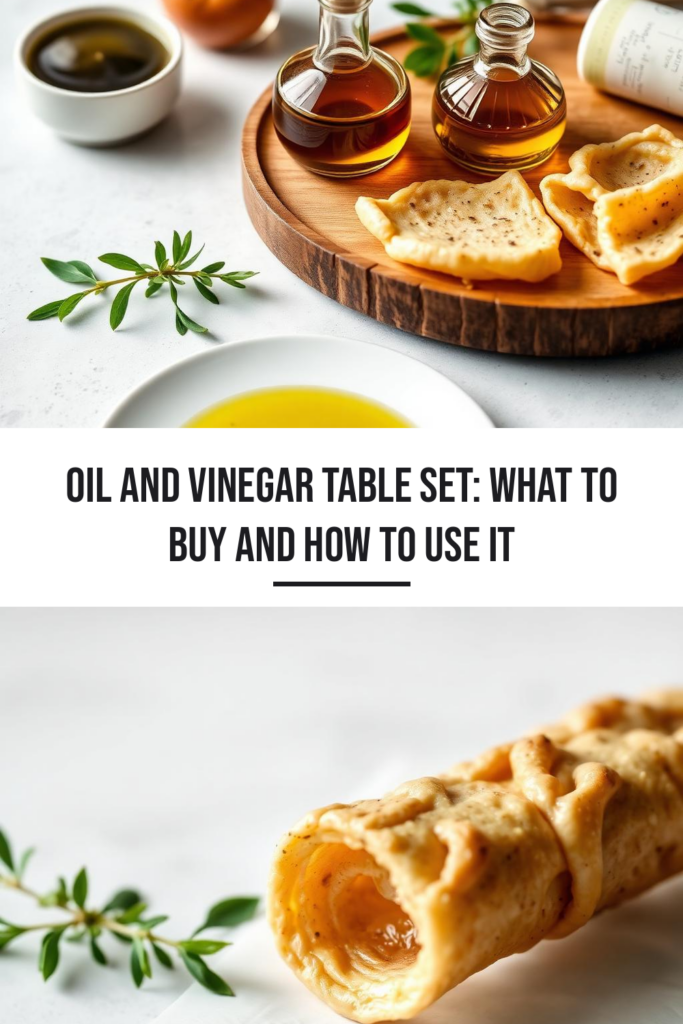
Time: 5 min setup · Serves: 4–6 · The key step: choose a set with a drip-free pour spout and a stable base, then fill it with good olive oil and vinegar. An oil and vinegar table set is a cruet pair (usually two bottles with spouts or stoppers) for serving oil and vinegar at the table for salads, bread dipping, and finishing dishes. It keeps both liquids handy, looks neat, and lets everyone season their own plate.
What to Look For
Before you buy, check three things: the spout, the base, and the material. A drip-free spout (often a small metal or plastic tip with an air hole) prevents oil from running down the bottle. A wide, heavy base stops the bottle from tipping over when you grab it. Glass is the standard material because it does not react with vinegar; ceramic also works, but avoid plastic for long-term vinegar storage. The set should include two bottles, usually 8–10 oz (240–300 ml) each, and sometimes a small tray to catch drips.
If the set comes with a wooden stand or tray, note that vinegar can damage wood over time. Look for a tray that is easy to wipe clean, or plan to place the bottles on a small plate. For daily use, a set with a stopper for the vinegar bottle and a pourer for the oil is common. Some sets have a single spout that fits both bottles; others have two different tops—make sure you can tell which is which.
Filling and Using
What to Put Inside
Use a good extra-virgin olive oil for the oil bottle, and a vinegar that suits your cooking. Red wine vinegar, white wine vinegar, or balsamic vinegar are the most common. If you use balsamic, choose a thick, aged one for dipping and a thinner one for salads. Fill the bottles about three-quarters full so you can pour without spilling. Do not mix oil and vinegar in the same bottle unless you are making a vinaigrette right before serving—they separate quickly.
How to Pour
Hold the bottle with the spout over the plate or salad bowl. Tilt it slowly; oil pours faster than vinegar, so start with a small amount. For a salad, a common ratio is 3 parts oil to 1 part vinegar, but adjust to taste. For bread dipping, pour a little oil onto a plate, add a few drops of vinegar, and season with salt and pepper. Always pour over the plate, not directly from the bottle into your mouth.
Cleaning and Storage
Wash the bottles after each use or when they look cloudy. Most glass bottles are dishwasher-safe, but check the spout—many are not. To clean, empty the bottle, rinse with warm water, and wash with mild soap. If oil residue remains, add a small amount of baking soda and water, shake, and rinse thoroughly. Dry upside down on a rack. Do not put the spouts in the dishwasher unless the label says they are dishwasher-safe; hand-wash them to avoid warping.
Store the filled bottles in a cool, dark place, away from the stove or direct sunlight. Oil can go rancid if exposed to heat and light; vinegar keeps longer but can develop sediment. Refill with fresh oil and vinegar as needed. If you add herbs, garlic, or chili to the oil or vinegar, refrigerate the bottle and use it within 4 days because of botulism risk. Plain oil and vinegar can stay at room temperature for months, but check the oil for off smells before use.
Common Problems and Fixes
Dripping spout: If oil runs down the side, the spout may be clogged or the bottle is too full. Clean the spout with a small brush or pipe cleaner, and pour less into the bottle. Some spouts have a small air hole that must be clear; poke it with a toothpick if needed.
Bottle tips over: A narrow base or a heavy bottle can cause tipping. Choose a set with a wider base, or place the bottles on a small tray that adds stability. When pouring, hold the bottle with two hands if it feels unsteady.
Vinegar tastes metallic: If the vinegar has a metallic taste, it may have been stored in a metal container or the spout is metal. Use a glass bottle with a plastic or ceramic spout, and store vinegar away from metal lids for long periods.
Frequently Asked Questions
Can I use any oil in the set? Yes, but extra-virgin olive oil is the most common for table use. If you use a flavored oil (like lemon or chili), keep it refrigerated and use it within 4 days.
How do I clean a bottle with a narrow neck? Use a bottle brush or fill with warm water and a drop of dish soap, shake, and rinse. For stubborn residue, add a teaspoon of uncooked rice and shake with water—the rice acts as an abrasive.
What if my set has a single spout for both bottles? That is fine; just rinse the spout between uses to avoid mixing flavors. Some sets come with two identical spouts, so you can leave one in each bottle.
Ingredients
- 1 bottle extra-virgin olive oil (about 8–10 oz / 240–300 ml)
- 1 bottle vinegar (red wine, white wine, or balsamic; about 8–10 oz / 240–300 ml)
Instructions
- Wash the bottles and spouts with warm soapy water. Rinse well and dry completely.
- Fill the oil bottle with olive oil, leaving about 1 inch (2.5 cm) of space at the top.
- Fill the vinegar bottle with your chosen vinegar, leaving the same headspace.
- Attach the spouts or stoppers. If the set has a tray, place the bottles on it.
- Set the bottles on the table. For a salad, pour 3 parts oil to 1 part vinegar over the greens. For bread dipping, pour a small pool of oil on a plate, add a few drops of vinegar, and season with salt and pepper.
Storage: Keep filled bottles at room temperature in a cool, dark place for up to 3 months for oil and 6 months for vinegar. If you add herbs, garlic, or chili, refrigerate and use within 4 days. Wash bottles after each use or when they look cloudy.
Related
- Lemon Bread With Oil: Moist Quick Bread Recipe
- Substitute for Oil in Zucchini Bread
- Apple Cider Vinegar Vinaigrette Recipe
Safe minimum internal temperatures follow USDA FSIS; raw-fish guidance follows the U.S. FDA. See our food safety notes.
Spotted an error? Tell us and we will correct it (corrections policy).