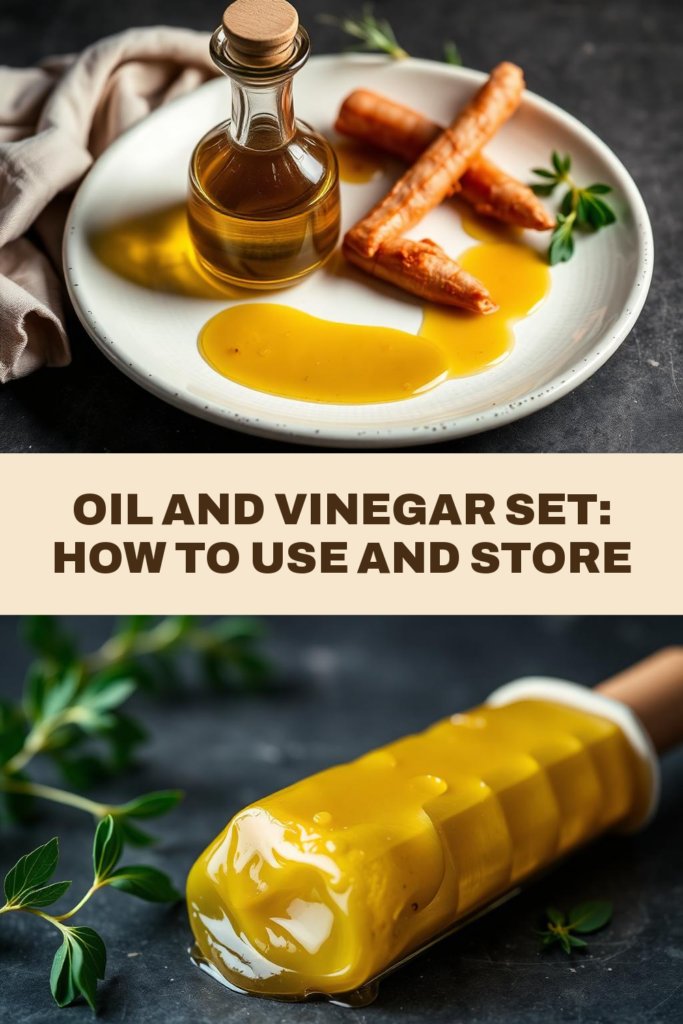
Time 5 min to fill · Serves 1 set · The key step keep the oil and vinegar separate until you dress the salad. An oil and vinegar set is a matched cruet and bottle pair, usually with a stopper or pour spout, used to serve and store homemade vinaigrette or separate oil and vinegar at the table. It suits weeknight salads, dinner parties, and anyone who prefers to mix dressing fresh rather than buying bottled.
Ingredients
- 1 cup (240 ml) extra-virgin olive oil
- 1/2 cup (120 ml) red wine vinegar or white wine vinegar
- 1 tsp (5 g) Dijon mustard (optional, for emulsified dressing)
- 1/2 tsp (2 g) salt
- 1/4 tsp (1 g) black pepper
- 1 small garlic clove, minced (optional, for flavor)
Instructions
- If you plan to mix the dressing in the set, combine the vinegar, mustard, salt, pepper, and garlic in the bottle. Shake or whisk until the salt dissolves.
- Add the olive oil. If you want a temporary emulsion, shake vigorously for 10 seconds; it will separate on standing. For a longer-lasting emulsion, use a blender or whisk in a bowl, then pour into the bottle.
- If you prefer to keep oil and vinegar separate, fill one bottle with oil and the other with vinegar. Label each bottle with a permanent marker or a small tag.
- Seal the bottles tightly. Store in a cool, dark cupboard or the refrigerator, depending on the ingredients (see storage section).
- Shake well before each use if the dressing has separated.
Oil and Vinegar Set: What Goes Wrong and How to Fix It
Three common problems happen with an oil and vinegar set: the dressing separates, the oil solidifies, or the vinegar becomes cloudy. Each has a clear cause and fix.
Dressing Separates Too Fast
Oil and vinegar naturally separate because oil is less dense and not water-soluble. A simple shake recombines them for a few minutes. To slow separation, add a teaspoon of Dijon mustard or honey, which acts as an emulsifier. For a stable emulsion that lasts hours, blend the vinegar, mustard, salt, and pepper first, then slowly drizzle in the oil while blending. The result will still separate after a day, but it will hold longer during a meal.
Oil Turns Cloudy or Solidifies in the Fridge
Extra-virgin olive oil solidifies below about 50°F (10°C). If you refrigerate the set, the oil will turn cloudy or even solid. This is harmless. Remove the bottle 15–20 minutes before use and let it warm to room temperature. Do not heat it rapidly; a warm water bath (not boiling) works if you are in a hurry. The oil will return to clear liquid.
Vinegar Develops a Cloudy Sediment
Unfiltered vinegar, especially apple cider or red wine vinegar, can develop a cloudy sediment called the “mother.” It is harmless and can be strained out. If the vinegar smells sharp or fruity, it is fine. If it smells musty or flat, discard it. Cloudiness from contamination—such as dipping a wet spoon in—can also happen. Always use a clean, dry pour spout or cap.
Scaling the Dressing for Half or Double Batches
| Batch | Oil | Vinegar | Mustard | Salt | Pepper |
|---|---|---|---|---|---|
| Half | 1/2 cup (120 ml) | 1/4 cup (60 ml) | 1/2 tsp | 1/4 tsp | 1/8 tsp |
| Full | 1 cup (240 ml) | 1/2 cup (120 ml) | 1 tsp | 1/2 tsp | 1/4 tsp |
| Double | 2 cups (480 ml) | 1 cup (240 ml) | 2 tsp | 1 tsp | 1/2 tsp |
For a half batch, use a smaller bottle or fill only halfway. For a double batch, use a larger cruet or split between two sets. The ratio of oil to vinegar is always 2:1 by volume.
Storage and Shelf Life of Oil and Vinegar Sets
Store the set in a cool, dark place away from direct sunlight and heat. A cupboard or pantry is ideal. Oil and vinegar both keep for months, but their quality declines over time.
- Oil: Extra-virgin olive oil keeps 18–24 months from the harvest date, but once opened, use within 6–12 months for best flavor. If it smells rancid (like crayons or putty), discard it.
- Vinegar: Vinegar is shelf-stable for years. Once opened, it does not expire, but flavor can mellow. If it develops a strong off odor or visible mold, discard it.
- Mixed dressing with garlic or herbs: If you add fresh garlic, herbs, or shallots to the dressing, it must be refrigerated and used within 4 days. This is a food-safety rule: garlic and herbs in oil can support botulism if left at room temperature. Never leave such a dressing out for more than 2 hours.
- Mixed dressing without fresh produce: A simple oil-and-vinegar mix with only salt, pepper, and mustard can sit at room temperature for a few hours, but for longer storage, refrigerate it. Refrigerated, it keeps 1–2 weeks. Shake well before using.
If you store the set in the refrigerator, the oil will solidify. Take it out 15–20 minutes before serving. Do not microwave the bottle; it can crack.
Choosing the Right Oil and Vinegar for Your Set
The oil and vinegar you choose affect flavor and shelf life. Extra-virgin olive oil has a fruity, peppery taste and is best for salads. Neutral oils like canola or grapeseed have a milder flavor and are better if you want the vinegar to shine. For vinegar, red wine vinegar is tangy and robust; white wine vinegar is lighter; apple cider vinegar adds a fruity note; balsamic vinegar is sweet and thick, but it is often used in smaller amounts.
If you are using balsamic vinegar, the ratio can shift to 3 parts oil to 1 part vinegar because balsamic is more concentrated. Taste as you go. For a set with two bottles, you can fill one with oil and one with vinegar, letting guests mix their own. In that case, no dressing is pre-mixed, and storage is simply oil and vinegar separately.
Cleaning and Maintaining Your Oil and Vinegar Set
Clean the bottles after each use, especially if you made a dressing with garlic or herbs. Wash with hot, soapy water and rinse thoroughly. Use a bottle brush for narrow necks. Dry completely before refilling to prevent water from diluting the vinegar or causing mold. If the bottle has a pour spout, remove it and clean it separately. Do not put the bottles in the dishwasher unless the manufacturer says they are dishwasher-safe; the heat can warp plastic stoppers or cloud glass.
If the bottle develops a lingering smell from garlic or herbs, soak it in a solution of 1 tablespoon (15 g) baking soda and 1 cup (240 ml) warm water for 30 minutes, then rinse. Avoid using bleach or harsh chemicals.
Using the Set at the Table
Place the set on the table with a small plate or tray to catch drips. If the bottles have stoppers, remove them before pouring; if they have pour spouts, open the cap. For a mixed dressing, shake the bottle well before pouring. For separate oil and vinegar, let guests pour their own ratio—typically 2 parts oil to 1 part vinegar, but adjust to taste. A small spoon or fork can be used to whisk the dressing on the salad if it separates.
If you are serving a salad with a delicate green like arugula, dress it lightly to avoid wilting. For sturdier greens like romaine, you can be more generous. The set is also useful for drizzling oil over bread or vegetables, or for adding vinegar to sauces.
When to Replace the Set
Replace the set if the glass cracks, the stopper no longer seals, or the pour spout becomes clogged. A cracked bottle can leak and contaminate the contents. A loose stopper lets air in, which speeds up oil oxidation. If the set is made of plastic, check for clouding or cracks; plastic can absorb odors and stain. Glass is preferred for long-term use because it is non-reactive and easy to clean.
If you notice the oil has a rancid smell or the vinegar tastes flat, replace the contents, not necessarily the set. The set itself can last for years with proper care.
Related
- Lemon Bread With Oil: Moist Quick Bread Recipe
- Substitute for Oil in Zucchini Bread
- Apple Cider Vinegar Vinaigrette Recipe
Safe minimum internal temperatures follow USDA FSIS; raw-fish guidance follows the U.S. FDA. See our food safety notes.
Spotted an error? Tell us and we will correct it (corrections policy).