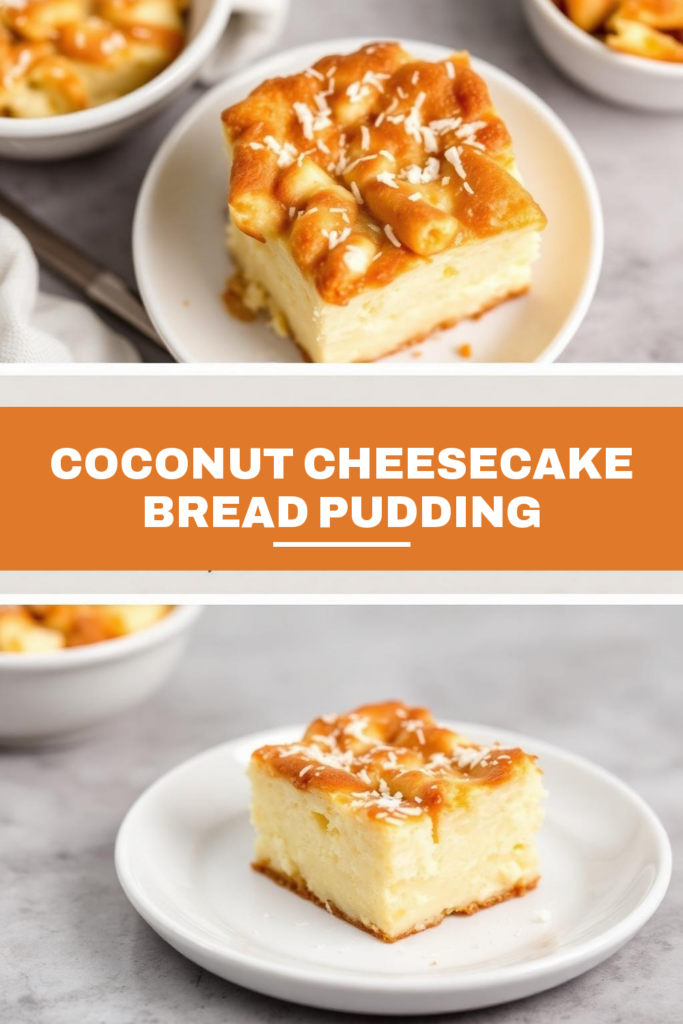
Coconut cheesecake bread pudding combines the custard-soaked softness of bread pudding with the tangy richness of cheesecake and the sweet, nutty flavor of coconut. The dish depends on the ratio of bread to custard: enough liquid to saturate the bread without turning it to soup, and enough egg to set the custard into a sliceable, spoonable texture. It suits a brunch, a holiday dessert table, or a make-ahead weekend treat.
Ingredients
- 8 cups (about 450 g) day-old brioche or challah, cut into 1-inch cubes
- 1 cup (240 ml) full-fat coconut milk
- 1 cup (240 ml) heavy cream
- 3/4 cup (150 g) granulated sugar
- 1/2 cup (100 g) packed light brown sugar
- 4 large eggs
- 2 large egg yolks
- 1 tablespoon (15 ml) vanilla extract
- 1 teaspoon (5 ml) coconut extract (optional)
- 1/2 teaspoon (3 g) salt
- 8 oz (226 g) cream cheese, softened
- 1/2 cup (40 g) sweetened shredded coconut, plus more for topping
Instructions
- Preheat the oven to 350°F (175°C). Butter a 9×13-inch (23×33 cm) baking dish.
- Place the bread cubes in the prepared dish and spread them into an even layer.
- In a medium saucepan, heat the coconut milk and heavy cream over medium heat until steaming, about 3–4 minutes. Do not boil.
- In a large bowl, whisk the granulated sugar, brown sugar, eggs, egg yolks, vanilla, coconut extract (if using), and salt until smooth.
- Gradually whisk the warm milk mixture into the egg mixture, a ladleful at a time, to temper the eggs. Whisk until fully combined.
- Add the softened cream cheese to the custard mixture. Whisk until the cream cheese is mostly smooth; small lumps are fine.
- Stir in the shredded coconut.
- Pour the custard over the bread cubes. Press the bread down gently with a spatula to help it absorb the liquid. Let it sit for 15 minutes at room temperature.
- After sitting, press the bread again. Sprinkle the top with an extra 2 tablespoons of shredded coconut.
- Bake for 45–55 minutes, until the center is just set and the top is golden brown. The internal temperature of the custard should read 160°F (71°C) on a food thermometer (USDA FSIS safe minimum for egg dishes).
- Let cool on a wire rack for at least 20 minutes before serving. Serve warm or at room temperature.
Why Did My Bread Pudding Turn Out Too Dry?
Dry bread pudding usually comes from too little custard or overbaking. The bread should be saturated but not swimming; if you can see dry bread after pressing, add another 1/4 cup (60 ml) of coconut milk. Overbaking dries out the custard—start checking at 45 minutes, and pull it when the center jiggles slightly but is not liquid. If the top browns too fast, cover loosely with foil for the last 15 minutes.
Why Is My Bread Pudding Too Runny?
A runny center means the custard was underbaked or the bread-to-custard ratio was off. The custard should be about 2 cups (480 ml) per 6 cups of bread cubes; this recipe uses roughly 2.5 cups (600 ml) for 8 cups. Bake until the center reaches 160°F (71°C). If it still looks wet after 55 minutes, the bread may have been too fresh and didn’t absorb enough—use day-old bread or toast fresh cubes at 300°F (150°C) for 10 minutes to dry them out.
Why Is It Too Dense?
Dense bread pudding is usually from overmixing the custard (which develops gluten if you used bread flour) or from pressing the bread too hard, which crushes the air out. Fold the bread gently with a spatula instead of pressing firmly. Also, don’t skip the 15-minute rest—it lets the bread absorb without being compacted. If you used a very dense bread like sourdough, cube it smaller (3/4-inch) so it soaks evenly.
What Can I Substitute for Coconut Milk or Cream Cheese?
- Instead of coconut milk: Use whole milk or half-and-half. The coconut flavor will be milder; add 1/2 teaspoon more coconut extract to compensate.
- Instead of heavy cream: Use half-and-half or whole milk. The custard will be lighter and less rich.
- Instead of cream cheese: Use mascarpone or a dairy-free cream cheese alternative. Mascarpone is less tangy; add 1 tablespoon lemon juice for tang. Dairy-free cream cheese may need a few extra minutes to melt into the custard.
- Instead of brioche: Use challah, Hawaiian rolls, or a plain white sandwich bread. Avoid whole-grain breads, which make the pudding dense.
- Instead of shredded coconut: Use unsweetened coconut flakes. Reduce the sugar by 2 tablespoons if you use unsweetened.
How Should I Store and Reheat It?
Refrigerate leftovers within 2 hours of baking. Cover the dish with foil or transfer to an airtight container; it keeps for 3–4 days in the fridge. To reheat, warm a portion in the microwave for 30–60 seconds, or in a 300°F (150°C) oven for 10–15 minutes. You can freeze the baked pudding for up to 2 months—wrap it tightly in plastic wrap and foil, then thaw overnight in the fridge before reheating. Do not freeze unbaked custard with bread, as the texture will suffer.
What Goes Well With This Dish?
Serve it warm with a drizzle of caramel sauce, a scoop of vanilla ice cream, or a spoonful of whipped cream. For brunch, pair it with fresh berries and a cup of coffee. If you want a toasted coconut topping, spread extra shredded coconut on a baking sheet and toast at 350°F (175°C) for 3–5 minutes, watching closely, then sprinkle over the top before serving.
Can I Make It Ahead?
Yes. Assemble the bread pudding (without baking), cover, and refrigerate for up to 24 hours. Let it sit at room temperature for 30 minutes before baking, then add 5–10 minutes to the baking time. The bread will absorb more liquid overnight, so you may need to add an extra 1/4 cup (60 ml) of coconut milk before baking if it looks dry.
Safe minimum internal temperatures follow USDA FSIS; raw-fish guidance follows the U.S. FDA. See our food safety notes.
Spotted an error? Tell us and we will correct it (corrections policy).





