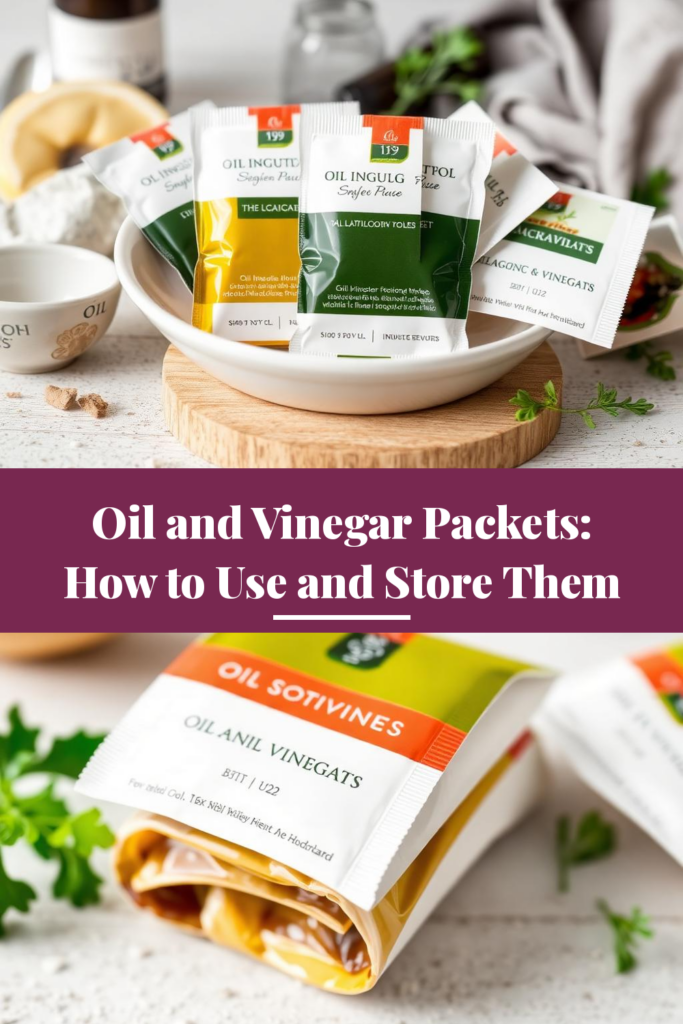
Oil and vinegar packets are the small condiment pouches found at salad bars and delivery orders, holding a single serving of dressing or the two separate components. They give you a quick, portable way to dress a salad, marinate a small portion of meat, or add acidity to a dish without opening a full bottle. This page covers how to use them, how to combine them into a dressing, and how long they stay good after opening.
What Is in a Typical Oil and Vinegar Packet?
Most packets contain either a pre-mixed vinaigrette or two separate compartments with oil on one side and vinegar on the other. The oil is usually soybean, canola, or olive oil; the vinegar is often red wine, white wine, or balsamic. Some packets add salt, sugar, or dried herbs. Check the label for the exact ingredients, since packets vary by brand and restaurant.
If the packet is pre-mixed, it is ready to pour. If it is split, you can use the two parts separately or combine them. A standard split packet holds about 1.5 tablespoons (22 ml) total, roughly 1 tablespoon (15 ml) oil and 1.5 teaspoons (7 ml) vinegar.
How to Turn a Packet into a Dressing
For a split packet, empty both sides into a small bowl or directly onto the salad. Whisk or shake to combine. The ratio is already set by the packet, so no measuring is needed. If you want a sharper dressing, add a few drops of extra vinegar from a bottle; if you want it milder, add a little more oil.
For a pre-mixed packet, shake it well before opening, because the oil and vinegar separate during storage. Pour it over the salad and toss immediately. If you are dressing a hot dish, such as roasted vegetables or warm grains, pour the dressing on right before serving so the oil does not turn greasy.
You can also use the packet as a marinade for 4–6 ounces (115–170 g) of chicken, fish, or tofu. Combine the packet contents with the protein in a bowl, refrigerate for 15–30 minutes, then cook. Discard any leftover marinade that touched raw meat.
How Long Do Opened Packets Keep?
An unopened packet lasts for months past the printed date, as long as it is stored in a cool, dry place. Once opened, the shelf life depends on the contents. A plain oil-and-vinegar mix (no herbs, garlic, or dairy) can sit at room temperature for up to 2 hours during a meal, then should be refrigerated and used within 3–4 days. If the packet contains garlic, herbs, or chili, refrigerate it immediately after opening and use within 4 days, because those ingredients can grow botulism bacteria in oil at room temperature.
If the packet includes cheese, yogurt, or any dairy, treat it like a perishable dressing: refrigerate within 2 hours and use within 3–4 days. Do not taste a packet to check if it is still good; if it smells off, has separated into an odd texture, or shows mold, throw it out.
Scaling Up: From One Packet to a Full Dressing
If you like the flavor of a particular packet and want to make a larger batch at home, use the same ratio. A standard vinaigrette is 3 parts oil to 1 part vinegar. For a single packet, that is 1 tablespoon (15 ml) oil and 1 teaspoon (5 ml) vinegar. To make a cup (240 ml) of dressing, use ¾ cup (180 ml) oil and ¼ cup (60 ml) vinegar, plus a pinch of salt and a pinch of sugar if you want it closer to a commercial packet.
| Batch | Oil | Vinegar | Salt | Yield |
|---|---|---|---|---|
| Half | 6 tbsp (90 ml) | 2 tbsp (30 ml) | ¼ tsp | ½ cup (120 ml) |
| Single | ¾ cup (180 ml) | ¼ cup (60 ml) | ½ tsp | 1 cup (240 ml) |
| Double | 1½ cups (360 ml) | ½ cup (120 ml) | 1 tsp | 2 cups (480 ml) |
Whisk the oil and vinegar together with the salt. The dressing will separate as it sits, so shake or whisk again before each use. Store it in a sealed jar in the refrigerator for up to 2 weeks; the oil may solidify when cold, so let it sit at room temperature for 10 minutes and shake before serving.
What to Serve with Oil and Vinegar Packets
Beyond salads, a packet works as a quick finishing sauce for steamed vegetables, a drizzle over grilled fish or chicken, or a dressing for cold pasta or bean salads. For a simple side, toss 2 cups (about 150 g) of mixed greens with one packet, plus a pinch of black pepper. The vinegar brightens the greens, and the oil carries the flavor.
If you are packing a lunch, keep the packet separate from the salad until you are ready to eat, so the leaves do not wilt. For a picnic, carry the packet in a small cooler if the temperature is above 90°F (32°C); otherwise, it can stay in a lunch bag for up to 2 hours.
For a more filling meal, use the packet as a marinade for 4 ounces (115 g) of chicken breast. Marinate in the refrigerator for 30 minutes, then cook to an internal temperature of 165°F (74°C) (USDA FSIS safe minimum). Discard the used marinade. The same packet can dress a side salad while the chicken cooks.
Oil and Vinegar Packets for Large Batches and Kids
For a family dinner, you can open several packets and pour them into a small bowl, then let everyone spoon their own dressing. This avoids wasting packets and lets each person control the amount. For kids, the vinegar can be sharp; mix one packet with 1 teaspoon (5 ml) of honey or maple syrup to soften the acidity, or use a balsamic packet, which is naturally milder.
If you are feeding a crowd, count on about one packet per salad serving. A standard packet dresses 2–3 cups (150–225 g) of greens. For 10 people, you will need about 10 packets, or make a homemade batch using the scaling table above. Store any leftover opened packets in a sealed container in the refrigerator and use within 4 days.
For a child’s lunchbox, a split packet is easier for small hands to open than a full bottle. Show them how to tear the top carefully and pour it into the salad container, then close the lid and shake. If the packet has a foil top, they may need help peeling it back.
When using packets for cooking, remember that they are salted. Adjust the salt in your recipe accordingly, starting with half the amount you normally use. For a marinade, the salt helps season the meat, but do not add extra salt until after cooking.
Related
- Lemon Bread With Oil: Moist Quick Bread Recipe
- Substitute for Oil in Zucchini Bread
- Apple Cider Vinegar Vinaigrette Recipe
Safe minimum internal temperatures follow USDA FSIS; raw-fish guidance follows the U.S. FDA. See our food safety notes.
Spotted an error? Tell us and we will correct it (corrections policy).