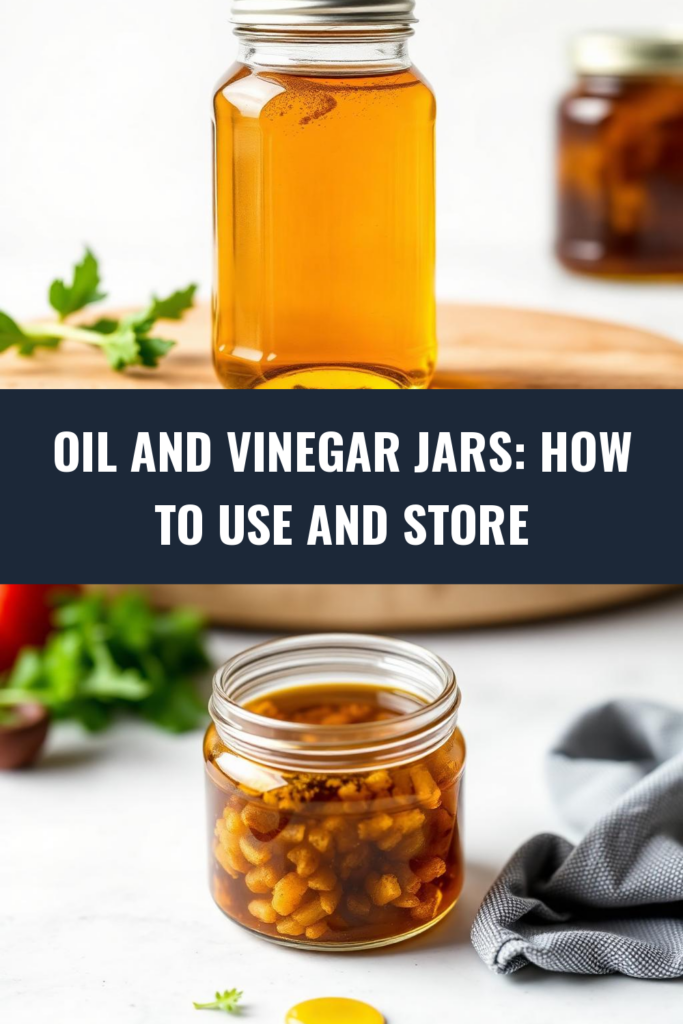
Oil and vinegar jars are the classic cruet set for salads, marinades, and bread dipping. The goal is a stable blend that pours easily and stays fresh, achieved by choosing the right jar and knowing how long each component keeps. This page covers choosing a jar, making a vinaigrette right in the bottle, and storing both oil and vinegar safely.
What Kind of Jar Works Best?
Look for a glass jar with a tight-fitting lid—a cruet with a spout, a mason jar, or a bottle with a stopper all work. Avoid plastic for long-term oil storage because oil can slowly absorb compounds from some plastics. A jar with a narrow neck pours a thinner stream, while a wide-mouth jar is easier to fill and clean. For a classic vinaigrette, a 12-ounce (355 ml) bottle is a good size for a single batch; for a larger batch, use a 16- or 24-ounce (475 or 710 ml) bottle.
How to Make a Vinaigrette Right in the Jar
You don’t need a separate bowl—just add ingredients to the jar, seal, and shake. The standard ratio is 3 parts oil to 1 part vinegar, but you can adjust to taste. For a thick, emulsified dressing, add a teaspoon of Dijon mustard or honey; it helps the oil and vinegar stay mixed longer.
Basic Vinaigrette Recipe
- 3/4 cup (180 ml) olive oil
- 1/4 cup (60 ml) red wine vinegar or white wine vinegar
- 1 teaspoon Dijon mustard (optional, for emulsification)
- 1/2 teaspoon salt
- 1/4 teaspoon black pepper
- 1 small garlic clove, minced (optional)
- Add all ingredients to the jar. If using garlic, mince it finely or press it so it doesn’t clog the spout.
- Seal the lid tightly.
- Shake vigorously for 20–30 seconds until the dressing looks cloudy and combined.
- Taste and adjust salt or vinegar—add a pinch of salt or a few drops of vinegar at a time.
- Use immediately or refrigerate (see storage below).
Makes about 1 cup (240 ml) · Total time: 5 minutes
How Long Does an Open Bottle of Oil or Vinegar Keep?
Both oil and vinegar are shelf-stable, but they degrade over time. An open bottle of olive oil or vegetable oil keeps for about 6 months at room temperature if stored in a cool, dark place; it can last up to a year if refrigerated (it will turn cloudy and thick—that’s normal, and it clears at room temperature). Vinegar, being acidic, keeps almost indefinitely; an open bottle of most vinegars (red wine, white, apple cider) stays good for 2–3 years at room temperature, though flavor slowly fades. Balsamic vinegar can last even longer, but its flavor peaks within a year of opening.
If you add fresh herbs, garlic, or chili to oil, that mixture must be refrigerated and used within 4 days because of botulism risk. The same rule applies to a vinaigrette that contains fresh garlic or shallots—refrigerate and use within 4 days. A plain oil-and-vinegar dressing without fresh aromatics can sit at room temperature for a few hours, but refrigerate any leftover dressing.
How to Clean and Care for Your Oil and Vinegar Jars
Wash glass jars in hot, soapy water after each use, especially if they held oil—oil can go rancid and leave a sticky film. Use a bottle brush to reach the bottom and neck. Rinse thoroughly and let dry completely before refilling; moisture can make oil go cloudy and can promote mold in vinegar. For a cruet with a spout, run hot water through the spout to clear any dried dressing. Avoid putting a glass cruet in the dishwasher if it has a metal or cork lid; hand-wash those parts.
Scaling the Vinaigrette for Half or Double Batches
| Batch | Oil | Vinegar | Mustard (if using) | Salt |
|---|---|---|---|---|
| Half | 6 tbsp (90 ml) | 2 tbsp (30 ml) | 1/2 tsp | 1/4 tsp |
| Single | 3/4 cup (180 ml) | 1/4 cup (60 ml) | 1 tsp | 1/2 tsp |
| Double | 1 1/2 cups (360 ml) | 1/2 cup (120 ml) | 2 tsp | 1 tsp |
Serving and Pairing Ideas
Use the vinaigrette on green salads, grain bowls, or roasted vegetables. For bread dipping, pour olive oil into a small dish, add a splash of balsamic vinegar, and season with salt and pepper. The same jar dressing works as a marinade for chicken or fish—use it within the day, and discard any leftover marinade that touched raw meat. Pair with a crisp white wine or sparkling water with lemon.
What About Oil and Vinegar Jars for Gifts?
Fill a clean glass bottle with olive oil and a separate bottle with vinegar, and attach a tag with the ratio (3:1) and a simple recipe. Do not add fresh herbs or garlic to the oil if you plan to give it—those must be refrigerated and used within 4 days, so they are not suitable for a shelf-stable gift. Instead, add dried herbs (like rosemary or thyme) that are fully dry; they are safe at room temperature, but the flavor will be milder. Always label the bottle with the contents and date.
Oil and Vinegar Jars for Large Batches and Kids
For a large batch (like for a party), use a 32-ounce (946 ml) jar and multiply the recipe by 4. Shake well before each use because oil and vinegar separate on standing. For kids, skip the garlic and use a milder vinegar like white wine or apple cider; you can also add a teaspoon of honey or maple syrup to balance the tartness. Store any leftover dressing in the fridge for up to 4 days if it contains fresh aromatics, or up to 2 weeks if it is just oil, vinegar, salt, and pepper (the acid keeps it safe, but flavor fades).
Related
- Lemon Bread With Oil: Moist Quick Bread Recipe
- Substitute for Oil in Zucchini Bread
- Apple Cider Vinegar Vinaigrette Recipe
Safe minimum internal temperatures follow USDA FSIS; raw-fish guidance follows the U.S. FDA. See our food safety notes.
Spotted an error? Tell us and we will correct it (corrections policy).