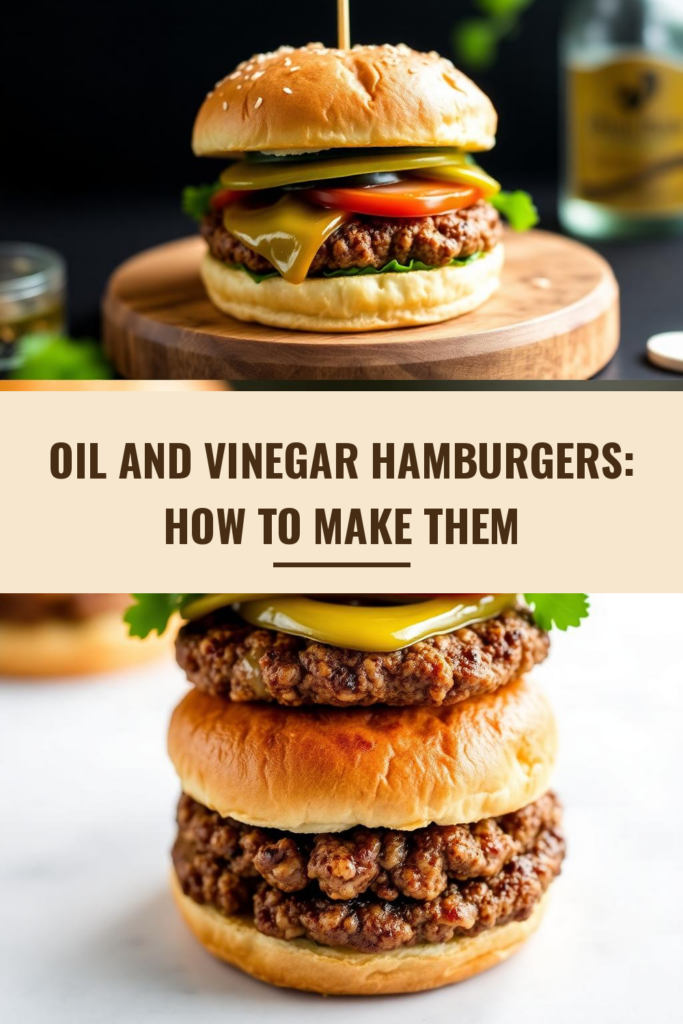
Oil and vinegar hamburgers are a simple diner-style burger where the patty is brushed with a tangy oil-and-vinegar mixture while grilling, giving it a crisp, slightly acidic crust. The key is using the right vinegar and applying it at the right time so it doesn’t just burn off. Here’s how to get that classic flavor at home.
Ingredients
- 1 ½ lb (680 g) ground beef (80/20)
- 1 tsp (5 g) salt
- ½ tsp (2 g) black pepper
- ¼ cup (60 ml) neutral oil (canola or vegetable)
- 3 tbsp (45 ml) red wine vinegar
- 1 tsp (5 ml) Worcestershire sauce (optional)
- 4 hamburger buns
- Lettuce, tomato, onion, pickles (for serving)
Instructions
- In a small bowl, whisk together the oil, red wine vinegar, and Worcestershire sauce (if using). Set aside.
- Divide the ground beef into 4 equal portions (about 6 oz / 170 g each). Gently shape into patties about ¾ inch (2 cm) thick. Season both sides with salt and pepper.
- Preheat a grill or cast-iron skillet over medium-high heat (about 400°F / 200°C).
- Place the patties on the grill. Cook for 3 minutes without moving, then brush the tops with the oil-vinegar mixture.
- Flip the patties. Brush the cooked side with more mixture. Cook for another 3–4 minutes for medium (160°F / 71°C internal temperature, USDA FSIS safe minimum for ground meat).
- During the last minute, brush both sides once more with the mixture, then remove from heat.
- Let the patties rest for 2–3 minutes. Toast the buns on the grill for 30 seconds if desired.
- Assemble the burgers with your chosen toppings.
What Makes Oil and Vinegar Hamburgers Different
The oil-vinegar mixture is not a marinade—it’s a basting sauce. The oil helps the patty brown and keeps it moist, while the vinegar adds a tangy brightness that cuts through the richness of the beef. Unlike a traditional burger that’s seasoned only with salt and pepper, this version has a distinct acidic kick that pairs well with sharp cheese or pickled toppings.
Choosing the Right Vinegar and Oil
Red wine vinegar is the classic choice because its flavor is bold but not overpowering. White wine vinegar or apple cider vinegar also work; each adds a slightly different tang. Avoid balsamic vinegar, which is too sweet and thick. For the oil, use a neutral oil like canola or vegetable so the vinegar flavor stays forward. Olive oil can be used, but it will add its own fruity note.
How to Apply the Mixture Without Burning It
Apply the mixture only after the patty has had a chance to sear—about 3 minutes per side. If you brush it on too early, the vinegar will evaporate and the sugar (if any) will burn, leaving a bitter taste. Brush it on after flipping, and again in the last minute of cooking. This builds the crust without over-browning.
Substitutions and Variations
- Ground turkey or chicken: Use lean ground poultry; cook to 165°F (74°C) safe minimum. The mixture will still work, but the patties will be drier—consider adding 1 tbsp (15 ml) oil to the meat.
- Gluten-free buns: Use your favorite gluten-free buns; the patty mixture is naturally gluten-free (check Worcestershire sauce label).
- Add garlic: Add 1 minced garlic clove to the oil-vinegar mixture for extra flavor. If you make a batch ahead, refrigerate and use within 4 days.
- Spicy version: Add ½ tsp (2 g) red pepper flakes to the mixture.
Make-Ahead Timeline
You can shape the patties up to 24 hours in advance and keep them refrigerated in a single layer. The oil-vinegar mixture can be made up to 3 days ahead and stored in a sealed jar in the fridge—bring it to room temperature before using. Do not mix the patties with the vinegar mixture ahead of time; the acid will start to break down the meat’s texture.
Storage and Reheating
Cooked burgers keep in the refrigerator for 3–4 days. To reheat, place them in a 350°F (175°C) oven for 10–12 minutes, or until heated through to 165°F (74°C). Avoid microwaving, which makes the patty rubbery. You can also freeze cooked patties for up to 3 months; thaw overnight in the fridge before reheating.
Serving and Pairing Ideas
These burgers are best with toppings that echo the tang: sharp cheddar, pickled red onions, or a slice of tomato. Serve with potato salad, coleslaw, or grilled corn. For a complete meal, pair with a crisp green salad dressed with a simple vinaigrette—the vinegar in the burger will tie everything together.
Why the Burger Is Juicy Even With Vinegar
The oil in the mixture is what keeps the patty moist; vinegar alone would dry it out. Using 80/20 ground beef (20% fat) also helps. If you use leaner beef, the patty will be drier, so consider adding a tablespoon of oil to the meat mixture itself.
Can I Use This on a Gas or Charcoal Grill?
Yes. On a gas grill, preheat with the lid closed for 10 minutes. On a charcoal grill, wait until the coals are covered with gray ash. The basting technique works the same. Just watch for flare-ups—if the oil drips and flames rise, move the patties to a cooler part of the grill.
What to Do With Leftover Oil-Vinegar Mixture
If you have extra mixture, it makes a great salad dressing—just whisk it again before using. Store it in the fridge and use within 4 days. It also works as a quick marinade for chicken or vegetables, but keep it refrigerated and discard any that has touched raw meat.
Related
- Lemon Bread With Oil: Moist Quick Bread Recipe
- Substitute for Oil in Zucchini Bread
- Apple Cider Vinegar Vinaigrette Recipe
Safe minimum internal temperatures follow USDA FSIS; raw-fish guidance follows the U.S. FDA. See our food safety notes.
Spotted an error? Tell us and we will correct it (corrections policy).