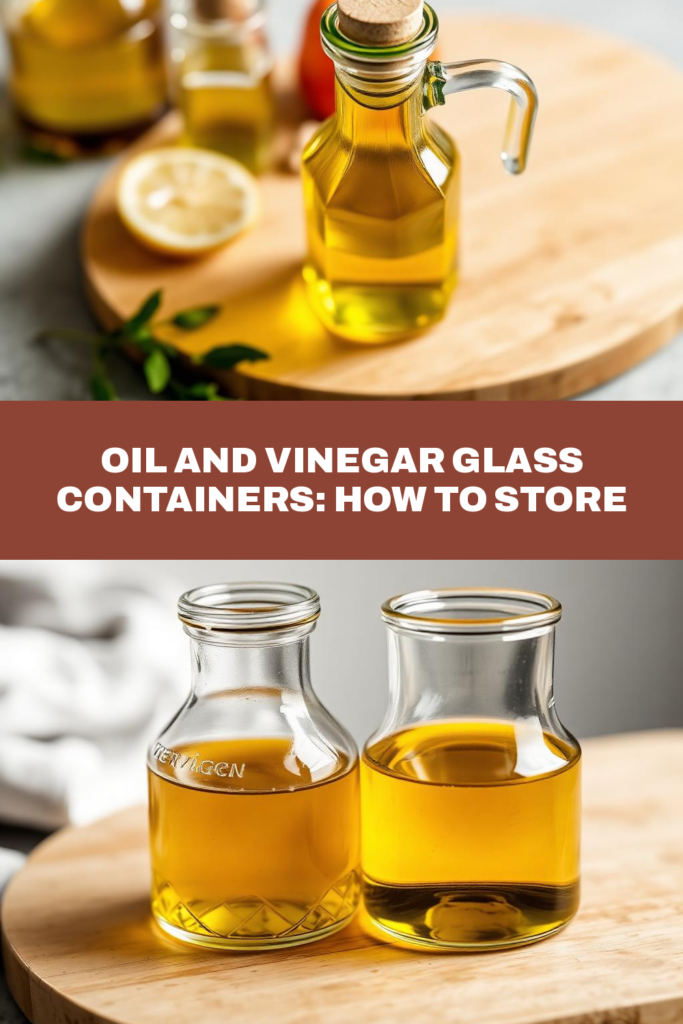
Oil and vinegar are best stored in glass containers because glass is non-reactive and does not leach chemicals or flavors into the liquids. A typical vinaigrette or infused oil will keep its quality longest in a tightly sealed glass bottle or jar, stored away from heat and light. The right container also makes pouring and measuring easier, whether you use a cruet, a swing-top bottle, or a mason jar.
What to Look for in a Glass Container
Choose glass that is thick enough to resist breakage and has a tight-fitting lid. For oil, a dark glass bottle (amber or green) blocks light that can cause oxidation and rancidity. For vinegar, clear glass is fine, but dark glass also works. A narrow spout or a pour spout helps control the flow, especially for oil. A jar with a wide mouth is easier to fill and clean, but a cruet with a stopper is more convenient at the table.
Check that the lid is made of a material that will not corrode from vinegar. Metal lids with a plastic liner or plastic caps are safe. Avoid cork stoppers that can dry out and crumble; if you use a cork, replace it when it becomes loose.
How to Clean and Prepare Glass Containers
Wash new containers in hot, soapy water, rinse thoroughly, and dry completely before filling. For reuse, wash with warm soapy water and a bottle brush to remove any residue. If the container has a lingering odor, fill it with hot water and a tablespoon of baking soda, let it sit for 15 minutes, then rinse. To sterilize for long-term storage, you can boil the glass jars for 10 minutes (remove any plastic lids first), but this is not required for everyday use.
Dry the inside completely before adding oil or vinegar, especially for oil, because water droplets can cause cloudiness or promote microbial growth. Let the container air-dry upside down on a rack, or use a clean, lint-free cloth.
How to Fill and Store Oil and Vinegar
When filling a container, leave about 1 inch (2.5 cm) of headspace at the top. This allows for expansion if the liquid freezes (vinegar can freeze at around 28°F / -2°C) and makes pouring easier. Use a funnel to avoid spills.
Store filled containers in a cool, dark place, such as a pantry or a cupboard away from the stove. The ideal temperature range is 50–70°F (10–21°C). Do not store oil or vinegar near heat sources or in direct sunlight, as heat and light accelerate rancidity and flavor loss. A countertop cruet is fine for daily use, but keep the main supply in the pantry.
If you make a vinaigrette with fresh herbs or garlic, it must be refrigerated and used within 4 days (see safety note below). Plain oil and vinegar, without added perishables, can be stored at room temperature for months, but check for signs of spoilage.
How Long Do Oil and Vinegar Keep in Glass?
Unopened, most vegetable oils (olive, canola, sunflower) keep for 12–18 months from the production date if stored cool and dark. Once opened, they retain quality for about 6–12 months, depending on the type. Olive oil is best used within 6 months of opening. Vinegar, being acidic, does not spoil; it remains safe indefinitely, but its flavor may mellow over time. For best quality, use vinegar within 2 years.
To test if oil has gone rancid, smell it: it will have a sharp, bitter, or crayon-like odor. If it smells off, do not use it. Vinegar that develops sediment or a cloudy appearance is still safe, but if it smells fermented or yeasty, discard it.
Infused oils or vinaigrettes with fresh ingredients (garlic, herbs, chili, shallots) are a botulism risk if stored at room temperature. Always refrigerate these and use within 4 days. Discard any infused oil that looks cloudy, has bubbles, or smells unpleasant.
Can You Reuse Glass Oil and Vinegar Bottles?
Yes, you can reuse glass bottles and jars, but clean them thoroughly between uses. If the bottle previously contained a different oil or vinegar, wash and dry it completely to avoid flavor mixing. For oil bottles, a thorough rinse with hot water and a drop of dish soap, followed by a vinegar rinse to remove any oily film, works well. For vinegar bottles, hot soapy water is enough.
If you refill a bottle that had a pour spout, remove the spout and clean it separately. Check that the lid or stopper still seals tightly; a loose lid lets air in and speeds up spoilage.
Common Problems and Fixes
Oil becomes cloudy or solidifies. Some oils (like olive oil) naturally solidify in cold temperatures; this is normal. Place the bottle in warm water for a few minutes to return to liquid. If the oil is cloudy at room temperature, it may be a sign of moisture or emulsion—strain it through a fine mesh and use it soon.
Vinegar develops a cloudy sediment. This is usually harmless—it is called “mother” and is a natural byproduct of fermentation. You can strain it out or leave it; it does not affect safety. If the vinegar smells yeasty or sour, discard it.
The lid is stuck. Vinegar can corrode metal lids; if a lid is stuck, run the cap under hot water to expand it, or use a rubber grip. To prevent this, wipe the rim of the bottle after pouring and choose plastic-lined lids.
Oil leaks from the spout. Check that the spout is clean and the cap is tight. If the spout is a pourer, ensure it is pushed in securely. Store the bottle in a tray to catch drips.
Safety Note for Infused Oils and Vinaigrettes
When you add fresh garlic, herbs, or chili to oil, the mixture must be refrigerated and used within 4 days. These ingredients can harbor Clostridium botulinum spores, which thrive in low-oxygen, low-acid environments like oil at room temperature. Always store such mixtures in the refrigerator, and never leave them out for more than 2 hours (1 hour if the room is above 90°F / 32°C). For vinaigrettes with fresh ingredients, the same rule applies. If you want a longer shelf life, use dried herbs instead, or make small batches and freeze them (oil freezes well, but may separate when thawed—shake to re-emulsify).
Ingredients
- 1 glass bottle or jar with tight lid (8–16 oz / 240–480 ml capacity)
- 1 cup (240 ml) oil of your choice (olive, canola, sunflower)
- 1 cup (240 ml) vinegar of your choice (white, red wine, apple cider)
- Optional: 1 teaspoon (5 ml) dried herbs (such as oregano, thyme, or rosemary)
Instructions
- Wash the glass bottle or jar in hot, soapy water. Rinse thoroughly and dry completely.
- If using dried herbs, add them to the empty bottle first.
- Using a funnel, pour the oil into the bottle, filling it about halfway.
- Pour the vinegar into the bottle, leaving about 1 inch (2.5 cm) of headspace.
- Seal the bottle with the lid. Shake gently to combine if you want a vinaigrette, or leave separate for drizzling.
- Label the bottle with the date and contents. Store in a cool, dark place for plain oil and vinegar, or refrigerate if you added fresh ingredients.
How to Use Your Oil and Vinegar Containers
Use the filled container for salad dressings, marinades, or for drizzling over finished dishes. For a quick vinaigrette, shake together 3 parts oil to 1 part vinegar, add salt and pepper to taste. If you made a plain oil and vinegar set, use them separately: oil for sautéing or roasting, vinegar for deglazing or pickling.
For serving at the table, pour a small amount into a cruet or small dish. Keep the main bottle in the pantry to preserve freshness.
Substitutions and Variations
You can use any oil and vinegar combination. For a milder flavor, use a light olive oil or canola oil; for a stronger taste, use extra-virgin olive oil or walnut oil. Vinegar can be swapped: white wine vinegar for a lighter tang, balsamic for sweetness, or apple cider vinegar for a fruity note. If you want a flavored oil, add a few sprigs of dried rosemary or a dried chili (not fresh) to the bottle—dried ingredients are safe at room temperature, but fresh ones must be refrigerated.
For a ready-made vinaigrette, combine 3/4 cup (180 ml) oil, 1/4 cup (60 ml) vinegar, 1 teaspoon (5 ml) Dijon mustard, and salt and pepper to taste. Shake well before each use.
How to Store Filled Containers for Best Quality
Keep filled containers in a cabinet away from the stove or oven. The temperature should stay below 70°F (21°C). If you live in a warm climate, you may refrigerate oil; it will become cloudy but will clear when brought to room temperature. Vinegar does not need refrigeration unless it is a vinaigrette with fresh ingredients.
Check your containers every few weeks: look for leaks, cracks, or signs of spoilage in the contents. Replace any bottle that is cracked or has a damaged lid.
How to Dispose of Old Oil and Vinegar
If oil has gone rancid or vinegar has an off smell, do not pour them down the drain. Pour small amounts into a sealed container and throw it in the trash. For larger amounts, check local recycling guidelines for cooking oil disposal. Never mix oil with other liquids before disposal.
Related
- Cranberry Orange Bread in a Glass Loaf Pan
- Lemon Poppy Seed Bread in a Glass Loaf Pan
- Carrot Bread in a Glass Loaf Pan: Baking Times & Tips
Safe minimum internal temperatures follow USDA FSIS; raw-fish guidance follows the U.S. FDA. See our food safety notes.
Spotted an error? Tell us and we will correct it (corrections policy).