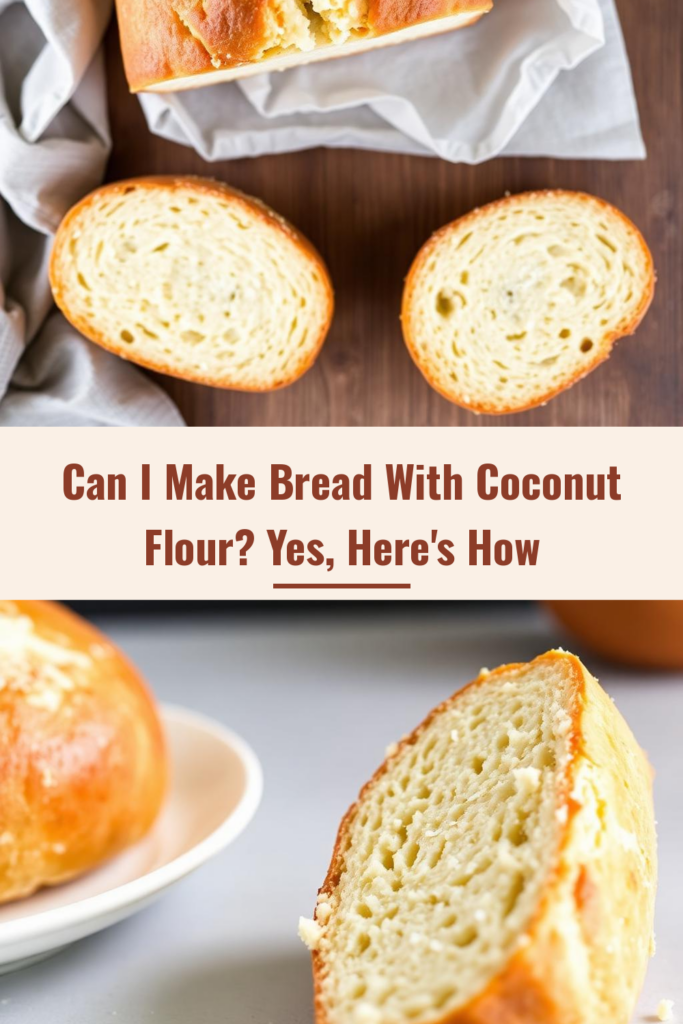
Yes, you can make bread with coconut flour, but it will not behave like wheat flour. Coconut flour is extremely absorbent and needs many more eggs and liquid than regular flour, so the loaf is denser, moister, and more crumbly. The most common mistake is substituting coconut flour 1:1 for wheat flour, which produces a dry, eggy brick.
Why Coconut Flour Bread Needs a Different Formula
Coconut flour is ground dried coconut meat, so it has almost no gluten and very little starch. It soaks up liquid like a sponge: 1 cup (112 g) of coconut flour can absorb about 1 cup (240 ml) of liquid plus 6 eggs. That is why a basic coconut flour bread recipe usually calls for 1/2 cup (56 g) coconut flour, 6 large eggs, and 1/2 cup (120 ml) of melted butter or oil. The eggs provide structure, moisture, and lift; without them the loaf collapses.
Because there is no gluten, the crumb is tender and slightly grainy, and the bread toasts well but does not slice thinly like sandwich bread. It also browns faster, so you often bake it at a lower temperature than wheat bread.
Basic Coconut Flour Bread Recipe
This makes one 8×4-inch (20×10 cm) loaf. It tastes mildly sweet and coconutty, good for toast, sandwiches, or French toast. The texture is dense and moist, closer to a quick bread than a yeasted loaf.
Ingredients
- 1/2 cup (56 g) coconut flour
- 6 large eggs, at room temperature
- 1/2 cup (120 ml) melted butter or coconut oil, cooled slightly
- 1/4 cup (60 ml) milk or unsweetened almond milk
- 1 tablespoon (15 ml) honey or maple syrup (optional, for a sweeter loaf)
- 1/2 teaspoon baking powder
- 1/4 teaspoon salt
Instructions
- Preheat the oven to 350°F (175°C). Line an 8×4-inch (20×10 cm) loaf pan with parchment paper.
- In a large bowl, whisk the eggs, melted butter, milk, and honey (if using) until smooth.
- Add the coconut flour, baking powder, and salt. Stir until no dry spots remain. The batter will be thick and paste-like; let it sit for 5 minutes so the flour absorbs the liquid.
- Scrape the batter into the pan and smooth the top. Bake for 35-40 minutes, until the top is deep golden and a toothpick inserted in the center comes out clean (the internal temperature should read 200°F/93°C, but the toothpick test is the main cue).
- Cool in the pan for 10 minutes, then lift out and cool completely on a rack before slicing. Refrigerate leftovers in an airtight container for up to 4 days, or freeze slices for up to 3 months.
Where People Go Wrong With Coconut Flour Bread
The biggest errors are using too little egg, overmixing, and not letting the batter rest. Coconut flour needs time to hydrate; if you bake it right away, the center can be gummy. Also, do not add extra flour if the batter looks thin—it will thicken as it sits. Another common mistake is baking at too high a temperature; 375°F (190°C) or higher will burn the outside before the inside sets. Stick to 350°F (175°C) and check early, since ovens vary.
If the loaf crumbles when sliced, it likely needs one more egg or a bit more liquid next time. If it is dense and wet in the middle, reduce the liquid by 1-2 tablespoons or bake 5 minutes longer. Coconut flour bread does not rise much, so expect a shorter, denser loaf than wheat bread.
Adjusting the Recipe for Sweet or Savory Bread
For a savory loaf, omit the honey and add 1/2 teaspoon garlic powder, 1/4 cup (25 g) grated Parmesan, or 2 tablespoons (30 g) chopped fresh herbs like rosemary or thyme. For a sweeter bread, increase the honey to 3 tablespoons (45 ml) and add 1 teaspoon vanilla extract. You can also fold in 1/2 cup (60 g) of chopped nuts, seeds, or dried fruit (for sweet versions) after the batter rests.
If you want a lighter texture, separate the eggs: whisk the yolks into the batter, then beat the whites to soft peaks and fold them in gently. This adds air and makes the crumb slightly less dense, but it still will not be fluffy like wheat bread.
Using Coconut Flour in Other Bread Recipes
You can adapt muffins, pancakes, or flatbreads, but always follow a coconut-flour-specific recipe. As a rule of thumb, replace every 1 cup (120 g) of wheat flour with 1/4 cup (28 g) coconut flour, and add 1 egg per 1/4 cup (28 g) of coconut flour used. You also need to increase liquid by about 1/4 cup (60 ml) per 1/4 cup (28 g) of coconut flour. For yeast breads, coconut flour will not work because there is no gluten to trap gas; use a recipe designed for gluten-free yeast breads that combines coconut flour with other flours like almond or tapioca.
When measuring coconut flour, spoon it into the cup and level it off; it packs easily and too much will dry out the loaf. Store coconut flour in an airtight container in a cool, dark place for up to 6 months, or in the fridge for longer, since its natural oils can go rancid.
How to Store and Reheat Coconut Flour Bread
Because it is moist and egg-rich, coconut flour bread spoils faster at room temperature than wheat bread. Keep it refrigerated in a sealed container for up to 4 days. To reheat, toast slices directly from the fridge, or microwave them for 15-20 seconds. For longer storage, freeze the whole loaf wrapped in plastic and foil for up to 3 months; thaw overnight in the fridge. Do not leave it out on the counter for more than 2 hours, especially in warm weather, because of the eggs and dairy.
If the bread tastes too eggy, reduce the eggs to 5 and add 2 tablespoons (30 ml) more milk, but know that the loaf will be more fragile. If it tastes too coconutty, use refined coconut oil (which has no coconut flavor) instead of butter, or add a pinch of cinnamon or nutmeg to mask it.
Checking for Doneness Without Overbaking
Use a toothpick inserted into the center; it should come out clean, with no wet batter clinging. The top should be firm and spring back when pressed. Because coconut flour bread browns quickly, if the top is dark before the center is done, tent the pan loosely with foil for the last 10 minutes of baking. Let the loaf cool completely before slicing—cutting it warm will make it crumble. If you need to slice it sooner, use a serrated knife and cut gently.
Safe minimum internal temperatures follow USDA FSIS; raw-fish guidance follows the U.S. FDA. See our food safety notes.
Spotted an error? Tell us and we will correct it (corrections policy).