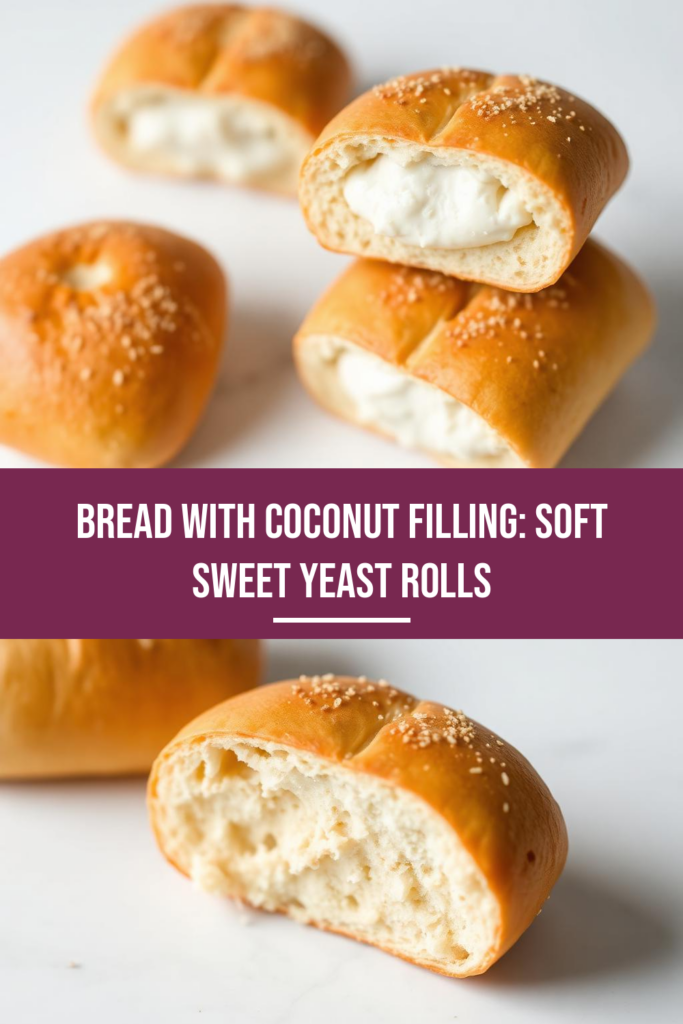
This is a soft, enriched yeast bread swirled with a sweet, sticky coconut filling, similar to a cinnamon roll but with shredded coconut and often a touch of cardamom. It works for breakfast, brunch, or an afternoon snack, and the dough is forgiving enough for a home baker. The key ratio to remember is about 1 part filling to 3 parts dough by weight, which keeps the rolls moist without turning soggy.
Ingredients
- For the dough:
- 1 cup (240 ml) whole milk, warmed to 110°F (43°C)
- 2 1/4 teaspoons (7 g) active dry yeast (one packet)
- 1/4 cup (50 g) granulated sugar
- 1 large egg, room temperature
- 1/4 cup (60 g) unsalted butter, melted and cooled
- 3 1/2 cups (440 g) all-purpose flour, plus more for dusting
- 1 teaspoon salt
- For the coconut filling:
- 1 1/2 cups (120 g) sweetened shredded coconut
- 1/2 cup (100 g) granulated sugar
- 1/4 cup (60 g) unsalted butter, melted
- 1 large egg white (save the yolk for brushing)
- 1 teaspoon vanilla extract
- 1/4 teaspoon ground cardamom (optional)
- For brushing:
- 1 large egg yolk beaten with 1 tablespoon (15 ml) milk
Instructions
- In a small bowl, combine warm milk, yeast, and 1 tablespoon of the sugar. Let stand for 5–10 minutes until foamy. If it doesn’t foam, the yeast is dead; start over with fresh yeast.
- In a large mixing bowl or stand mixer, whisk together the remaining sugar, egg, melted butter, and the yeast mixture. Add the flour and salt. Mix on low speed until a shaggy dough forms, then knead on medium-low for 8–10 minutes (or by hand on a floured surface for 10–12 minutes) until the dough is smooth and elastic. It should be slightly tacky but not sticky.
- Shape the dough into a ball, place it in a lightly oiled bowl, cover with plastic wrap or a damp towel, and let rise in a warm place (about 75°F/24°C) for 1 to 1 1/2 hours, until doubled in size.
- While the dough rises, make the filling: in a medium bowl, stir together the shredded coconut, sugar, melted butter, egg white, vanilla, and cardamom (if using). The mixture will be crumbly and slightly wet. Set aside.
- Punch down the dough and turn it out onto a lightly floured surface. Roll it into a 12×18-inch (30×45 cm) rectangle, about 1/4 inch (6 mm) thick.
- Spread the coconut filling evenly over the dough, leaving a 1-inch (2.5 cm) border on one long edge. Brush the border with a little water. Starting from the long edge opposite the border, roll the dough tightly into a log. Pinch the seam to seal.
- Cut the log into 12 equal slices (about 1 1/2 inches / 4 cm each). Place the slices cut-side up in a greased 9×13-inch (23×33 cm) baking dish, leaving a little space between them. Cover loosely with plastic wrap and let rise for 30–45 minutes, until puffy and touching each other.
- Preheat the oven to 375°F (190°C). Brush the tops of the rolls with the egg yolk mixture.
- Bake for 20–25 minutes, until the tops are deep golden brown and the filling is bubbling. The internal temperature of the bread should reach 190°F (88°C) if you want to check. Let cool in the pan for 10 minutes before serving warm.
Why the Filling Turns Out Too Dry, Too Runny, or the Bread Too Dense
The most common problem is a dry, crumbly filling that falls out of the rolls. This happens when the filling lacks enough moisture or fat to bind to the dough. The egg white and melted butter in the filling are what hold it together; if you reduce either, the filling will be sandy. If your filling is too runny and leaks out during baking, you likely used fresh coconut (which has more moisture) or added extra liquid. Stick to sweetened shredded coconut, which is dried and has a consistent moisture level.
Dense, heavy rolls usually mean the dough wasn’t kneaded enough or the second rise was too short. Knead until the dough passes the windowpane test: stretch a small piece of dough; it should form a thin, translucent membrane without tearing. The second rise should make the rolls visibly puffy and almost touching each other in the pan.
Substitutions and What They Change
- Unsweetened shredded coconut: Use the same amount, but increase the sugar in the filling by 2 tablespoons (25 g). The rolls will be less sweet overall.
- Instant yeast instead of active dry: Use 1 3/4 teaspoons (5 g) instant yeast. Mix it directly into the flour; no need to proof in milk first. The rise times will be slightly shorter.
- Bread flour instead of all-purpose: Use the same weight (440 g). The rolls will be slightly chewier and hold their shape a bit better.
- Milk alternatives (oat, almond): Use the same amount. The dough may be slightly less rich; add 1 tablespoon (15 g) extra melted butter to compensate.
- Add raisins or chopped nuts: Fold up to 1/2 cup (80 g) raisins or 1/2 cup (60 g) chopped pecans into the filling. This adds texture but doesn’t change the liquid ratio.
Storing and Reheating Coconut Bread Rolls
Store leftover rolls in an airtight container at room temperature for up to 2 days. For longer storage, wrap the pan tightly in plastic wrap and refrigerate for up to 4 days, or freeze the baked rolls for up to 2 months. To reheat, warm individual rolls in a 350°F (175°C) oven for 5–7 minutes, or microwave for 20–30 seconds. The filling will firm up as the rolls cool, so if you prefer it gooey, reheat before serving.
If you plan to make the rolls ahead, you can assemble them, place them in the pan, cover, and refrigerate overnight instead of doing the second rise. Let them sit at room temperature for 30–45 minutes before baking to allow the dough to warm up and rise slightly.
Can I Use a Bread Machine or Stand Mixer for the Dough?
Yes. If using a bread machine, add the ingredients in the order recommended by your machine’s manual (usually liquids first, then dry). Use the dough cycle, then proceed with rolling and filling. For a stand mixer, use the dough hook on medium-low speed for 8–10 minutes. The dough should pull away from the sides of the bowl but still stick slightly to the bottom.
If the dough is too sticky after kneading, add flour one tablespoon at a time until it clears the sides. If it’s too dry and crumbly, add milk one teaspoon at a time until it comes together. The dough should feel soft and slightly tacky, like a baby’s cheek.
Safe minimum internal temperatures follow USDA FSIS; raw-fish guidance follows the U.S. FDA. See our food safety notes.
Spotted an error? Tell us and we will correct it (corrections policy).