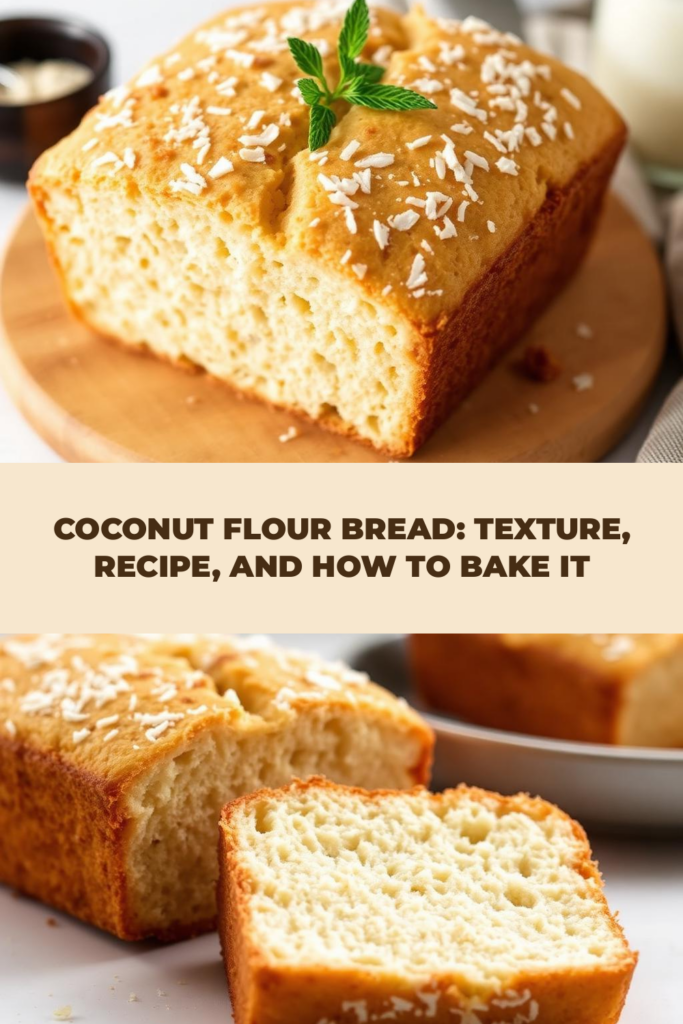
Coconut flour bread is dense, tender, and faintly sweet, with a crumb that holds together better than wheat bread. Because coconut flour soaks up liquid aggressively, this recipe uses eggs and a hot liquid to create a moist loaf that slices cleanly without crumbling. It suits anyone baking gluten-free at home, and it toasts well for breakfast or sandwiches.
Ingredients
- 6 large eggs, at room temperature
- 1/2 cup (120 ml) hot water (about 140°F / 60°C)
- 1/4 cup (60 ml) olive oil or melted butter
- 1 tablespoon (15 ml) apple cider vinegar
- 1/2 cup (60 g) coconut flour
- 1/2 teaspoon baking soda
- 1/2 teaspoon salt
- 1 tablespoon (15 g) honey or maple syrup (optional, for a touch of sweetness)
How to Make Coconut Flour Bread
- Preheat the oven to 350°F (175°C). Line a 8.5 x 4.5-inch (22 x 11 cm) loaf pan with parchment paper.
- In a large bowl, whisk the eggs, hot water, oil, vinegar, and honey (if using) until frothy.
- In a separate bowl, whisk the coconut flour, baking soda, and salt. Add the dry ingredients to the wet mixture and stir until no dry streaks remain. Let the batter rest for 5 minutes; it will thicken as the coconut flour absorbs liquid.
- Pour the batter into the prepared pan and smooth the top. Bake for 40–45 minutes, until the top is deep golden brown and a toothpick inserted in the center comes out clean. The internal temperature should read 200°F (93°C) if you use an instant-read thermometer.
- Cool in the pan for 10 minutes, then lift out and cool completely on a wire rack before slicing. Slice with a serrated knife.
Why Does Coconut Flour Bread Need So Many Eggs?
Coconut flour is made from dried, defatted coconut meat, so it has almost no starch and very little gluten. It absorbs 4 to 6 times its weight in liquid, which is why a standard wheat-bread ratio fails. The eggs provide structure, moisture, and lift; without them the loaf turns into a dense, dry brick. If you reduce eggs, you must add another binder like psyllium husk or ground flaxseed, but the texture will change.
Can I Halve or Double the Recipe?
Yes. The recipe scales by simple multiplication, but baking time changes slightly. Use the table below as a guide.
| Batch | Eggs | Coconut flour | Liquid (water + oil + vinegar) | Pan size | Bake time |
|---|---|---|---|---|---|
| Half | 3 | 1/4 cup (30 g) | 1/2 cup (120 ml) total | 6 x 3-inch (15 x 8 cm) | 30–35 min |
| Single | 6 | 1/2 cup (60 g) | 1 cup (240 ml) total | 8.5 x 4.5-inch (22 x 11 cm) | 40–45 min |
| Double | 12 | 1 cup (120 g) | 2 cups (480 ml) total | two 8.5 x 4.5-inch pans | 45–50 min |
For a double batch, use two loaf pans rather than one large pan so the center bakes through. Check doneness with a toothpick; if the top browns too quickly, tent loosely with foil.
How Long Does Coconut Flour Bread Keep?
Store the cooled loaf in an airtight container or wrapped in plastic wrap at room temperature for up to 3 days. For longer storage, refrigerate for up to 1 week or freeze for up to 3 months. To freeze, slice first and separate layers with parchment paper so you can pull out single slices. Thaw at room temperature or toast directly from frozen. Reheat leftovers to 165°F (74°C) if you prefer warm bread.
What Can I Serve With Coconut Flour Bread?
This bread is neutral enough for both sweet and savory toppings. Toast it and spread with butter and jam, or use it for avocado toast. It also makes a sturdy base for open-faced sandwiches with smoked salmon or egg salad. Because it is denser than wheat bread, keep toppings modest to avoid overpowering the crumb. For a sweeter loaf, add 1 teaspoon of cinnamon or 1/2 cup (60 g) of chopped nuts to the dry ingredients.
Coconut Flour Bread for Large Batches and Kids
If you bake a double batch, freeze half immediately to keep it fresh. For kids, cut the bread into small squares and serve with cream cheese or nut butter. The bread is not as fluffy as white sandwich bread, so it works best for small hands that can hold a firmer slice. When making a half batch, use a smaller pan and check for doneness earlier; the toothpick test is the most reliable cue.
What If My Bread Is Too Dense or Too Dry?
Dense bread usually means the batter was overmixed or the pan was too large, allowing the loaf to spread thin. Dry bread often comes from too much coconut flour or overbaking. Measure coconut flour by spooning it into the cup and leveling, not scooping, because it compacts easily. If you use a different brand, the absorption may vary; if the batter looks like a thick paste after resting, add 1–2 tablespoons (15–30 ml) of water. If it looks too thin, add 1 tablespoon (8 g) of coconut flour and rest again.
Safe minimum internal temperatures follow USDA FSIS; raw-fish guidance follows the U.S. FDA. See our food safety notes.
Spotted an error? Tell us and we will correct it (corrections policy).