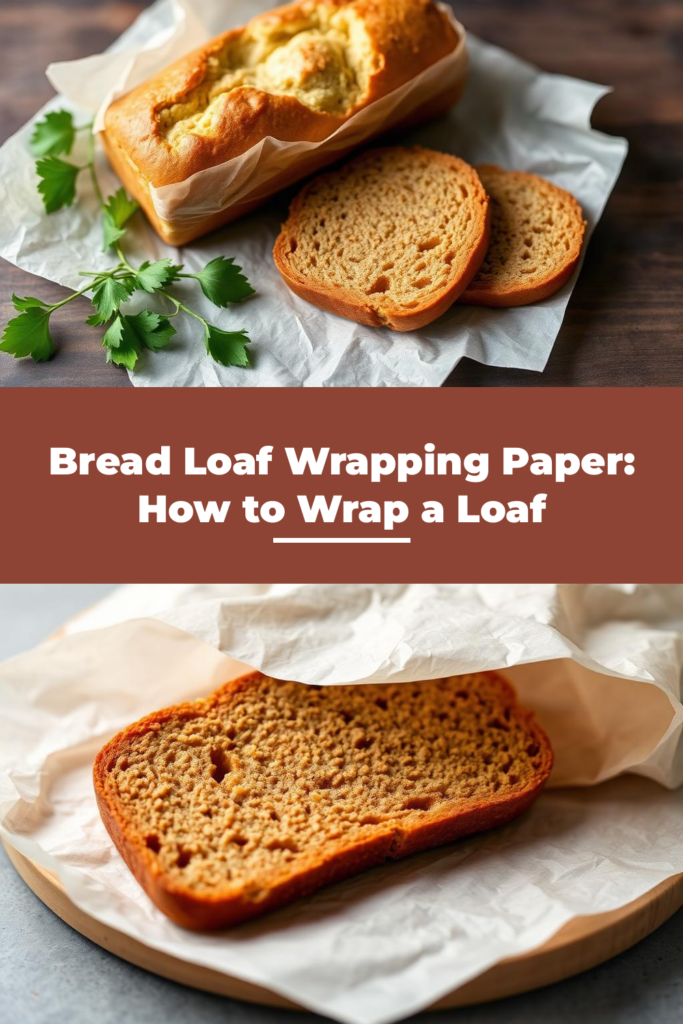
Wrapping a bread loaf in paper keeps the crust crisp and the crumb from drying out, and it makes a homemade loaf look like a bakery purchase. The method below covers the standard way to wrap a loaf in kraft or butcher paper, with the fold-and-tuck technique that holds without tape.
What You Need
- 1 sheet of food-safe wrapping paper (kraft, butcher, or bakery paper), about 24 x 36 inches (61 x 91 cm) for a standard 9×5-inch (23×13 cm) loaf
- 1 loaf of bread, fully cooled to room temperature (about 70°F / 21°C)
- Optional: kitchen twine or a paper sticker to secure the ends
Wrapping the Loaf
- Place the paper on a flat surface in a diamond orientation (one corner pointing toward you). Center the loaf horizontally across the middle of the paper, with the long side of the loaf parallel to the paper’s long edges.
- Fold the bottom corner (the one nearest you) up and over the loaf, pulling it snug so the paper hugs the bottom of the loaf. The corner should reach about halfway up the side of the loaf.
- Fold the top corner down over the loaf, overlapping the first fold by about 2 inches (5 cm). Tuck the excess paper under the loaf’s bottom edge to create a tight seal.
- Take the left corner and fold it tightly against the end of the loaf, creasing it sharply. Then fold the right corner the same way, so both ends are neatly closed.
- Flip the wrapped loaf over so the seam is on the bottom. If you want extra security, tie kitchen twine around the loaf in two places (about 1 inch / 2.5 cm from each end) and knot it on top.
Doneness Cues for the Wrap
The wrap is correct when the paper is smooth against the crust with no loose air pockets, the ends are folded flat, and the loaf holds its shape when you pick it up by the middle. If the paper slides or the ends pop open, re-fold with tighter creases.
Paper Choices and What Changes
- Kraft paper (brown): Most common; breathable, keeps crust crisp for 1-2 days. Use uncoated, food-grade kraft.
- Butcher paper (white or coated): Slightly less breathable; keeps bread softer but may soften the crust. Fine for sandwich loaves.
- Wax paper: Not breathable; traps moisture and makes crust soggy. Use only for short-term transport (under a few hours).
- Plastic wrap or foil: Not paper, but if you use them, plastic makes crust soft, foil can cause condensation; both are fine for freezing (see below).
Storage After Wrapping
Wrapped in paper at room temperature, most breads keep 2-3 days. For longer storage, wrap the paper-wrapped loaf tightly in plastic wrap or a resealable freezer bag and freeze for up to 3 months. Thaw at room temperature in the paper for 1-2 hours. Do not refrigerate bread—it stales faster. If you notice mold, discard the loaf; do not cut off the moldy part.
Wrapping for Gifting or Transport
For a gift, add a second layer of decorative paper or a ribbon after the basic wrap. For transport, place the wrapped loaf in a rigid container or bread box to prevent crushing. If you’re wrapping a warm loaf, wait until it is completely cool—wrapping warm bread traps steam and makes the crust soft and the crumb gummy.
How to Check If the Loaf Is Cool Enough
The center of the loaf should be at room temperature (about 70°F / 21°C). A quick test: touch the bottom of the loaf—if it feels warm, wait another 30 minutes.
Common Wrap Mistakes and Fixes
- Paper too small: If the corners don’t meet, use a larger sheet or wrap diagonally instead of straight. A 24×36-inch (61×91 cm) sheet fits a standard loaf; for a round boule, use a 30-inch (76 cm) square.
- Loose ends: Crease each fold firmly with your fingers before moving to the next side. If ends still pop, use a sticker or twine.
- Soggy crust: The loaf was wrapped while warm. Unwrap, let cool fully, and re-wrap.
- Torn paper: Use a thicker paper (50 lb or higher) or double-layer the bottom corner.
Wrapping Bread for Freezing vs. Serving
For freezing, use paper as the inner layer, then overwrap with plastic or foil to prevent freezer burn. For serving the same day, paper alone is fine. If you plan to toast slices, you can skip the paper and use a cloth bag, but that dries the loaf faster (1-2 days).
Safe minimum internal temperatures follow USDA FSIS; raw-fish guidance follows the U.S. FDA. See our food safety notes.
Spotted an error? Tell us and we will correct it (corrections policy).