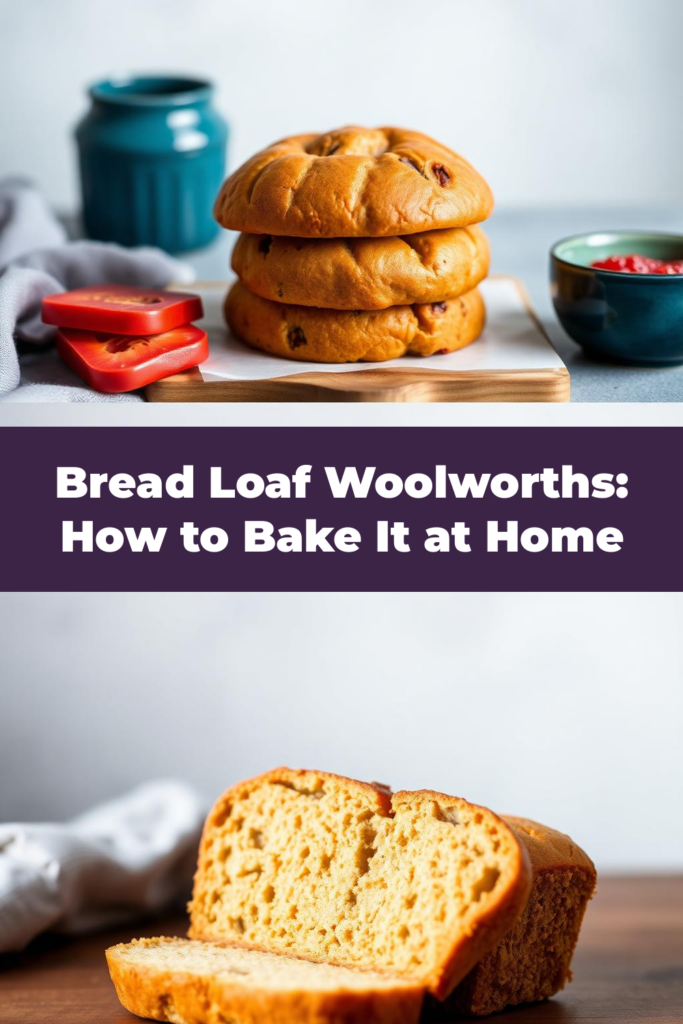
Woolworths bread loaf is a soft, slightly sweet white sandwich loaf with a tender crumb and a thin, golden crust. It is the kind of bread that suits toast, sandwiches, and lunchboxes, and it slices cleanly without crumbling. This recipe makes a close homemade version using plain pantry ingredients, with a sponge step that gives the loaf its characteristic softness.
Ingredients
- 1 cup (240 ml) warm water (105–115°F / 40–46°C)
- 2 1/4 tsp (7 g) active dry yeast (one packet)
- 1 tbsp (15 g) sugar
- 3 cups (375 g) bread flour, plus more for dusting
- 1 tsp (5 g) salt
- 2 tbsp (30 g) unsalted butter, melted and cooled
- 1/4 cup (60 ml) whole milk, at room temperature
- 1 large egg, at room temperature
- 1 tbsp (15 ml) vegetable oil, for greasing the bowl and pan
Make the Sponge
The sponge is a small amount of flour, water, yeast, and sugar that sits briefly to get the yeast working. This step builds the soft, airy crumb typical of commercial sandwich loaves. It takes about 15 minutes and should look bubbly and smell yeasty.
- In a large bowl, stir together the warm water, yeast, and sugar. Let stand for 5 minutes until frothy.
- Add 1 cup (125 g) of the bread flour and stir until smooth. Cover with plastic wrap and let stand at room temperature for 15 minutes. The mixture will bubble and rise slightly.
Mix the Dough
After the sponge is ready, the remaining flour, salt, butter, milk, and egg go in. The dough will be soft and slightly sticky; resist adding too much flour. Kneading develops the gluten that gives the loaf its structure.
- Add the remaining 2 cups (250 g) flour, salt, melted butter, milk, and egg to the sponge. Stir with a wooden spoon until a shaggy dough forms.
- Turn the dough onto a lightly floured surface. Knead for 8–10 minutes, until smooth and elastic. The dough should spring back when poked. If it sticks, dust with a little flour, but keep it soft.
- Lightly grease a large bowl with vegetable oil. Place the dough in the bowl, turn to coat, and cover with plastic wrap. Let rise in a warm spot (about 75°F / 24°C) for 1 to 1 1/2 hours, until doubled in size.
Shape and Second Rise
Shaping the dough into a tight cylinder helps it rise evenly in the pan. The second rise, or proof, gives the loaf its final volume before baking. A properly proofed loaf will hold a gentle indentation when pressed.
- Punch down the dough. Turn it out onto a lightly floured surface and press into a rectangle about 9 by 12 inches (23 by 30 cm).
- Roll the dough tightly from a short end, pinching the seam closed. Place seam-side down in a greased 9 by 5 inch (23 by 13 cm) loaf pan.
- Cover loosely with plastic wrap and let rise in a warm spot for 45–60 minutes, until the dough rises about 1 inch (2.5 cm) above the rim of the pan.
Bake the Loaf
Baking at a moderate temperature sets the crumb and browns the crust without burning. The loaf is done when it reaches an internal temperature of 190–200°F (88–93°C) and sounds hollow when tapped. The USDA safe minimum for bread does not apply, but this temperature ensures a fully baked crumb.
- Preheat the oven to 375°F (190°C).
- Bake the loaf for 30–35 minutes, until deep golden brown and the internal temperature reads 190°F (88°C) on an instant-read thermometer.
- Immediately turn the loaf out onto a wire rack. Let cool completely, at least 1 hour, before slicing. Slicing warm bread compresses the crumb.
Serving and Pairing
This loaf is a plain white sandwich bread. Serve it toasted with butter and jam, use it for grilled cheese, or slice it for lunchbox sandwiches. It also makes good French toast because the crumb soaks up custard without falling apart. For a slightly richer version, brush the top with melted butter right after baking.
Variations
Whole wheat blend: Replace 1 cup (125 g) of the bread flour with whole wheat flour. Add 2 tbsp (30 ml) extra water, as whole wheat absorbs more. The loaf will be denser and slightly nuttier.
Milk bread style: Increase the milk to 1/2 cup (120 ml) and reduce the water to 3/4 cup (180 ml). This makes a softer, slightly sweeter loaf with a finer crumb.
Storage and Shelf Life
Store the cooled loaf in a plastic bag or bread box at room temperature for up to 3 days. For longer storage, wrap tightly in plastic wrap and freeze for up to 3 months. Thaw at room temperature, then reheat slices in a toaster. Do not refrigerate the bread; it goes stale faster in the fridge. If the loaf develops mold, discard it.
Safe minimum internal temperatures follow USDA FSIS; raw-fish guidance follows the U.S. FDA. See our food safety notes.
Spotted an error? Tell us and we will correct it (corrections policy).