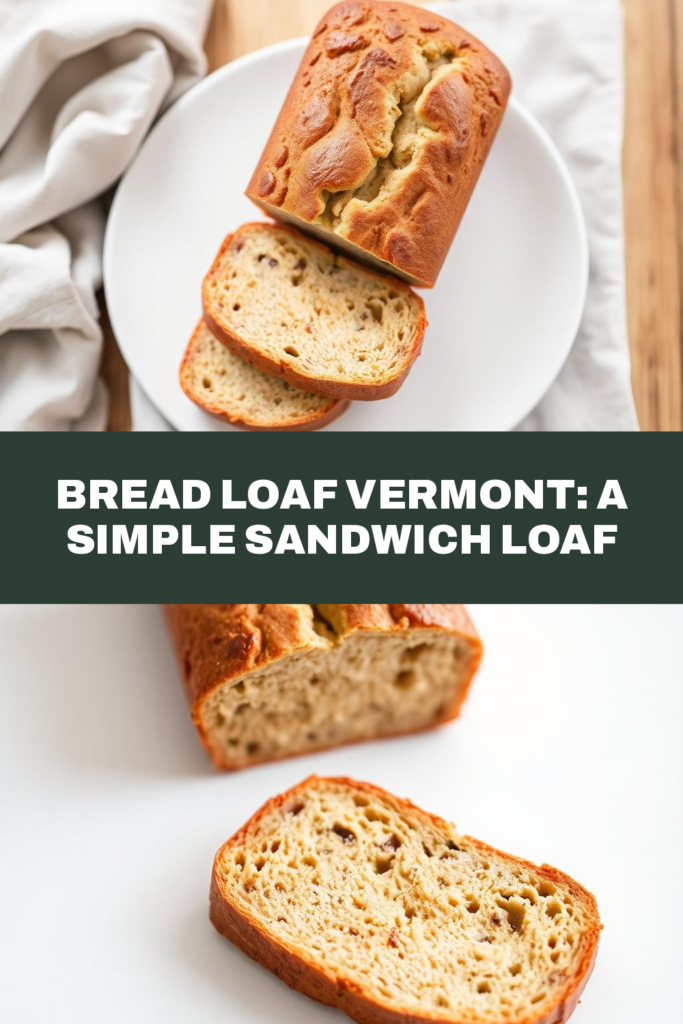
Time: About 3 hours 30 minutes · Serves: 1 loaf (about 16 slices) · The key step: A long, slow first rise in the refrigerator develops the mild tang and open crumb that make this bread taste like a Vermont bakery loaf.
This is a straightforward white sandwich loaf with a soft, tender crumb and a thin, golden crust. It uses a preferment (a small amount of dough made the night before) to add flavor without extra yeast. The bread suits everyday sandwiches, toast, and French toast, and it slices cleanly when cool.
The Preferment Builds Flavor Overnight
Start this bread the evening before you plan to bake. The preferment—a mixture of flour, water, and a pinch of yeast—ferments slowly in the refrigerator for 12 to 18 hours. This long, cool rise produces organic acids that give the loaf a subtle sourness and a more open crumb, similar to bread from a small bakery. It also relaxes the gluten, making the dough easier to shape.
If you skip the preferment, the bread will still be good but will taste flat and have a tighter crumb. The preferment is not difficult; it takes 5 minutes to mix and then sits in the fridge overnight.
Ingredients
For the preferment:
- 1 cup (120 g) bread flour
- 1/2 cup (120 ml) water, room temperature
- 1/8 teaspoon active dry yeast or instant yeast
For the final dough:
- All of the preferment
- 3 cups (360 g) bread flour, plus more for dusting
- 1 1/4 cups (300 ml) water, room temperature
- 1 1/2 teaspoons salt
- 1 teaspoon active dry yeast or instant yeast
- 1 tablespoon (15 ml) honey or maple syrup (optional, for a hint of sweetness)
- 2 tablespoons (30 ml) olive oil or melted butter, for the bowl and pan
Instructions
- Make the preferment (evening, day before): In a medium bowl, stir together 1 cup (120 g) bread flour, 1/2 cup (120 ml) water, and 1/8 teaspoon yeast until no dry flour remains. Cover with plastic wrap and leave at room temperature for 1 hour, then refrigerate for 12 to 18 hours. The preferment will be bubbly and smell yeasty.
- Mix the final dough: The next day, remove the preferment from the fridge and let it sit at room temperature for 30 minutes. In a large bowl, combine the preferment, 3 cups (360 g) bread flour, 1 1/4 cups (300 ml) water, salt, 1 teaspoon yeast, and honey if using. Stir with a wooden spoon until a shaggy dough forms.
- Knead: Turn the dough onto a lightly floured surface. Knead for 8 to 10 minutes, until smooth and elastic. The dough should feel soft and slightly tacky but not sticky. If it sticks, dust with a little flour, 1 tablespoon at a time. (Alternatively, use a stand mixer with a dough hook on medium speed for 6 to 8 minutes.)
- First rise: Lightly oil a large bowl. Place the dough in the bowl, turn to coat, and cover with plastic wrap. Let rise at room temperature (about 70°F/21°C) for 1 1/2 to 2 hours, until doubled in size. A finger pressed into the dough should leave a dent that doesn’t spring back.
- Shape the loaf: Turn the dough onto a lightly floured surface. Gently press it into a rectangle about 9 by 12 inches (23 by 30 cm). Fold the short ends toward the center, then roll it up tightly from a long side, pinching the seam. Place the loaf seam-side down in a greased 9-by-5-inch (23-by-13-cm) loaf pan.
- Second rise: Cover the pan loosely with plastic wrap or a clean kitchen towel. Let rise at room temperature for 45 to 60 minutes, until the dough has risen about 1 inch (2.5 cm) above the rim of the pan. Meanwhile, preheat the oven to 375°F (190°C) with a rack in the middle.
- Bake: Bake the loaf for 35 to 40 minutes, until the top is deep golden brown and the loaf sounds hollow when tapped on the bottom. If using an instant-read thermometer, the center should read 190°F to 200°F (88°C to 93°C) for a fully baked bread (this is not a food-safety minimum, but a doneness cue).
- Cool completely: Remove the loaf from the pan immediately and let it cool on a wire rack for at least 1 hour before slicing. Slicing warm bread compresses the crumb; for clean slices, wait until fully cool.
What Ruins This Loaf and How to Avoid It
Dense, heavy crumb: This happens when the dough is under-kneaded or under-proofed. Knead until the dough passes the windowpane test: stretch a small piece of dough; it should form a thin, translucent membrane without tearing. Let the first rise go the full 1 1/2 to 2 hours, even if it seems slow.
Bread that collapses in the oven: Over-proofing is the usual cause. If the dough rises more than 1 1/2 inches (4 cm) above the pan rim, it may fall during baking. Stick to the 45-to-60-minute second rise, and check at 45 minutes.
Crust that is too hard or too pale: A pale crust means the oven was too cool or the bread was under-baked. Check that your oven is actually at 375°F (190°C) with an oven thermometer. If the crust browns too quickly, tent the loaf loosely with foil for the last 10 minutes.
Gummy or raw center: This occurs when the loaf is removed too early. Always test with a thermometer; the center should read at least 190°F (88°C). If the top is browning too fast, lower the oven to 350°F (175°C) for the last 10 minutes.
Storing, Slicing, and Making Ahead
Cool the loaf completely before storing. Wrap it tightly in plastic wrap or place it in a bread box at room temperature for up to 3 days. For longer storage, slice the bread and freeze it in a zip-top bag for up to 3 months. Thaw slices as needed in a toaster or at room temperature.
To refresh a day-old loaf, warm it in a 350°F (175°C) oven for 5 to 7 minutes. This restores some crispness to the crust.
Make-ahead timeline: The preferment is made the evening before (5 minutes active time). The next day, the dough mixing, kneading, rising, shaping, and baking take about 3 hours 30 minutes total, including the final rise. You can also prepare the dough through the first rise, then refrigerate it overnight for up to 24 hours; bring it to room temperature for 30 minutes before shaping.
Serving ideas: This bread is ideal for turkey or ham sandwiches, grilled cheese, or toast with butter and jam. It also makes excellent French toast or bread pudding. For a Vermont-style touch, serve it with sharp cheddar and apple slices.
Swaps: You can use all-purpose flour instead of bread flour; the loaf will be slightly less chewy and rise a bit less. Replace honey with maple syrup for a subtle maple flavor. If you omit the sweetener, the bread will be a little blander but still fine.
Food safety: This bread contains no eggs or dairy, so it is safe at room temperature for 3 days. If you add butter to the dough, store the loaf in the refrigerator for up to 5 days, but note that refrigeration can dry out bread; reheat slices before serving.
Note on yeast: Active dry yeast and instant yeast can be used interchangeably in this recipe. If using active dry yeast, dissolve it in the water with a pinch of sugar for 5 minutes before adding to the dough. Instant yeast can be mixed directly into the flour.
Safe minimum internal temperatures follow USDA FSIS; raw-fish guidance follows the U.S. FDA. See our food safety notes.
Spotted an error? Tell us and we will correct it (corrections policy).