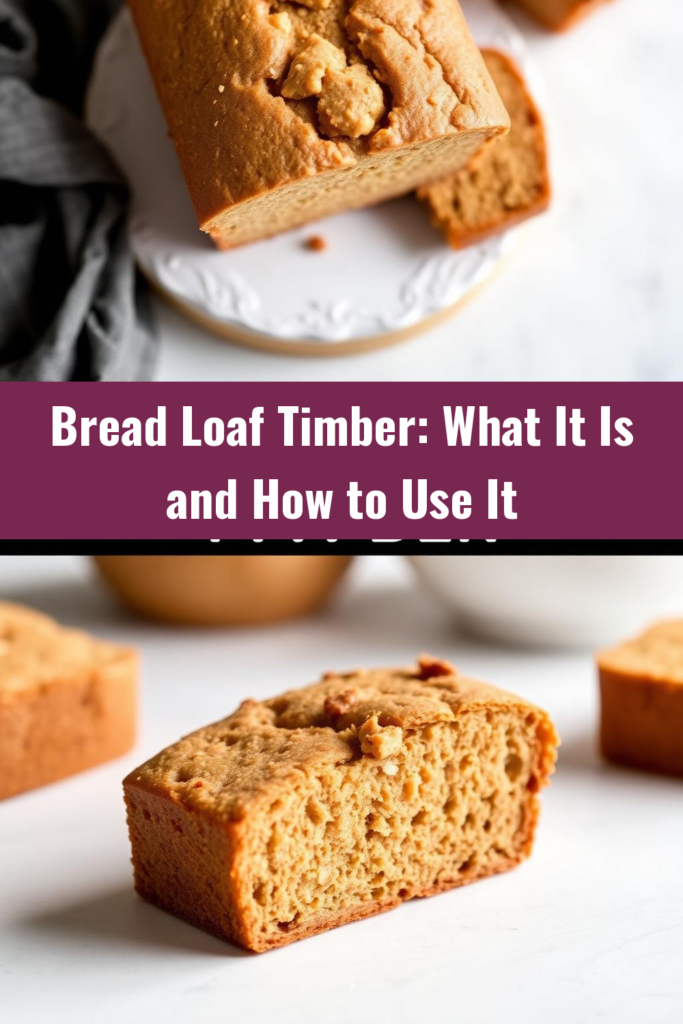
Bread loaf timber is a food-safe wood product used to shape and support bread dough during proofing and baking, giving loaves a consistent form. It is typically a flat, rectangular board of untreated hardwood, often maple or birch, that you place inside a loaf pan or use as a base for free-form loaves. Below are the practical details for selecting, using, and caring for one.
What Bread Loaf Timber Is For
Bread loaf timber serves two main purposes: it presses dough into a uniform shape during proofing, and it can be used as a baking surface. When placed on top of dough in a loaf pan, it keeps the loaf flat and even. When used as a base, it mimics a baking stone, absorbing moisture and creating a crisp crust. It is not a flavored wood chip; it does not add smoke or taste.
Selecting and Preparing the Timber
Choose a piece that fits your loaf pan: standard 9×5-inch (23×13 cm) pans need a board about 8×4 inches (20×10 cm) and 1/2 to 3/4 inch (1.3–1.9 cm) thick. The wood must be untreated, unfinished hardwood—never softwood like pine, which can impart resin. Before first use, wash with hot water and mild soap, rinse thoroughly, and dry completely. Do not soak it; wood warps. Some bakers lightly oil the board with food-grade mineral oil once a month to prevent cracking.
Using It for Proofing and Baking
For proofing: after shaping your dough, place it in a greased loaf pan. Lay the timber directly on top of the dough, then weigh it with a heavy can or a brick wrapped in foil. Let it proof at room temperature (70–75°F / 21–24°C) for 45–60 minutes, or until the dough rises to within 1/2 inch (1.3 cm) of the pan rim. Remove the timber before baking.
For baking: preheat your oven to 375°F (190°C) with the timber on the middle rack. When the oven is hot, slide the shaped dough onto the timber using parchment paper. Bake for 25–30 minutes, until the internal temperature reads 190–200°F (88–93°C) on an instant-read thermometer and the crust is deep golden brown. Remove the loaf and cool on a wire rack for 1 hour before slicing.
Substitutions and Alternatives
If you do not have bread loaf timber, use these in its place:
- Unglazed ceramic tile (food-safe, lead-free): same size, preheat like timber, works as a baking surface.
- Cast-iron griddle: heavier, holds heat longer, but may over-brown the bottom; reduce oven temperature by 25°F (14°C).
- Heavy baking sheet: preheat it empty, then place dough on parchment; crust will be less crisp.
- For pressing dough: a second loaf pan filled with dry beans works; place it on top of the dough during proofing.
Each substitute changes heat retention and crust color; the timber gives the most even, moderate heat.
Caring for the Timber
After each use, scrape off any dough residue with a plastic scraper. Wash with hot water and soap, rinse, and dry upright. Never put it in a dishwasher. Store in a dry place away from heat. If it develops mold, discard it—wood is porous and cannot be fully sanitized. Replace the board when it cracks or warps noticeably; a warped board will not press dough evenly.
Safety and Storage Notes
Bread loaf timber is not for cutting raw meat or poultry—use separate boards for that. After baking, the wood may darken; this is normal. Store the timber at room temperature. If you use it to press dough that contains eggs or dairy, the dough is perishable: keep it refrigerated during proofing if your kitchen is above 75°F (24°C), and never leave it out more than 2 hours total. Baked bread keeps at room temperature for 3–4 days in a paper bag, or freeze for up to 3 months wrapped tightly in plastic and foil.
Bread Loaf Timber for Large Batches and High Hydration
For high-hydration doughs (75% or more water), the timber works best as a baking surface rather than a press, because sticky dough clings. Dust the timber lightly with flour or line it with parchment. For large batches, use multiple timbers spaced 2 inches (5 cm) apart on the oven rack to allow air circulation. If you bake more than two loaves at once, rotate the timbers halfway through baking for even browning. The timber does not need preheating for proofing—only for baking.
When to Check for Doneness
Beyond internal temperature, look for these cues: the loaf should sound hollow when tapped on the bottom, the sides should pull away from the pan, and the top should be evenly browned. If the crust browns too fast, tent with foil after 15 minutes. If the bottom is pale, increase oven temperature by 10°F (5°C) next time and preheat the timber longer.
Safe minimum internal temperatures follow USDA FSIS; raw-fish guidance follows the U.S. FDA. See our food safety notes.
Spotted an error? Tell us and we will correct it (corrections policy).