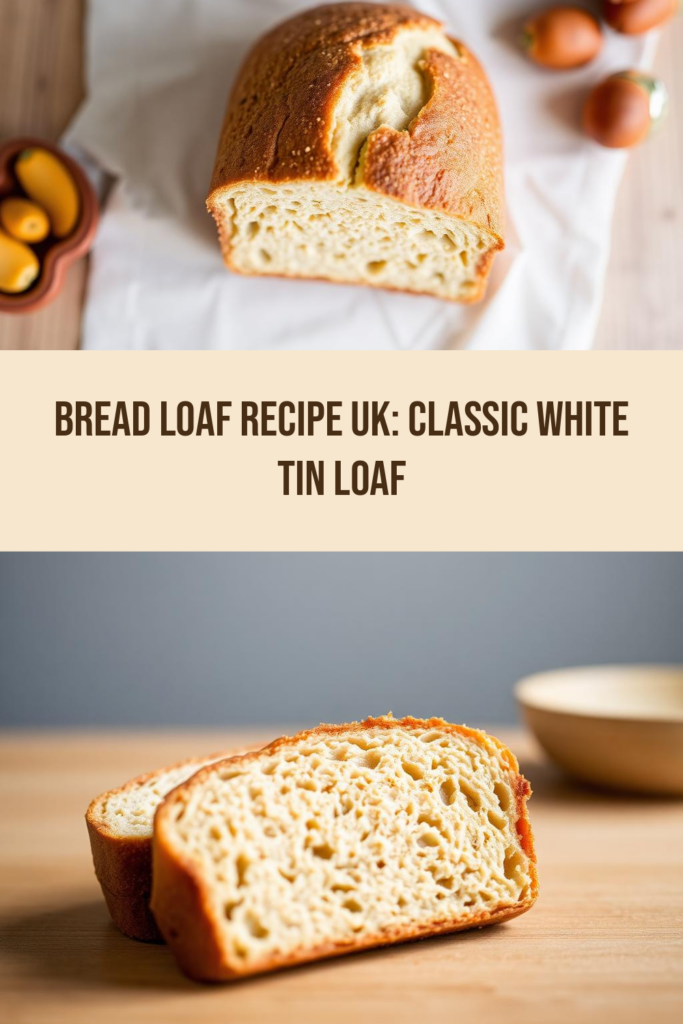
This is a classic British white bread loaf, baked in a 2 lb (900 g) loaf tin, with a soft crumb and a golden, crisp crust. It suits everyday sandwiches, toast, and breakfast, and uses strong bread flour for the proper UK-style texture.
Ingredients
- 500 g (4 cups) strong white bread flour, plus extra for dusting
- 7 g (1 sachet) fast-action dried yeast (or 15 g fresh yeast)
- 10 g (2 tsp) salt
- 300 ml (1 ¼ cups) lukewarm water (about 37°C / 98°F)
- 30 ml (2 tbsp) olive oil or softened unsalted butter
- 1 tsp sugar or honey (optional, helps the yeast)
Instructions
- In a large bowl, mix the flour, yeast, salt, and sugar (if using). Make a well in the centre.
- Pour in the lukewarm water and oil (or add the butter). Mix with a spoon or your hands until a shaggy dough forms.
- Turn the dough onto a lightly floured surface. Knead for 10 minutes by hand, or 5 minutes in a stand mixer with a dough hook, until smooth and elastic. The dough should pass the windowpane test: a small piece stretches thin without tearing.
- Place the dough in a lightly oiled bowl, cover with a damp tea towel or cling film, and leave in a warm place (about 24–27°C / 75–80°F) for 1–1 ½ hours, until doubled in size.
- Turn the dough out onto a floured surface. Knock it back (punch down) to release air. Shape into a rectangle about 20 cm (8 in) wide.
- Roll the dough up tightly from a short end, tuck the ends under, and place seam-side down in a greased 2 lb (900 g) loaf tin (about 23 x 13 cm / 9 x 5 in).
- Cover loosely with oiled cling film or a tea towel. Leave to rise for 45–60 minutes, until the dough has risen about 2 cm (¾ in) above the rim of the tin.
- Preheat the oven to 220°C (425°F). Place a small roasting tin of hot water on the bottom shelf to create steam.
- Bake the loaf for 30–35 minutes, until deep golden brown and hollow when tapped on the bottom. The internal temperature should read at least 90°C (194°F) for a fully baked crumb.
- Turn the loaf out onto a wire rack immediately. Let it cool completely before slicing, at least 1 hour.
Make-Ahead Timeline
You can prepare the dough the night before. After kneading, place it in a covered bowl in the fridge for 8–12 hours. The next day, bring it to room temperature for 30 minutes, then shape, rise (about 1 hour), and bake as directed. Alternatively, after shaping, you can put the loaf tin in the fridge overnight, then let it rise at room temperature for 1–2 hours before baking.
What to Serve With It
Serve slices warm with butter and jam for breakfast, or use for sandwiches with cheese, ham, or roasted vegetables. It also makes excellent toast. For a savoury side, serve alongside soup or a full English breakfast.
Storing and Freezing
Store the cooled loaf in a bread bin or paper bag at room temperature for up to 3 days. Do not refrigerate, as that dries the bread out. To freeze, wrap the cooled loaf tightly in cling film and then foil, and freeze for up to 3 months. Thaw at room temperature for 2–3 hours. To refresh, warm slices in a toaster or the whole loaf in a 180°C (350°F) oven for 5–10 minutes.
Common Problems and Fixes
Dough Won’t Rise
Check the yeast is in date. The water must be lukewarm, not hot (above 50°C / 122°F kills yeast). If your kitchen is cold, place the dough in a slightly warm oven (turned off) with a bowl of hot water.
Loaf Is Dense or Heavy
You may have added too much flour during kneading, or not kneaded long enough. Use a light dusting only, and knead until the dough is smooth and springy. Also ensure the second rise is complete—the dough should visibly puff up.
Crust Too Dark or Too Pale
If the crust browns too quickly, cover the loaf loosely with foil after 15 minutes. If it’s too pale, increase the oven temperature by 10°C (50°F) and check it’s actually at temperature with an oven thermometer.
Variations
Wholemeal Bread Loaf
Replace half the white flour with wholemeal strong flour. Add an extra 30 ml (2 tbsp) water, as wholemeal absorbs more. The loaf will be denser and nuttier.
Seeded Loaf
Add 50 g (⅓ cup) of mixed seeds (sunflower, pumpkin, linseed) to the flour before mixing. Brush the top with milk and sprinkle with extra seeds before baking.
Milk Loaf (Softer Crumb)
Use 250 ml (1 cup) lukewarm milk plus 50 ml (¼ cup) water instead of all water. Add 20 g (1 ½ tbsp) butter. The crumb will be softer and slightly sweeter.
How to Check the Loaf Is Done
The most reliable test is a digital thermometer inserted into the centre of the loaf—it should read at least 90°C (194°F). If you don’t have one, tap the bottom of the loaf; it should sound hollow. The loaf should also have pulled away from the sides of the tin slightly.
Safe minimum internal temperatures follow USDA FSIS; raw-fish guidance follows the U.S. FDA. See our food safety notes.
Spotted an error? Tell us and we will correct it (corrections policy).