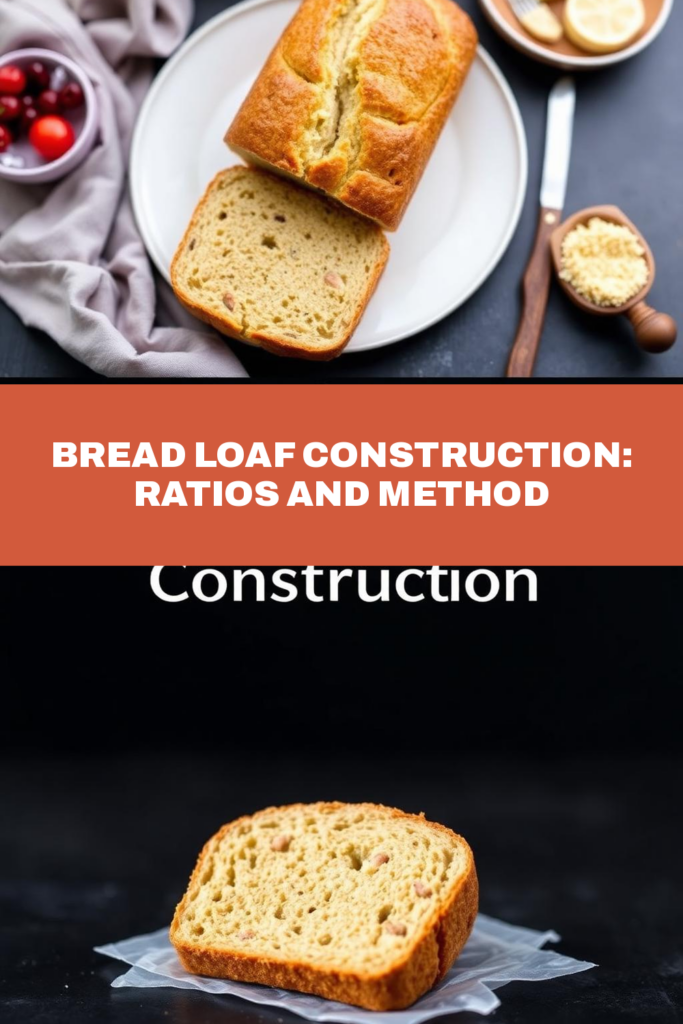
Bread loaf construction depends on the ratio of flour to water by weight, which determines the dough’s structure and crumb. A standard sandwich loaf uses about 65-70% hydration (water weight divided by flour weight), giving a soft but sliceable crumb. The gluten network built during kneading is what traps gas and gives the loaf its rise.
Ingredient List for a Basic White Bread Loaf
- 3 1/2 cups (440 g) bread flour (or all-purpose)
- 1 1/2 cups (360 ml) warm water (105-115°F / 40-46°C)
- 2 teaspoons (6 g) instant yeast (or 2 1/4 tsp active dry)
- 1 1/2 teaspoons (9 g) fine salt
- 1 tablespoon (15 ml) olive oil or melted butter
- 1 tablespoon (15 g) sugar or honey (optional, for crust color and yeast activity)
How the Dough Goes Together
- In a large bowl, whisk the flour and salt. If using active dry yeast, dissolve it in the warm water with the sugar and let stand 5 minutes until foamy. If using instant yeast, mix it into the flour directly.
- Add the water (and yeast mixture if using), oil, and sugar (if using) to the flour. Stir with a wooden spoon until a shaggy dough forms and no dry flour remains.
- Turn the dough out onto a lightly floured surface. Knead for 8-10 minutes (or 5-6 minutes in a stand mixer with a dough hook on medium-low) until the dough is smooth, elastic, and passes the windowpane test: a small piece stretched thin shows light through it without tearing.
- Place the dough in a lightly oiled bowl, cover with plastic wrap or a damp towel, and let rise in a warm spot (75-80°F / 24-27°C) for 1 to 1 1/2 hours, until doubled in size.
- Punch down the dough gently. Shape it into a loaf: flatten into a rectangle about 8×10 inches, roll tightly from the short end, and pinch the seam closed.
- Place the loaf seam-side down in a greased 9×5-inch (23×13 cm) loaf pan. Cover loosely and let rise again for 45-60 minutes, until the dough rises just above the pan rim (about 1 inch above).
- Preheat the oven to 375°F (190°C) during the second rise. Bake the loaf for 30-35 minutes, until the top is deep golden brown and the internal temperature reaches 190-200°F (88-93°C) on an instant-read thermometer. If the top browns too fast, tent loosely with foil after 20 minutes.
- Remove the bread from the pan immediately and cool completely on a wire rack, at least 1 hour, before slicing. Slicing warm bread crushes the crumb.
Why the Loaf Comes Out Dry, Dense, or Sunken
Too Dry and Crumbly
This usually means too much flour or overbaking. Flour is measured by weight, not volume; scooping with a cup packs in extra flour. Reduce flour by 10-15 g or add 1-2 tablespoons more water. Also check oven temperature with an oven thermometer—if it runs hot, the crust sets before the crumb cooks, drying it out.
Too Dense and Heavy
Underproofing is the most common cause. If the dough hasn’t doubled in the first rise or risen above the pan rim in the second, the gluten hasn’t relaxed enough to expand in the oven. Let it rise longer, even if it takes 2 hours. Also, old yeast loses potency; check the expiration date and proof active dry yeast before using.
Sunken in the Middle
Overproofing makes the gluten structure collapse. If the dough rises more than 1 1/2 inches above the pan rim, it’s overproofed. Bake it anyway, but expect a denser, slightly concave top. Next time, shorten the second rise by 15-20 minutes.
Substitutions That Change the Loaf
- Whole wheat flour: Replace up to half the bread flour with whole wheat. Add 2 tablespoons (30 ml) extra water per cup (120 g) of whole wheat, and expect a denser, nuttier loaf.
- All-purpose flour: Use it 1:1, but reduce water by 2 tablespoons (30 ml) because all-purpose absorbs less than bread flour.
- Honey instead of sugar: Use 1 1/2 tablespoons (30 g) honey; it adds moisture and a slightly darker crust. Reduce water by 1 tablespoon (15 ml).
- No oil or butter: Omit it entirely; the loaf will be slightly chewier and stale faster. Add 1 tablespoon (15 ml) water to compensate.
- Active dry yeast instead of instant: Use 2 1/4 teaspoons (7 g) active dry, dissolve in the warm water with sugar, and wait 5-10 minutes for foam.
Storing the Baked Loaf
Cool completely before storing. Keep at room temperature in a bread box or paper bag for up to 3 days; plastic wrap keeps it softer but the crust becomes chewy. Refrigerate only if you live in high humidity, but expect faster staling. Freeze for up to 3 months: wrap tightly in plastic wrap then foil, and thaw at room temperature for 2 hours. Reheat slices in a toaster or in a 350°F (175°C) oven for 5 minutes to refresh.
Safe minimum internal temperatures follow USDA FSIS; raw-fish guidance follows the U.S. FDA. See our food safety notes.
Spotted an error? Tell us and we will correct it (corrections policy).





