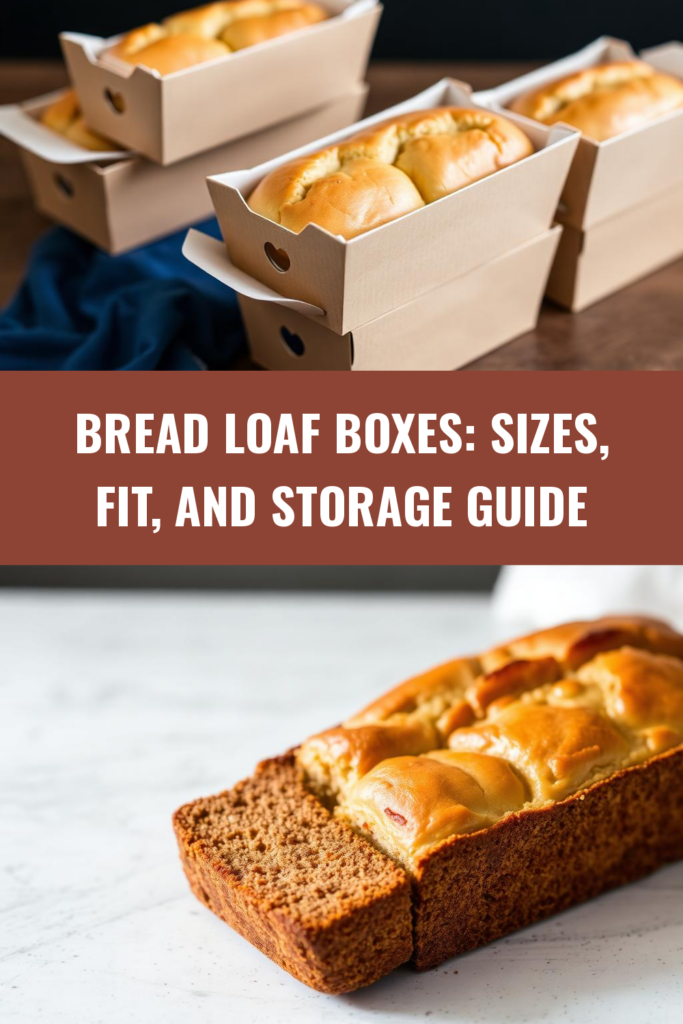
Time: 5 min to measure · Serves: 1 loaf · The key step: measure your loaf’s length, width, and height before choosing a box. A bread loaf box keeps homemade or bakery bread fresh at room temperature for 3–5 days, protecting it from air, dust, and pests while allowing slight moisture release. Choose a box that fits your loaf with at least 1 inch (2.5 cm) of clearance on all sides to avoid crushing the crust.
Measure Your Loaf First: Three Numbers Decide the Fit
Before you buy or repurpose a box, measure the baked loaf, not the pan. Use a ruler or tape measure. Write down three numbers:
- Length: the longest side of the loaf, from end to end.
- Width: the widest point, usually across the top.
- Height: from the bottom to the highest point of the dome.
Add 1 inch (2.5 cm) to each measurement to find the minimum interior size of the box. For example, a standard 9×5-inch (23×13 cm) loaf pan produces a loaf about 9 inches (23 cm) long, 5 inches (13 cm) wide, and 4 inches (10 cm) tall. That loaf needs a box interior of at least 10×6×5 inches (25×15×13 cm). A larger 10×5-inch (25×13 cm) pan gives a loaf about 10 inches (25 cm) long, so look for a box with an interior length of 11–12 inches (28–30 cm).
If you bake free-form loaves (round boules or batards), measure the widest diameter and the tallest point. A round loaf that is 8 inches (20 cm) across and 5 inches (13 cm) tall needs a box interior of at least 9 inches (23 cm) in every horizontal direction and 6 inches (15 cm) tall.
Standard Bread Box Sizes and What Fits Inside
Bread boxes come in a few common interior dimensions. Here is what typically fits in each size:
| Interior size (inches) | Interior size (cm) | Fits |
|---|---|---|
| 10 × 6 × 5 | 25 × 15 × 13 | One standard 9×5-inch loaf, a baguette up to 10 inches long, or a small round loaf |
| 12 × 7 × 6 | 30 × 18 × 15 | One large 10×5-inch loaf, two small loaves side by side, or a longer baguette (up to 12 inches) |
| 14 × 8 × 7 | 36 × 20 × 18 | Two standard loaves, a large boule, or several rolls |
| 16 × 9 × 8 | 41 × 23 × 20 | Three standard loaves or a very large artisan loaf |
If you bake a tall sourdough boule, measure the height carefully. Many bread boxes are only 5–6 inches (13–15 cm) tall, so a tall loaf may not close properly. In that case, choose a box with a domed lid or a larger height.
For baguettes longer than 16 inches (41 cm), a standard bread box will not fit. Options: cut the baguette in half and store the cut side down on a board, or use a long canvas bag, or wrap in a cotton cloth and place in a large plastic bin. A bread box is not essential for baguettes; they go stale within 24 hours anyway.
How to Keep Bread Fresh in the Box: Rules That Work
Cool the loaf completely before storing
Wait until the bread is fully cool to room temperature, usually 2–3 hours after baking. Warm bread releases steam inside the box, which condenses on the lid and makes the crust soggy. If you must store warm bread, leave the lid slightly ajar for the first hour, then close it.
Cut only what you need
Store the loaf whole. Cut slices as needed, because cut surfaces dry out faster. If you cut the whole loaf, place the cut side face-down on a cutting board or on a piece of parchment inside the box to slow moisture loss.
Keep the box clean and dry
Wipe the inside of the box with a dry cloth every few days. Crumbs can attract pests. If you see mold on the bread or the box, discard the bread, wash the box with hot soapy water, dry it completely, and start fresh.
What to do with different bread types
- Sandwich bread (soft crust): Store in the box at room temperature for 3–5 days. The box keeps the crust soft better than a paper bag.
- Crusty artisan bread: The box will soften the crust over time. For the first 1–2 days, keep it in a paper bag to preserve crispness, then move to the box if you want to keep it longer.
- Rye or sourdough: These stay fresh longer, often 5–7 days in a bread box, because of their higher acidity and moisture.
- Gluten-free bread: These loaves go stale faster; keep in the box for 2–3 days, then freeze.
When to freeze instead
If you will not finish the loaf within 5 days, freeze it. Wrap the completely cooled loaf tightly in plastic wrap, then in foil, and freeze for up to 3 months. Thaw at room temperature for 1–2 hours, then reheat in a 350°F (175°C) oven for 5–10 minutes to refresh the crust. Do not store bread in the refrigerator; it goes stale faster at cold temperatures.
What Ruins Bread in a Box: Mistakes to Avoid
- Storing warm bread – traps steam, causing a soggy crust and mold within 2 days.
- Choosing a box too small – crushes the loaf and prevents air circulation, leading to a gummy texture.
- Leaving the box in direct sunlight or near a heat source – heat speeds up staling and can cause condensation.
- Forgetting to clean the box – old crumbs can harbor mold spores that contaminate new loaves.
- Storing bread with strong-smelling foods – bread absorbs odors; keep the box away from onions, garlic, or cleaning supplies.
- Using a box with a tight seal but no ventilation – some boxes have small holes or a gap; if yours is airtight, leave the lid slightly open to let moisture escape.
If you see any mold, discard the entire loaf. Mold roots are invisible, so cutting off the visible spot is not safe.
Making Bread Ahead: Plan for the Box
If you bake bread for a meal or gathering, plan the timeline:
- Bake 1 day ahead: Cool completely, store in the bread box overnight. The crust will soften slightly; reheat in a 350°F (175°C) oven for 5–10 minutes before serving.
- Bake 2–3 days ahead: Store in the bread box for up to 3 days, but reheat before serving. After 3 days, freeze any leftovers.
- Bake weeks ahead: Freeze the loaf, then thaw and reheat as described above.
For a dinner party, bake the bread the morning of the event, cool it, store in the box, and reheat just before guests arrive. This gives you a fresh-tasting loaf without last-minute baking stress.
Choosing a Bread Box: Material and Placement
Bread boxes come in wood, stainless steel, ceramic, and plastic. All work if they are clean and dry. Wood and ceramic absorb moisture slightly, which can help keep crusts crisp; stainless steel and plastic are easier to wipe clean. Choose a box that fits your counter space and matches your kitchen style.
Place the box in a cool, dry spot away from the stove, dishwasher, and direct sunlight. A pantry or a counter away from heat sources is ideal. If your kitchen is very humid, the bread may mold faster; in that case, store only 2–3 days in the box and freeze the rest.
If you do not have a bread box, a clean paper bag or a cotton cloth bag works for 2–3 days, but a box provides more protection and keeps soft bread softer for longer.
Safe minimum internal temperatures follow USDA FSIS; raw-fish guidance follows the U.S. FDA. See our food safety notes.
Spotted an error? Tell us and we will correct it (corrections policy).





