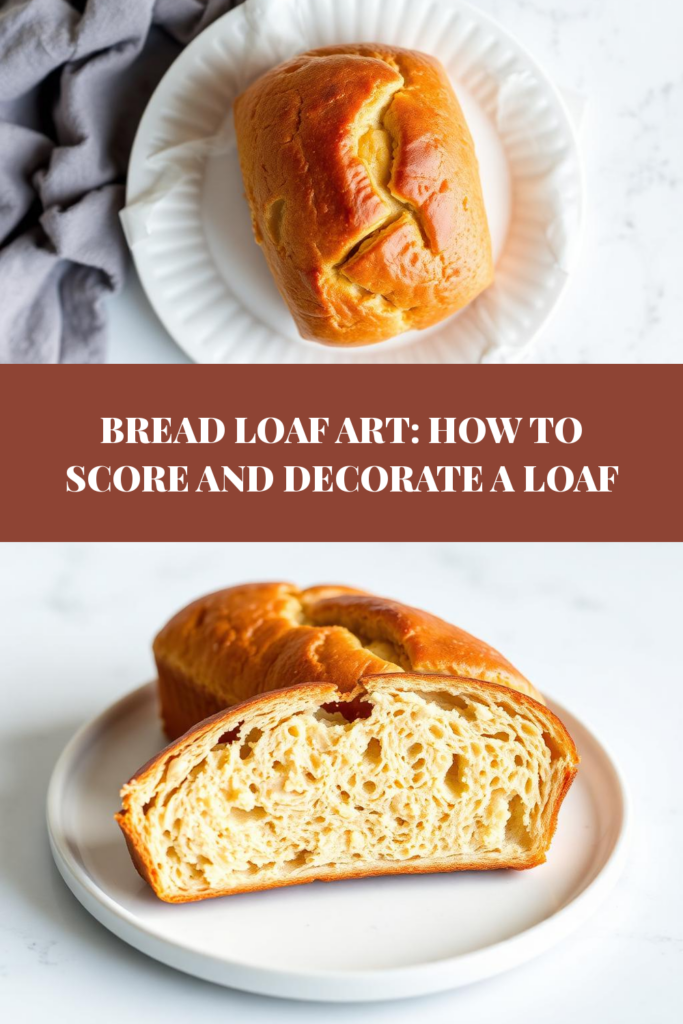
Time: 3 hr 15 min · Serves: 1 large loaf · The key step: score the proofed loaf with a sharp blade at a 45° angle, then bake at 425°F (220°C) with steam for the first 15 minutes.
Bread loaf art is the practice of cutting decorative patterns into the surface of a proofed dough before baking. The cuts control where the loaf expands, producing a crisp, glossy crust with intentional bursts and shapes. This method works on any standard white or whole wheat bread dough and turns a plain loaf into a centerpiece for a dinner table or gift.
Ingredients
- 3 ½ cups (440 g) bread flour, plus more for dusting
- 1 ½ teaspoons (9 g) fine sea salt
- 1 teaspoon (4 g) instant yeast
- 1 ½ cups (355 ml) warm water (105–115°F / 40–46°C)
- 1 tablespoon (15 ml) olive oil (optional, for softer crust)
For the wash and scoring:
- 1 egg white beaten with 1 tablespoon water (for shine)
- Rice flour or all-purpose flour for dusting the pattern
- Sharp lame, razor blade, or paring knife
Substitutions: Use all-purpose flour instead of bread flour; the loaf will be slightly less chewy. For a whole wheat version, replace 1 cup (125 g) of bread flour with whole wheat flour and add 2 tablespoons (30 ml) more water.
Instructions
- Mix the dough: In a large bowl, whisk together flour, salt, and yeast. Add water and olive oil if using. Stir with a wooden spoon until a shaggy dough forms.
- Knead: Turn dough onto a lightly floured surface. Knead for 8–10 minutes, until smooth and elastic. The dough should pass the windowpane test: stretch a small piece thin enough to see light through without tearing.
- First rise: Place dough in a lightly oiled bowl, cover with plastic wrap or a damp towel, and let rise at room temperature (70–75°F / 21–24°C) for 1 ½ to 2 hours, until doubled in size.
- Shape: Gently deflate the dough. On a lightly floured surface, shape into a round boule or an oval batard. Place on a parchment-lined baking sheet or in a floured proofing basket. Cover and let rise for 45–60 minutes, until puffy but not fully doubled.
- Preheat and prep: Place a cast-iron skillet or metal pan on the bottom rack of the oven. Preheat oven to 425°F (220°C). Bring 1 cup (240 ml) of water to a boil for steam.
- Score the pattern: Just before baking, brush the loaf with the egg white wash. Use a sharp blade to make shallow cuts about ¼ inch (6 mm) deep. For a wheat stalk pattern, make one long vertical cut down the center, then angled cuts on both sides. For a diamond pattern, make parallel diagonal cuts in one direction, then cross with diagonal cuts in the opposite direction. Dust the scored lines with rice flour if desired.
- Bake with steam: Place the loaf in the oven. Carefully pour the boiling water into the hot skillet. Close the door immediately. Bake for 15 minutes, then remove the skillet and reduce temperature to 375°F (190°C). Continue baking for 20–25 minutes, until the crust is deep golden brown and the loaf sounds hollow when tapped on the bottom. The internal temperature should read 200–210°F (93–99°C) for a fully baked bread.
- Cool: Transfer to a wire rack. Cool completely before slicing, at least 1 hour.
What Patterns Work Best for a First Loaf?
Start with a simple single slash down the center of a round boule. This gives a dramatic “ear” (a raised lip of crust) and is forgiving if your cuts are uneven. Once comfortable, try a crosshatch: make 4–5 diagonal cuts in one direction, then 4–5 in the opposite direction, spacing them about 1 ½ inches (4 cm) apart. Avoid cutting too deep—more than ½ inch (12 mm) will cause the loaf to deflate. Keep the blade at a 30–45° angle relative to the dough surface.
How to Get a Glossy, Crackly Crust
The shine comes from the egg white wash applied before scoring. For a matte, rustic look, skip the wash and dust the loaf with flour instead. The crackle comes from steam in the oven during the first 15 minutes of baking. Without steam, the crust will be thicker and less crisp. If you don’t have a cast-iron skillet, spray the inside of the oven with water from a spray bottle three times during the first 10 minutes—keep the door closed between sprays.
How Long Does Bread Loaf Art Keep?
Baked and cooled bread keeps at room temperature in a paper bag or bread box for 2–3 days. Do not refrigerate—it speeds up staling. For longer storage, wrap tightly in plastic wrap and freeze for up to 3 months. Thaw at room temperature for 2 hours, then reheat in a 350°F (175°C) oven for 5–10 minutes to refresh the crust. If the loaf has an egg wash, it is safe at room temperature for the same 2–3 days; the egg is fully cooked during baking.
Can You Score a Loaf After It’s Proofed Too Long?
If the dough has over-proofed (more than doubled and very jiggly), scoring will cause it to collapse. The cuts will not open properly. To test: press a finger gently into the dough. If the indentation springs back slowly and leaves a slight mark, it’s ready. If it springs back immediately, it needs 15 more minutes. If it doesn’t spring back at all, it’s over-proofed—bake it anyway, but expect a flatter loaf with less defined art. You can still score it, but make cuts only ⅛ inch (3 mm) deep.
Variations: Whole Wheat and Seeded Art Loaves
Whole wheat: Replace 1 cup (125 g) of bread flour with whole wheat flour. Add 2 tablespoons (30 ml) water. The dough will be stickier; knead 2 extra minutes. Score slightly shallower, as whole wheat dough spreads more.
Seeded: After brushing with egg wash, sprinkle the top with sesame seeds, poppy seeds, or rolled oats before scoring. The seeds will stick to the wash and create a textured pattern. Use 2 tablespoons (15 g) total seeds.
Serving and Pairing Ideas
Serve the art loaf warm with olive oil and balsamic vinegar, or alongside soups and stews. The scored patterns make it ideal for a cheese board—tear off pieces rather than slicing to show off the crust. For a breakfast pairing, toast thick slices and spread with butter and jam. The loaf is also a good gift: wrap in parchment and tie with twine, but leave it unsliced so the pattern stays intact.
Bread Loaf Art for Large Batches and Kids
Making two loaves: Double all ingredients. Knead as one batch, then divide after the first rise. Shape and proof separately. Bake one at a time to keep oven temperature steady; the second loaf can wait on the counter covered for up to 30 minutes.
With kids: Let them press cookie cutters into the proofed dough instead of using a blade—press gently to make an imprint, then bake. The imprint will darken but not split. For older kids, give them a plastic dough scraper to make simple straight cuts under supervision. Always use a sharp blade yourself; never let children handle the lame.
Safe minimum internal temperatures follow USDA FSIS; raw-fish guidance follows the U.S. FDA. See our food safety notes.
Spotted an error? Tell us and we will correct it (corrections policy).





