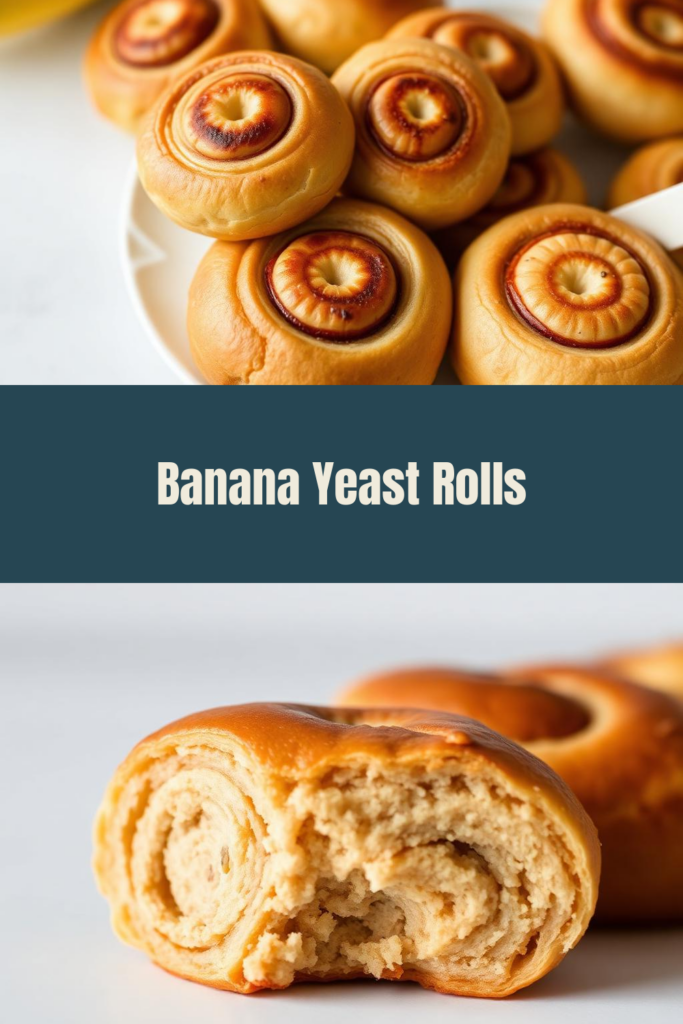
Banana yeast rolls are soft, lightly sweet dinner rolls made with ripe bananas in the dough. They taste like banana bread in roll form, with a tender crumb and a subtle fruity flavor. Serve them warm with butter for breakfast, brunch, or as a side to a holiday meal.
Ingredients
- 1 cup (240 ml) whole milk, warmed to 110°F (43°C)
- 2 1/4 teaspoons (7 g) active dry yeast (one packet)
- 1/4 cup (50 g) granulated sugar
- 1/2 cup (120 g) mashed ripe banana (about 1 large banana)
- 1/4 cup (60 g) unsalted butter, melted and cooled
- 1 large egg, room temperature
- 1 teaspoon vanilla extract
- 1 teaspoon salt
- 3 1/2 cups (440 g) all-purpose flour, plus more for dusting
- For the glaze: 1/4 cup (60 ml) honey mixed with 1 tablespoon (15 ml) warm water (optional)
Instructions
- In a small bowl, combine the warm milk, yeast, and 1 tablespoon of the sugar. Let stand for 5–10 minutes until foamy.
- In a large mixing bowl, whisk together the remaining sugar, mashed banana, melted butter, egg, vanilla, and salt. Add the yeast mixture and stir.
- Add the flour, 1 cup at a time, stirring until a soft dough forms. Turn out onto a floured surface and knead for 8–10 minutes, until smooth and elastic. (Alternatively, use a stand mixer with a dough hook for 5–7 minutes.)
- Place the dough in a lightly oiled bowl, cover with plastic wrap or a clean towel, and let rise in a warm spot (about 75°F/24°C) for 1 to 1 1/2 hours, until doubled in size.
- Punch down the dough. Divide into 12 equal pieces (about 60 g each). Shape each into a smooth ball and place in a greased 9×13-inch (23×33 cm) baking pan, spacing them evenly.
- Cover and let rise again for 30–45 minutes, until puffy and almost doubled.
- Preheat the oven to 375°F (190°C). Bake the rolls for 20–25 minutes, until golden brown on top and the internal temperature reaches 190°F (88°C) if measured with an instant-read thermometer. (Bread is done when it reaches 190–200°F/88–93°C, but this is not a safety requirement; the rolls are safe to eat once the dough is cooked through—look for a hollow sound when tapped.)
- If using the honey glaze, brush it over the hot rolls as soon as they come out of the oven. Let cool in the pan for 10 minutes, then serve warm.
How to Tell the Rolls Are Done
The rolls are done when the tops are deep golden brown and the sides pull slightly away from the pan. Tap the top of a roll—it should sound hollow. For a more precise check, insert an instant-read thermometer into the center of a roll; it should read 190°F (88°C) or higher. If the tops brown too quickly, tent loosely with foil for the last 5 minutes of baking.
How Long Do Banana Yeast Rolls Keep?
Store cooled rolls in an airtight container at room temperature for up to 3 days. For longer storage, wrap tightly and freeze for up to 2 months. To reheat, thaw at room temperature if frozen, then warm in a 300°F (150°C) oven for 5–8 minutes. Do not refrigerate—cold dries them out. Always reheat leftovers to 165°F (74°C) before serving if they have been sitting out.
Variations
Banana Walnut Rolls
Add 1/2 cup (60 g) chopped walnuts to the dough along with the flour. The nuts add crunch and a toasty flavor. Toast the walnuts first for better flavor.
Cinnamon-Sugar Banana Rolls
After shaping the balls, roll each in a mixture of 2 tablespoons (25 g) sugar and 1 teaspoon ground cinnamon before placing in the pan. This creates a spiced, crunchy exterior.
Banana Yeast Rolls for Large Batches and Kids
This recipe doubles easily—use a larger bowl and a 13×18-inch (33×46 cm) half-sheet pan, and increase the yeast to 1 1/2 tablespoons (14 g). For smaller rolls, divide into 16 pieces and bake for 18–22 minutes. Kids often prefer them without the honey glaze; serve with a side of peanut butter or jam instead. If you have overripe bananas, this is a good use for them—the riper the banana, the stronger the flavor.
Safe minimum internal temperatures follow USDA FSIS; raw-fish guidance follows the U.S. FDA. See our food safety notes.
Spotted an error? Tell us and we will correct it (corrections policy).





