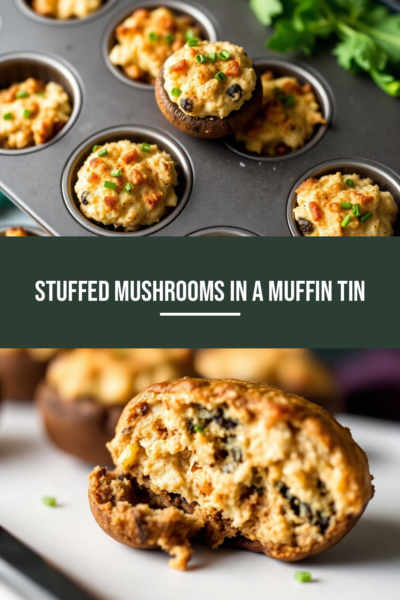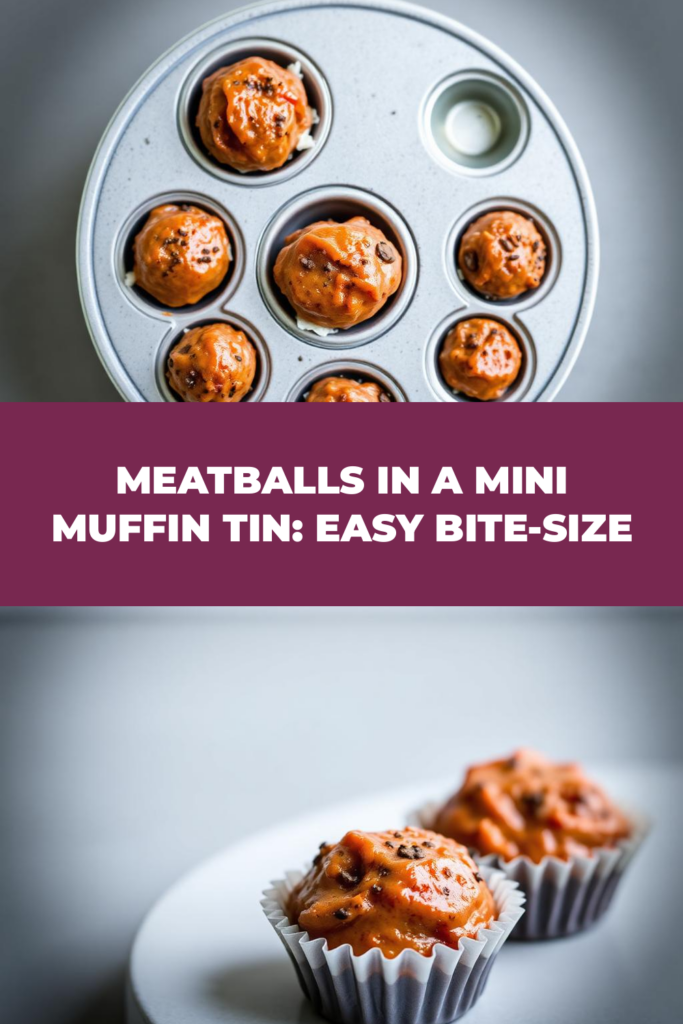
Mini muffin tin meatballs are a weeknight shortcut that gives you evenly browned, juicy meatballs in about 30 minutes, with no frying and no standing over a skillet. They work for a quick dinner over spaghetti, as a party appetizer with toothpicks, or as a make-ahead lunchbox protein. The tin holds the meatballs in a round shape while the heat circulates, so they cook through evenly without rolling around.
Why the Mini Tin Works
A standard 24-cup mini muffin tin (each cup about 1.75 inches / 4.4 cm across) holds about 1 tablespoon of meat mixture per cup. That yields meatballs roughly 1 inch (2.5 cm) in diameter, which cook in about half the time of a full-size meatball. The raised sides keep the meatballs from flattening, and the open top lets fat drip away, so they come out crusty on the outside and tender inside. If you only have a regular 12-cup muffin tin, use 2 tablespoons of mixture per cup and add 5–7 minutes to the bake time.
Ingredients
- 1 lb (450 g) ground beef (80/20 or 85/15)
- 1/2 cup (50 g) plain breadcrumbs
- 1/4 cup (60 ml) milk
- 1 large egg
- 1/4 cup (25 g) grated Parmesan cheese
- 2 cloves garlic, minced
- 1 tsp (5 ml) dried oregano
- 1/2 tsp (2.5 g) salt
- 1/4 tsp (1.25 g) black pepper
- 1 tbsp (15 ml) olive oil, for greasing the tin
Substitutions
- Ground turkey or chicken: Use 93/7 lean; add 1 extra tablespoon of olive oil to the mix to keep them moist. Cook to 165°F (74°C).
- Breadcrumbs: Swap in 1/2 cup (50 g) panko or crushed saltines. Panko makes a lighter texture; saltines add more salt, so reduce the added salt to 1/4 tsp.
- Milk: Use buttermilk or plain yogurt; both add tang and keep the meatballs tender. For a dairy-free version, use unsweetened almond milk.
- Egg: Replace with 1/4 cup (60 g) plain Greek yogurt or 1 tbsp (15 ml) water mixed with 1 tbsp (7 g) ground flaxseed, rested 5 minutes. The egg helps bind; without it, handle the mixture gently.
- Parmesan: Use 1/4 cup (25 g) Pecorino Romano or omit and add 1/2 tsp salt.
Instructions
- Preheat the oven to 400°F (200°C). Brush the cups of a 24-cup mini muffin tin with olive oil.
- In a large bowl, combine the breadcrumbs and milk. Let sit for 2 minutes so the breadcrumbs absorb the liquid.
- Add the ground beef, egg, Parmesan, garlic, oregano, salt, and pepper. Mix with your hands or a fork until just combined—overmixing makes dense meatballs.
- Scoop rounded tablespoons of the mixture (about 1 tbsp / 15 ml each) into the prepared cups. You should fill all 24 cups; if you have extra, press it gently into any cup that looks low.
- Bake for 18–22 minutes, until the tops are browned and the internal temperature reaches 160°F (71°C) for ground beef (USDA FSIS safe minimum). Check with an instant-read thermometer inserted into the center of a meatball.
- Let the meatballs rest in the tin for 2 minutes, then lift them out with a small fork or spoon. They should release easily; if any stick, run a thin spatula around the edge.
Makes 24 mini meatballs · Serves 4–6 as an appetizer or 3–4 over pasta
Browning and Doneness Checks
The tops will look deeply browned at 20 minutes, but color alone is not a safety cue. Always check the center of the largest meatball with a thermometer. For ground beef, the safe minimum is 160°F (71°C); for ground turkey or chicken, it is 165°F (74°C). If the tops brown before the centers reach temperature, cover the tin loosely with foil for the last 5 minutes. The meatballs will firm up slightly as they cool; they should feel springy, not hard.
Storage and Reheating
Refrigerate leftover meatballs in an airtight container within 2 hours of baking. They keep for 3–4 days. To reheat, place them on a baking sheet at 350°F (175°C) for 8–10 minutes, or microwave in 30-second bursts until hot all the way through (165°F / 74°C for leftovers). For longer storage, freeze the cooled meatballs in a single layer on a baking sheet, then transfer to a freezer bag; they keep for up to 3 months. Reheat frozen meatballs directly from the freezer at 350°F (175°C) for 15–18 minutes.
Sauces and Serving Ideas
These meatballs are mild on their own, so they take well to sauce. Toss them with 1 1/2 cups (360 ml) marinara and serve over spaghetti, or simmer them in 2 cups (480 ml) of beef broth with a splash of Worcestershire for a Swedish-style version. For appetizers, serve them with toothpicks and a bowl of warm marinara or a 1/2 cup (120 ml) of sour cream mixed with 1 tbsp (15 ml) of Dijon mustard. If you plan to sauce them, bake plain and add the sauce after—coating them before baking makes the outside soggy.
Making Ahead
Assemble the meatballs in the tin up to 24 hours ahead, cover with plastic wrap, and refrigerate. Add 3–4 minutes to the bake time because the mixture starts cold. You can also freeze the raw meatballs in the tin for up to 1 month; once frozen solid, pop them out into a freezer bag. Bake from frozen at 400°F (200°C) for 25–28 minutes, until the center reaches 160°F (71°C).
Common Problems and Fixes
Meatballs stick to the tin: Grease the cups thoroughly, not just the bottoms. Use a pastry brush to coat the sides. If they still stick, let them cool for 5 minutes—they shrink slightly and release more easily.
Meatballs are dry: You likely overmixed the meat or used very lean ground beef. Next time, mix until the ingredients are just distributed, and consider using 80/20 beef. Also, do not overbake; pull them at 160°F (71°C), not 170°F (77°C).
Meatballs are too small or uneven: Use a 1-tablespoon cookie scoop for uniform size. If you do not have one, scoop with a spoon and roll each portion into a ball with your hands—this also helps them cook evenly.
Meatballs fall apart: The mixture needs enough binder. If you skipped the egg or used a lean meat, add an extra 2 tablespoons of breadcrumbs. Also, let the mixture rest for 5 minutes before scooping so the breadcrumbs fully hydrate.
Related
- Microwave Cake Tin: How to Bake a Cake in a Mug or Tin
- Bread Loaf Recipe UK: Classic White Tin Loaf
- Bread Loaf Sizes: Standard, Mini, and How to Adjust
Safe minimum internal temperatures follow USDA FSIS; raw-fish guidance follows the U.S. FDA. See our food safety notes.
Spotted an error? Tell us and we will correct it (corrections policy).